

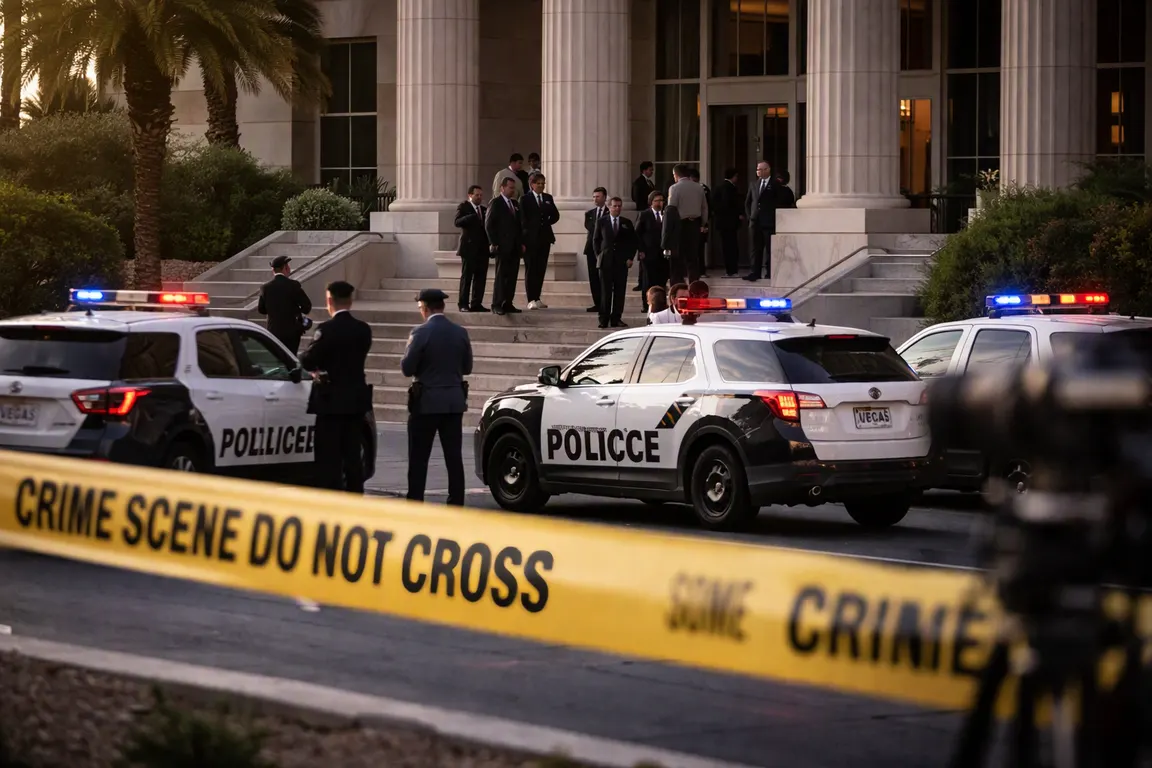
A Nevada jury convicted Duane “Keffe D” Davis for the September 7, 1996 shooting that killed rap icon Tupac Shakur on a Las Vegas Strip highway. The verdict ends a 27‑year investigation, the longest homicide case in U.S. history to reach a guilty finding.
Davis, 63, was a former leader of the Southside Crips gang in Los Angeles. Prosecutors said he acted as the on‑site commander who organized the attack that also wounded Death Row Records co‑founder Marion “Suge” Knight. The case was revived after detectives obtained drafts of a memoir Davis was writing about his gang life. Passages describing the planning, recruitment of shooters and the ambush after a Mike Tyson boxing match were admitted as evidence, directly linking Davis to the crime scene and contradicting his earlier denials.
The jury deliberated on a record that combined the memoir excerpts with eyewitness testimony and ballistic analysis. It concluded that the evidence met the legal standard of proof beyond a reasonable doubt.
Sentencing has not yet been set. Nevada law allows a first‑degree murder conviction to carry life imprisonment without parole, but a separate hearing will determine the exact term. The conviction provides a measure of closure for Shakur’s family and for communities long affected by gang violence.
Law‑enforcement officials praised the outcome as a validation of persistent investigative work. The Las Vegas Metropolitan Police Department highlighted how revisiting cold cases with new forensic tools and unconventional evidence can break long‑standing stalemates. Criminal‑justice scholars note that the case may encourage prosecutors elsewhere to seek written or digital self‑incriminating material as admissible proof.
While the legal significance is clear, the cultural impact remains muted. Industry observers acknowledge that the murder of a seminal artist has finally been addressed in a courtroom, but the focus stays on the procedural achievement rather than celebrity drama.
The next step is a sentencing hearing, where the court will decide whether Davis receives life without parole or a term that allows for future review. Victim‑impact statements and any restitution will also be considered. The case underscores the potential of creative evidentiary strategies in solving other unsolved gang‑related homicides that lack a paper trail, suggesting a shift toward integrating traditional police work with novel investigative approaches.