

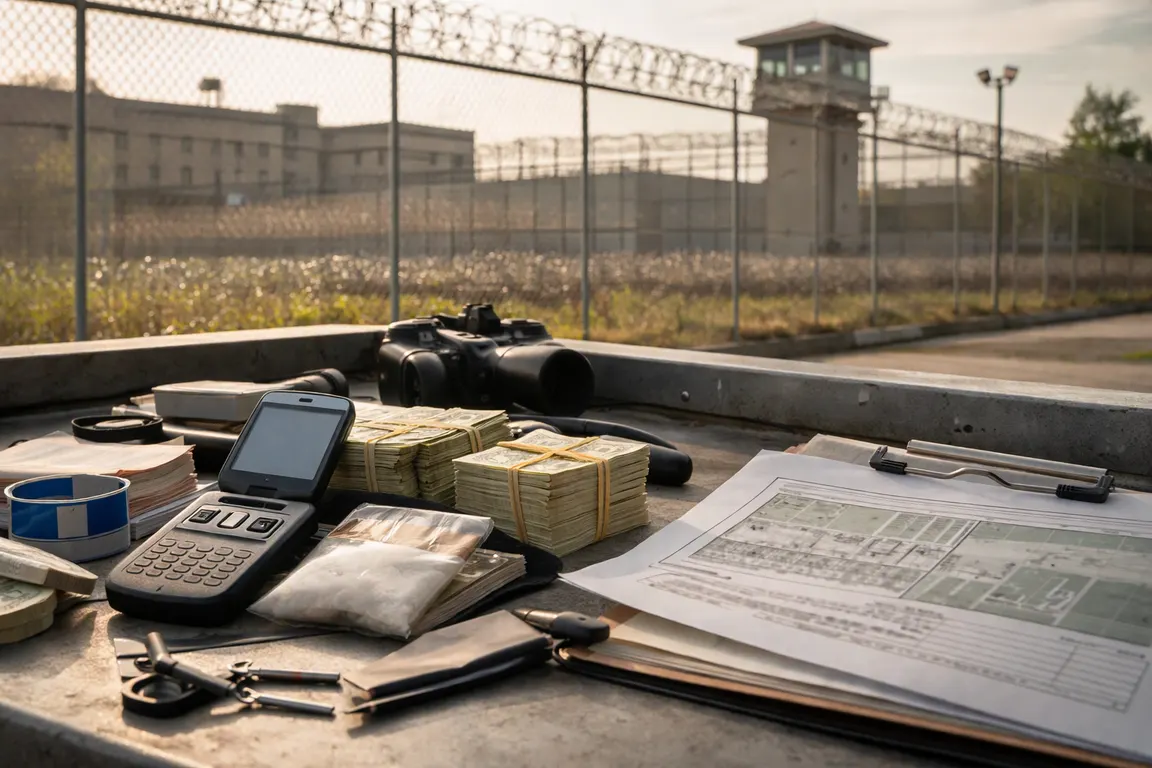
A video obtained by NBC News shows Sean “Diddy” Combs holding a cell phone inside Federal Correctional Institution, Fort Dix, a low‑security prison in southern New Jersey. Federal rules prohibit personal electronics for inmates, making the footage a clear violation of Bureau of Prisons policy and highlighting contraband at a federal prison.
NBC reporters also spoke with four former inmates who say Combs paid other prisoners for services such as massages, nude photographs and bottles of Hennessy cognac. The inmates described a pattern in which Combs transferred “thousands of dollars a month” to facilitate the contraband trade.
If the allegations are accurate, the incident points to a breach of security protocols that could endanger inmate safety, undermine staff authority and erode public confidence in the federal correctional system. Federal regulations explicitly bar cell phones, alcohol and other contraband. A working phone not only violates those rules but also raises concerns about illicit communication with the outside world and the potential for coordinated illegal activity.
According to a fellow inmate who spoke to the New York Post, the “party started” soon after Combs arrived at Fort Dix, suggesting the contraband entered the facility early in his sentence. While prison records have not been released to verify the amounts of money exchanged, the reported payments align with the Bureau’s prohibition on inmate possession of electronics and alcohol, which can trigger disciplinary action ranging from loss of privileges to additional criminal charges.
The Bureau of Prisons has not issued an official comment on the specific allegations involving Combs. Historically, the agency conducts internal investigations when contraband is discovered, but the lack of a public statement leaves the scope of any inquiry unclear and fuels speculation about whether high‑profile inmates receive different treatment.
The case highlights broader challenges in low‑security facilities, where staff‑to‑inmate ratios are lower and inmate movement is less restricted than in higher‑security institutions. Critics argue that such environments are more vulnerable to smuggling, especially when inmates have external connections or financial resources. Advocates for reform call for stronger monitoring technologies, clearer reporting mechanisms and consistent enforcement of existing policies to ensure equity across the inmate population.
Lawmakers and oversight bodies are expected to request information from the Bureau about any ongoing investigations and steps being taken to prevent similar incidents. Until official findings are released, the claims remain allegations supported by inmate testimony and video evidence, but they raise pressing questions about the effectiveness of current security measures and the fairness of privilege distribution within federal prisons.
The next likely development is a formal response from the Bureau of Prisons, which could include an internal review, disciplinary action against involved staff or policy adjustments aimed at tightening contraband controls. The outcome will determine whether the alleged lapses lead to substantive changes or remain an isolated incident within the broader correctional system.