

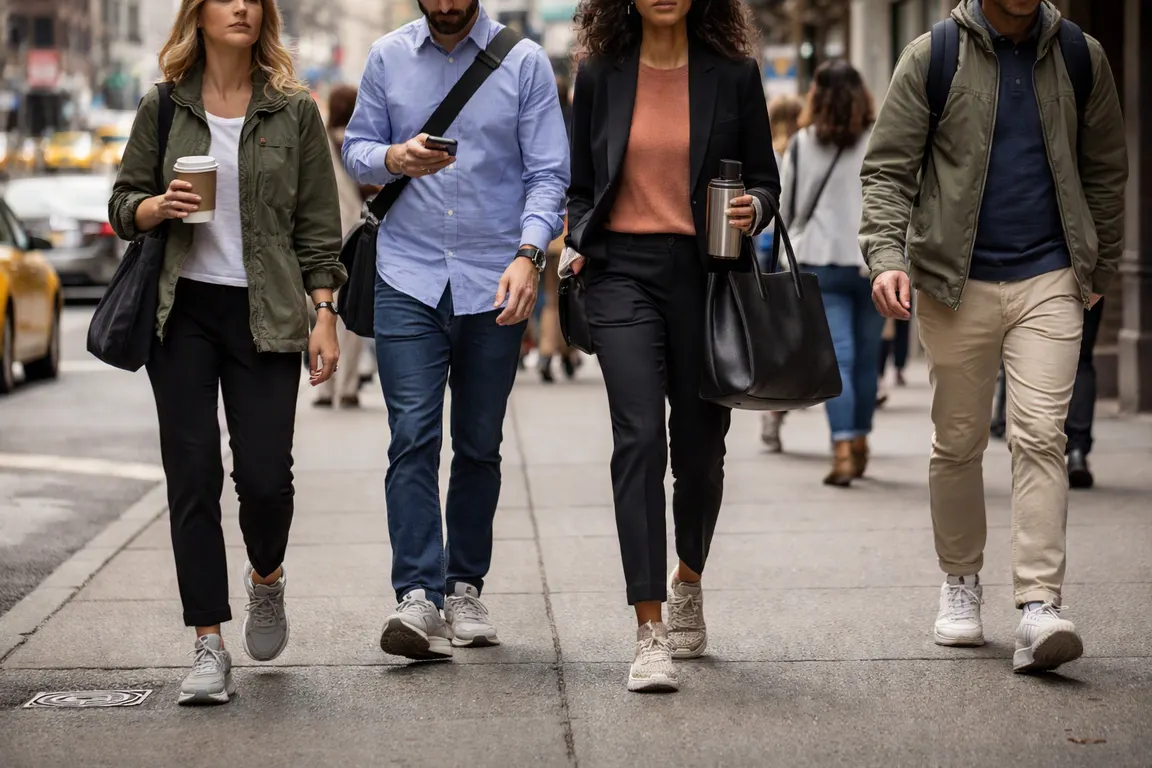
Six New York Post reporters spent several days walking Manhattan’s busiest sidewalks, putting fifteen popular commuter shoe models—including the best commuter shoes—through the city’s relentless foot traffic, shifting weather and abrasive pavement. The team logged miles of concrete, cobblestone and wet surfaces while navigating crowded subway exits, bus stops and street‑level crosswalks.
With millions of New Yorkers relying on walking, subways and buses each day, footwear that resists blisters, slips and fatigue can be a matter of daily safety. The Made It Here Awards 2026’s Best Commuter Shoes category offered a data‑driven look at which designs survive the city’s demanding environment, giving commuters guidance beyond marketing claims.
Reporters evaluated three primary criteria: comfort over long periods, durability of uppers and soles under constant abrasion, and slip resistance on wet or uneven pavement. They also recorded any injuries, noting a handful of blisters that required Band‑Aids and a single slip incident on a rain‑slickened crosswalk.
Over the course of the fieldwork, the team covered roughly ten miles of Manhattan streets, including the steep incline of the Upper West Side, the gritty sidewalks of the Financial District and the slick, newly resurfaced avenues of Midtown. Each shoe was worn for at least two full days, allowing the reporters to assess break‑in periods, arch support and breathability under typical commuter loads.
Findings showed that most models held up under the stress of daily commuting, but performance varied. Boots with reinforced toe caps and rubber lug soles fared best on uneven or debris‑laden sections, while low‑profile flats with cushioned midsoles offered superior comfort on flat, high‑traffic avenues. Heels with wider bases and textured outsoles demonstrated adequate slip resistance but often caused pressure points after prolonged wear.
One pair emerged as the most reliable across all three metrics, consistently receiving high marks for comfort, minimal wear and no reported injuries. The publication is holding off on naming the model pending final verification; a scoring sheet will be released in a follow‑up piece that ranks each shoe from most to least suitable for the city’s commuter.
The implications extend beyond individual shoppers. Retailers can anticipate heightened demand for the top‑scoring designs and may adjust inventory ahead of the spring rush. Shoe manufacturers receive indirect feedback on durability and urban‑specific design features, potentially guiding future product development aimed at city dwellers.
Commuters seeking safer, more comfortable footwear can apply the test’s criteria—comfort over eight‑hour shifts, durability measured by sole wear and upper integrity, slip resistance on wet surfaces, and the absence of injury‑inducing pressure points—to evaluate their own options. The New York Post will publish the full ranking and detailed notes in upcoming issues, offering a practical reference as New Yorkers continue to navigate the city’s relentless sidewalks.