

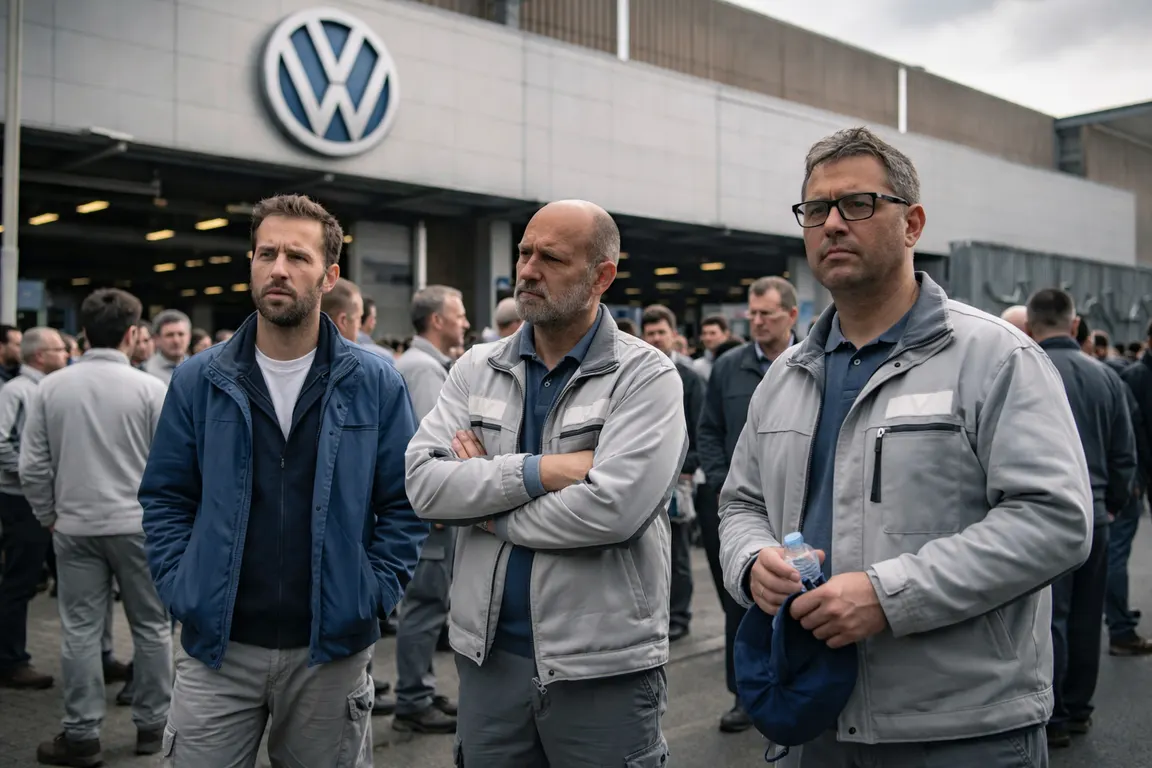
Volkswagen CEO Oliver Blume is planning a major restructuring that could eliminate up to 100,000 jobs, around 15% of the company's global workforce, in response to deteriorating earnings and increasing competition. The planned cuts are a significant response to Volkswagen's struggling financial performance, with first-quarter revenue and operating profit falling, and the company seeking to become more efficient and competitive in a changing automotive market.
Volkswagen's first-quarter revenue fell 2.5% to 75.7 billion euros, while operating profit dropped 14.3% to 2.46 billion euros. The company plans to cut 11 billion euros in costs by 2030. Four German plants may be closed or have production phased out, which would have a significant impact on local communities and economies.
The restructuring plan will be presented to the supervisory board next month. Although there is some uncertainty about the exact details, the planned job cuts will affect around 100,000 employees, primarily in Germany. As the automotive industry continues to evolve, Volkswagen's planned restructuring highlights the challenges faced by traditional manufacturers in adapting to changing market conditions.
The exact timeline for implementation is not yet clear, but the company's efforts to become more efficient and competitive will be closely watched. Volkswagen's ability to navigate this significant restructuring will be crucial in determining its future success in the industry. The company's plans will be presented to the supervisory board next month, marking a critical step in the restructuring process.
The implications of the restructuring for Volkswagen's competitiveness in the automotive market are significant. The job cuts and plant closures will have a substantial impact on local communities and economies. As Volkswagen moves forward with its plans, the company will need to balance its efforts to become more efficient and competitive with the need to support its employees and the communities it operates in.