

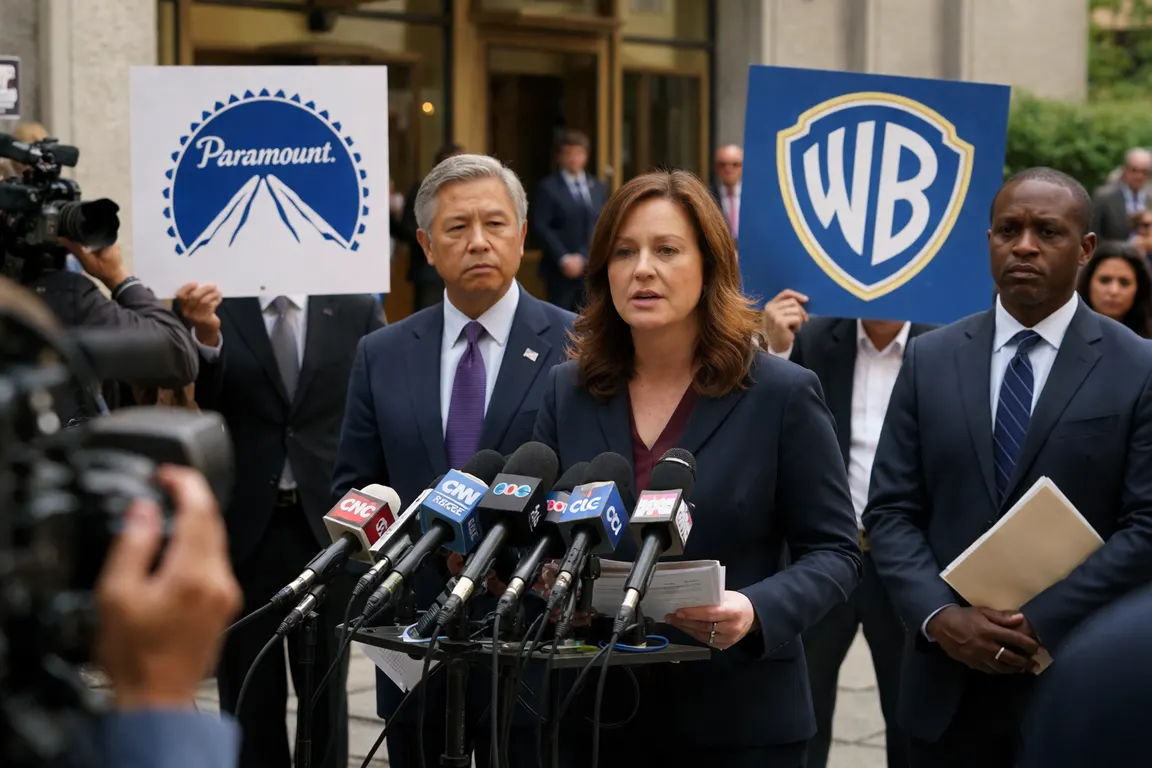
Twelve US states, including California, have filed a lawsuit to block the $110 billion takeover of Warner Bros. Discovery by Paramount, citing the Paramount Warner Bros Deal as a potential threat to competition. The lawsuit, filed in federal court in northern California, aims to prevent the largest media consolidation in Hollywood history. The combined company would control approximately 27% of wide-release theatrical film distribution and a similar percentage of basic cable channel licensing.
The states claim the merger violates the Clayton Act, a federal law that bars mergers likely to substantially reduce competition. They argue that the deal could lead to reduced competition, higher prices, and lower quality content for audiences. Paramount has pledged to release at least 30 films a year for full theatrical runs with a minimum 45-day window.
The lawsuit has been described as 'fundamentally flawed' by Paramount. Despite this, the states' decision to file the lawsuit has sparked a high-stakes battle over the future of the film and television industry. Competition regulators in 24 jurisdictions have already cleared the transaction or allowed their review periods to expire. The takeover battle began last year, with Netflix and Paramount competing to acquire Warner Bros.
Paramount secured the green light from federal antitrust authorities last month. However, the lawsuit could impact the livelihoods of hundreds of actors and directors who have signed a letter opposing the merger. The deal could have significant implications for the film and television industry, potentially leading to consolidation and cost-cutting. The lawsuit's success is uncertain, with some analysts suggesting it is unlikely to block the deal.
The next step will be a federal court hearing to determine the fate of the merger. The outcome of the lawsuit will have significant implications for the industry, and the public will be watching closely to see how it unfolds. The lawsuit highlights concerns about the impact of media consolidation on consumers and the industry as a whole. As the case moves forward, it will be important to consider the potential effects on the market and the parties involved.