

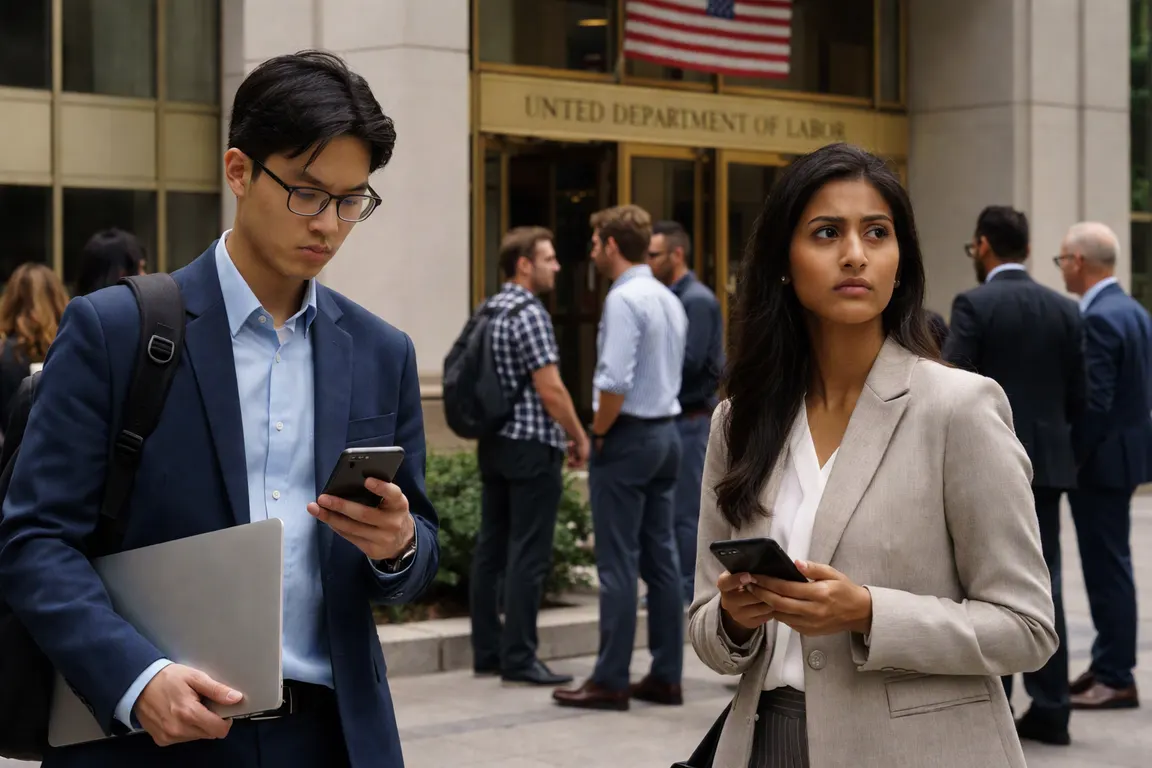
The U.S. Labor Department announced Thursday that Microsoft Corp. and Adobe Inc. have been placed on a suspension list that bars the companies from filing new employment‑based green‑card petitions while multiple federal investigations continue. This action, referred to as the Microsoft Adobe green card suspension, reflects “multiple active federal investigations” into how the firms used the program that lets H‑1B visa holders transition to permanent residency.
Labor Secretary Keith Sonderling said the suspension halts any new green‑card filings for the two companies until the inquiries are resolved. The move threatens the immigration status of thousands of foreign‑born tech workers and marks a rare enforcement step against two of the sector’s largest employers. It comes as the United States faces a persistent talent shortage and a broader Republican‑led push to tighten H‑1B and green‑card pathways, a policy focus that began under the Trump administration.
Under the employment‑based green‑card process, employers sponsor H‑1B workers for permanent residency, a procedure that can take several years. The Labor Department’s notice did not specify how many pending petitions are now in limbo, nor did it give a timeline for lifting the suspensions.
Senator J.D. Vance of Ohio confirmed the suspensions, framing them as a response to alleged abuse of the system. Vance cited concerns that some firms replace U.S. workers with foreign hires. The New York Post reported that the administration alleges Microsoft substituted laid‑off American employees with foreign workers at a ratio of roughly 1.5 to 1, but that figure has not been verified by other outlets. The department’s statement offered no detail on the specific allegations or the scope of the investigations.
For Microsoft and Adobe, the immediate impact is likely operational. Both companies may face hiring delays as they review compliance procedures and possibly suspend new sponsorship requests. Legal and compliance costs could rise, and the scrutiny may affect their reputations among investors and prospective talent. Existing green‑card petitions are not automatically revoked, but the inability to file new ones creates uncertainty for workers planning their careers and residency timelines.
Competitors that rely less on employer‑sponsored visas could see a short‑term recruitment advantage. Some firms may accelerate hiring of U.S. citizens or permanent residents to avoid similar enforcement actions, potentially shifting the tech labor market toward domestic hiring while guidance remains unclear.
The broader policy debate is expected to intensify. Lawmakers and advocacy groups have long criticized the green‑card sponsorship process for perceived exploitation, while industry leaders argue that foreign talent is essential for innovation and growth. The ongoing investigations could set precedents for how aggressively the Labor Department enforces compliance.
Microsoft and Adobe must cooperate with the inquiries and may need to submit corrective action plans to regain eligibility. The Labor Department has not indicated when, or if, the suspensions will be lifted, leaving affected workers and employers in a holding pattern. Stakeholders will be watching for any court filings or legislative proposals that could further reshape the H‑1B and green‑card landscape.