

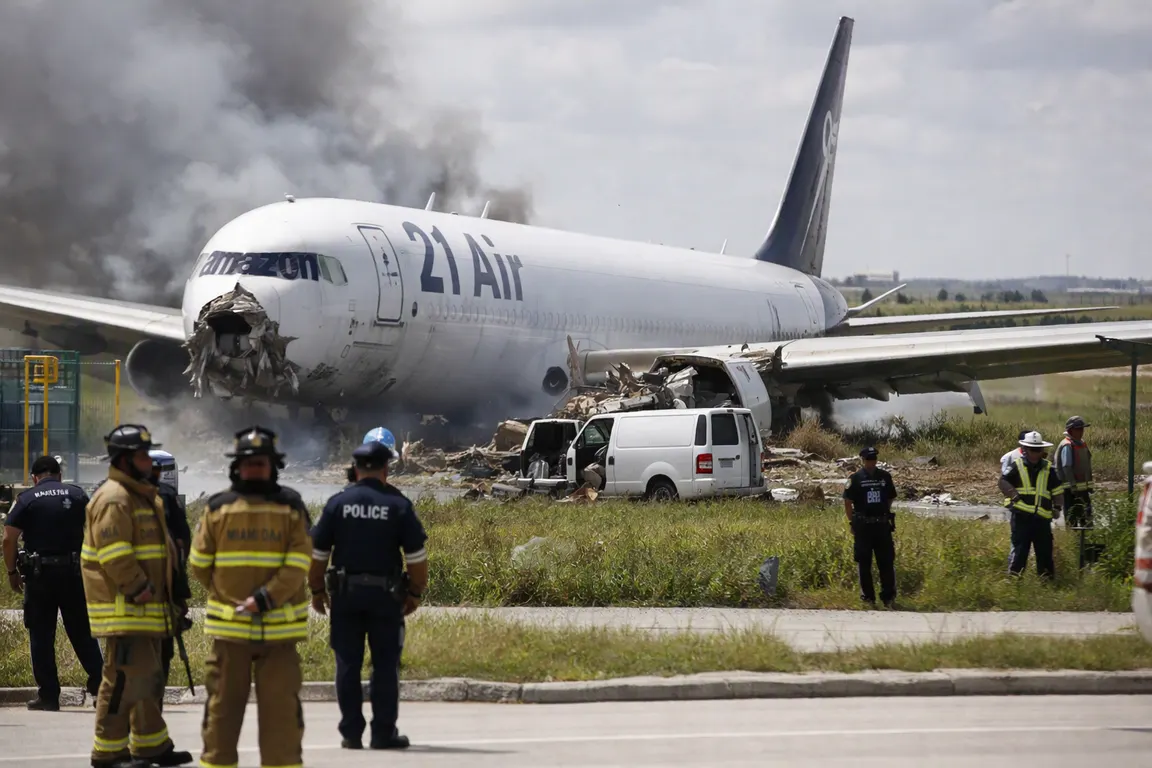
A Miami cargo plane runway overrun involving a Boeing 767‑300 operated by 21 Air for Amazon killed five ground workers and injured three others on Sunday. The aircraft overshot runway 9L at Miami International Airport, breaching the perimeter fence and striking a cleaning‑services van.
The flight was on its third landing of the day, arriving from San Juan, Puerto Rico. After touchdown, the plane traveled about 1,300 feet beyond the paved surface before the fuselage pierced the fence. The tail of the aircraft hit the van, killing its five occupants. A nearby passenger SUV also sustained damage. Emergency crews treated three people on site; two remain in critical condition and one is listed as stable.
The National Transportation Safety Board has taken custody of the flight‑data and cockpit‑voice recorders and is leading the investigation, while the Miami‑Dade Sheriff’s Office is conducting a parallel inquiry. Early NTSB statements indicate the board is reviewing safety recommendations issued after prior runway‑overrun incidents, many of which have not yet been fully implemented by the FAA or airport operators.
Pending recommendations include enhanced runway‑end safety areas, upgraded braking‑performance monitoring, and mandatory crew‑resource‑management training for cargo‑flight crews. The FAA oversees runway‑design standards; the Transportation Security Administration and individual carriers manage crew‑training protocols. NTSB Chairwoman Jennifer Homendy warned that failure to act on these recommendations could allow similar accidents to recur.
Families of the five deceased workers have been notified and are receiving assistance through the cleaning‑services company’s insurance carrier and state victim‑support programs. The three injured pilots were released from the hospital on Saturday after treatment; their conditions remain under observation.
Amazon’s logistics network, which relies on contracted operators such as 21 Air, has faced heightened scrutiny. Company spokespeople expressed condolences and pledged full cooperation with investigators but offered no details on operational changes. Industry analysts say the incident may prompt airlines and cargo carriers to reassess landing‑distance calculations, especially under wet or otherwise adverse runway conditions.
Miami International Airport experienced widespread flight delays and cancellations in the hours after the crash, affecting hundreds of passengers and costing the airport an estimated several million dollars in revenue. Airport officials said they are reviewing runway‑clearance procedures and will work with the FAA to evaluate whether additional safety zones are needed.
The broader aviation community is watching the case closely. If the NTSB’s final report confirms that insufficient runway safety areas or outdated braking‑system standards contributed to the overrun, regulators could issue new mandates affecting cargo operations nationwide.
Investigators expect to release a preliminary report within 90 days, with a full report later in the year. In the interim, the NTSB and FAA are expected to issue safety bulletins, and the Miami airport authority plans to convene a task force to address immediate runway‑safety concerns.