

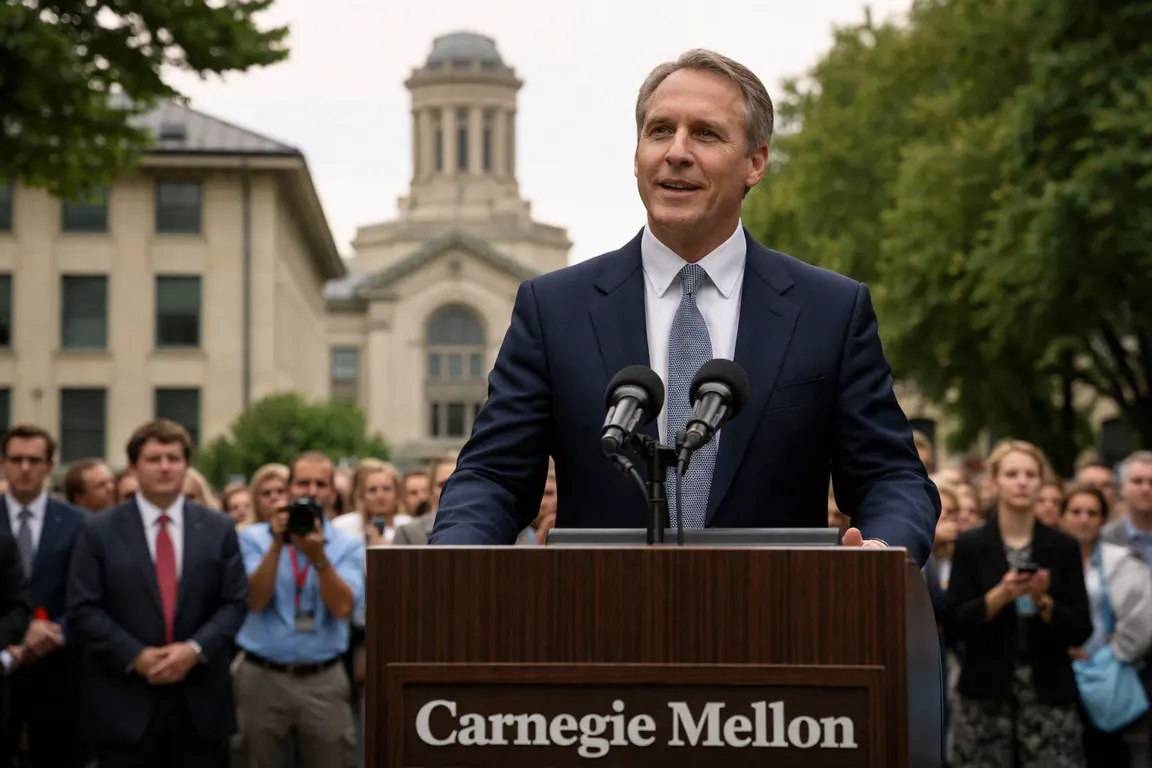
Citadel founder and chief executive Ken Griffin announced a $3 billion pledge to Carnegie Mellon University, the largest single donation ever made to a U.S. college or university. The commitment is split between a $1 billion boost for CMU’s Pittsburgh campus and $2 billion earmarked for a new campus in Miami, Florida. University President Farnam Jahanian said the partnership is intended to expand computer‑science research capacity and broaden the university’s regional economic impact.
At the Pittsburgh site, roughly half of the pledged funds will go to the School of Computer Science. The money is expected to support new laboratories, faculty hires and scholarship programs. The Independent World reported that the remaining Pittsburgh allocation will fund broader campus upgrades, though specific projects have not been detailed.
In Miami, the Guardian highlighted plans for a new CMU campus that would add a major research university to the city’s higher‑education landscape. No construction or opening timeline has been provided, and the university has not released a detailed spending schedule for the $2 billion earmarked for the Florida site.
The size of the donation raises practical questions about how the funds will be divided and spent. Neither CMU nor Griffin’s team has offered a public roadmap, leaving prospective students, faculty and local businesses awaiting clarification on which facilities, scholarships or research initiatives will receive the money.
For current and prospective CMU students, the pledge promises expanded facilities and potentially increased financial aid, especially in computer‑science programs that already attract high‑tech employers. Faculty anticipate new labs and research grants that could draw talent from around the world. Pittsburgh’s growing tech ecosystem may see a surge in venture‑capital activity and industry‑university collaborations as local firms look to tap the enhanced talent pipeline.
Miami stands to gain an academic anchor that could diversify the city’s economy beyond tourism and real estate. A CMU presence could stimulate demand for high‑skill jobs, foster startup incubators and attract additional research funding to South Florida. However, the lack of a concrete construction schedule leaves city planners and community leaders uncertain about when these benefits might materialize.
The donation also reflects a broader trend of billionaire philanthropy shaping higher‑education strategy. Griffin, 57, leads Citadel, described as the most profitable hedge fund in history. Critics caution that large, donor‑directed gifts can influence university priorities, a tension CMU has not publicly addressed.
CMU is expected to release a detailed allocation report later this year. Until then, students, faculty and regional leaders will watch for further information on project timelines, oversight mechanisms and the measurable impact of what remains the most sizable philanthropic investment in U.S. higher education.