

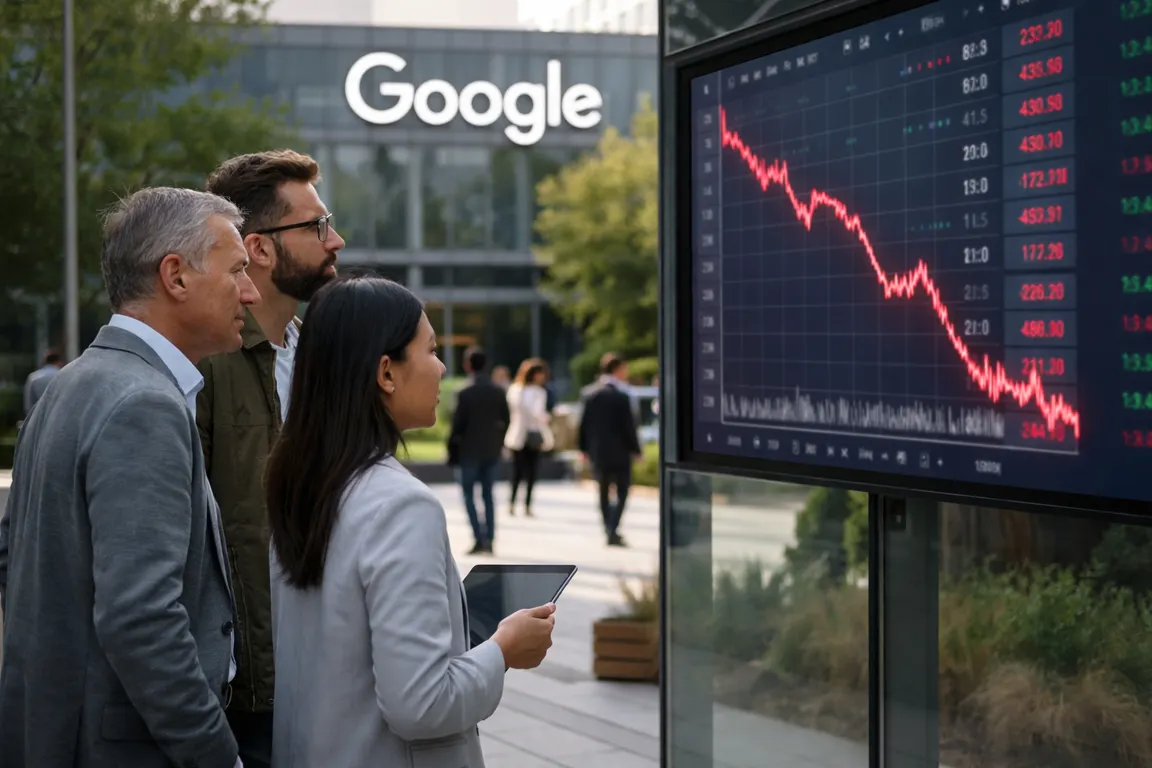
Google's stock price has fallen 3% after the company increased its 2026 capital expenditure guidance to $195B to $205B, sparking concerns about its ability to generate returns on investments in AI infrastructure and research. The company recently reported a significant jump in cloud revenue, with $24.77 billion for the quarter ended June 30, an 82% increase over the same period last year. The company's operating income was $40.77 billion, beating estimates.
The increased capital expenditure guidance has raised questions about Google's ability to compete in the rapidly evolving AI market. Google's AI development efforts, including its Gemini 3.5 Flash Cyber model, are a key part of its strategy. The model is available exclusively to governments and vetted partners. In contrast, SpaceX's market cap of $1.84 trillion, with a price-to-sales multiple of nearly 100x, has also raised questions about its growth prospects.
The implications of Google's increased capital expenditure guidance and AI development efforts are far-reaching, affecting not only the company's stock price but also its ability to compete in the AI market. As investors and analysts weigh the risks and challenges associated with Google's AI development efforts, the company's ability to generate returns on its investments will be closely watched. Google's investments in AI infrastructure and research are a key part of its strategy to remain competitive in the tech industry.
Google's decision to increase its capital expenditure guidance comes as the company faces increasing competition in the AI market. The company's ability to generate returns on its investments will depend on its ability to develop and deploy AI technologies that meet the needs of its customers. The company's Gemini 3.5 Flash Cyber model is a key part of its AI development efforts, and its success will be closely watched by investors and analysts.
The AI market is rapidly evolving, with companies like Google and SpaceX pushing the boundaries of AI development and investment. As these companies invest heavily in AI infrastructure and research, they face increasing scrutiny over their ability to compete in the market. The potential impacts of Google's and SpaceX's AI development efforts are far-reaching, with implications for the broader tech industry and economy.