

Washington issued an Exclusion and Removal Order on July 24 directing civilian federal agencies to purge DeepSeek AI products after the Department of Homeland Security said the models pose multiple security threats linked to Huawei hardware. The order now covers Treasury, State, Justice and other civilian departments and follows a Pentagon and intelligence community ban enacted under the FY 2026 National Defense Authorization Act.
Federal officials must replace DeepSeek‑based tools, a shift that could delay analytics projects, raise procurement costs and limit access to a lower‑cost alternative to Nvidia’s CUDA stack.
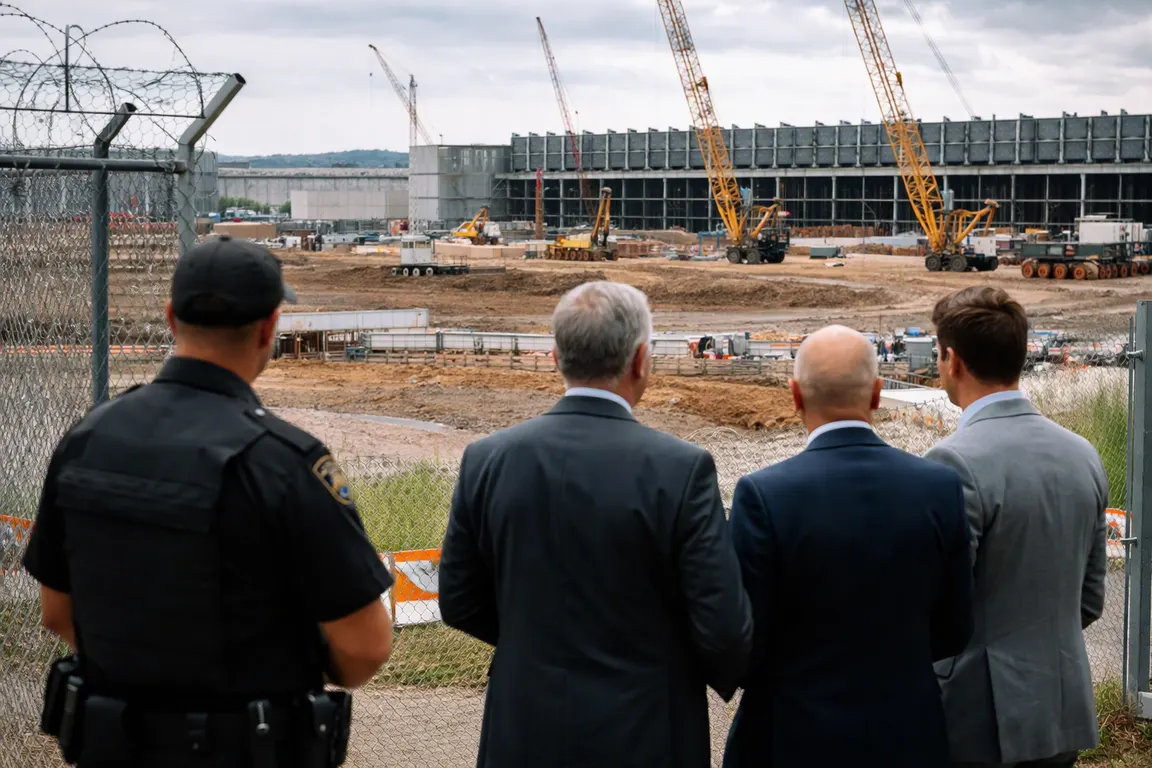
On the same day, Brookfield Asset Management and NextEra Energy announced a $100 billion investment to build a 1.8‑gigawatt AI and high‑performance‑computing data‑center campus on the former Paducah Gaseous Diffusion Plant in Kentucky. The project will be powered by 2 GW of natural‑gas generation and 2.6 GW of battery storage, creating roughly 8,000 construction jobs and 600 permanent positions, with completion targeted for 2032.
A Gallup poll cited in the announcement shows 71 % of Americans oppose local AI data‑center construction, reflecting concerns about land use, energy demand and environmental impact. Financing details remain unclear, leaving analysts uncertain about the mix of equity, debt and any public‑sector incentives.
Also on July 24, a San Francisco magistrate denied bail to Saudi national Abdulrahman Alfozan, accused of planting a listening device at an OpenAI executive meeting. Prosecutors say Alfozan communicated with a Saudi royal about a Saudi AI program and accessed internal OpenAI folders labeled “Saudi Gov Docs.” The Saudi consulate offered a blanket bail guarantee, but the judge kept the suspect detained. Technical specifics of the device and any data exfiltrated have not been publicly verified.
These three developments illustrate how geopolitical rivalry is reshaping the U.S. AI ecosystem. The DHS order forces agencies to turn to domestic vendors or alternative stacks, while the Paducah hub brings unprecedented private capital to a former nuclear site, sparking both economic optimism and local opposition. The OpenAI espionage case underscores lingering national‑security risks for private tech firms.
Policymakers now face a dilemma: protect critical AI infrastructure without stifling innovation or discouraging investment. Options under discussion include targeted funding for U.S. AI hardware, clearer export‑control thresholds and oversight mechanisms for large‑scale data‑center projects. The coming weeks will reveal whether additional DHS directives follow the DeepSeek ban and whether the Paducah project stays on schedule, while the OpenAI case will likely prompt tighter internal security protocols across the tech sector.