

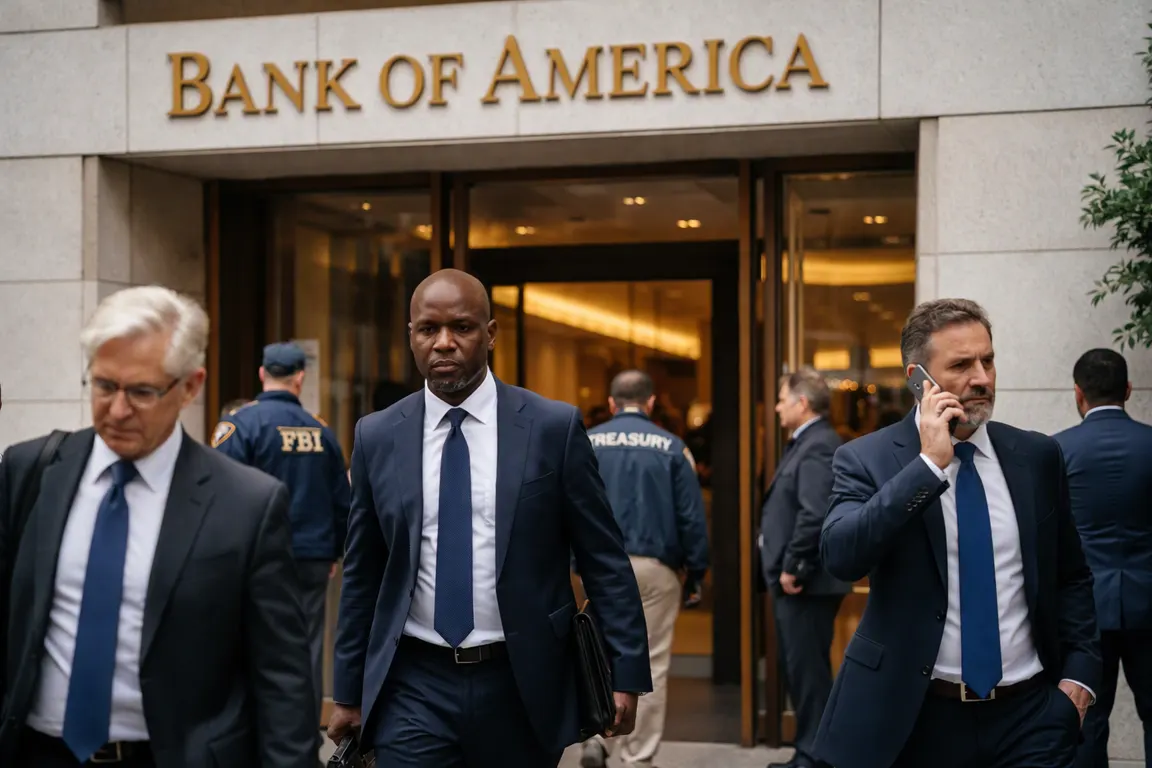
Bank of America AML penalty was announced on Oct. 13, 2026, when the Treasury, OCC and OFAC agreed the bank would pay a combined $1.21 billion for willful violations of the Bank Secrecy Act and multiple sanctions programs. The settlement, the largest anti‑money‑laundering penalty in U.S. history, was disclosed just hours before the bank’s scheduled third‑quarter earnings call.
Regulators said the charge will be treated as a non‑tax‑deductible expense, shaving roughly $0.17 from adjusted earnings per share – about 15 % below consensus forecasts. BofA’s stock fell 1.2 % to $53.94 in regular trading and slipped another 2 % in after‑hours trading. The agencies also ordered third‑party look‑backs and independent reviews, signaling tighter oversight for large U.S. banks that have traditionally viewed compliance as a cost center.
The Treasury broke down the total as $1.2 billion from FinCEN, a $750 million civil penalty from the OCC (credited toward the FinCEN amount) and an $11.6 million sanction‑related fine from OFAC. The OCC called its $750 million penalty the largest ever assessed against a bank, while the Treasury described the overall $1.21 billion settlement as the third‑largest in its history. OFAC identified 475 apparent sanctions violations involving Iran, Russia, narcotics and terrorism programs, labeling them “non‑egregious.” The OCC, in contrast, described the Bank Secrecy Act breaches as “egregious and continued.”
The violations stem from BofA’s failure to file suspicious activity reports on more than $5 billion of transactions, including roughly $1 billion tied to “priority” national‑security risks such as Chinese money‑laundering networks and illicit border‑finance flows. The bank’s own admissions confirm willful breaches of the Bank Secrecy Act, following a Dec. 23, 2024 OCC cease‑and‑desist order that flagged systemic BSA and sanctions deficiencies but did not impose a monetary penalty at the time.
Analysts note the fine is about 40 % of the $3 billion settlement TD Bank reached in 2024 for similar failures. Unlike TD’s case, BofA’s penalty carries no criminal plea or asset cap, but it does require extensive remediation, including third‑party audits of transaction‑monitoring systems and expanded compliance staffing mandates. Investors will watch how the bank integrates these requirements into its risk framework, as the added oversight could affect product rollout timelines and customer onboarding.
The coordinated action by three agencies suggests a more unified enforcement posture. Regulators have warned that institutions with “revenue‑first” cultures may face heightened scrutiny, and the BofA case could set a benchmark for future AML and sanctions enforcement.
BofA’s next public appearance will be its Q3 earnings call on Oct. 16, where senior executives are expected to detail the $0.17‑EPS charge and outline the remediation plan approved by regulators. How the bank balances the cost of compliance upgrades with its growth targets will be a key focus for shareholders and policymakers.