

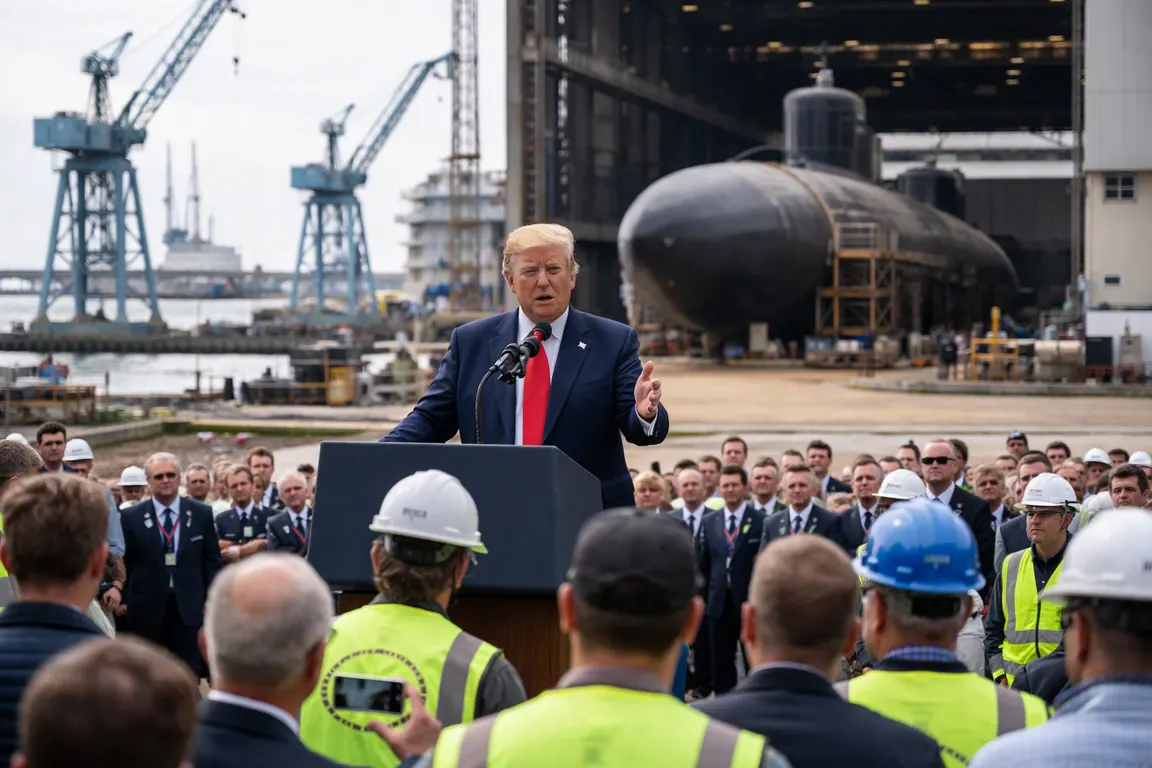
President Donald Trump announced Tuesday that Anduril Industries will receive a $2.9 billion U.S. Navy contract to produce components for Virginia‑class nuclear attack submarines. The firm will invest $3.7 billion of private capital to convert the former Bethlehem Steel mill at Sparrows Point into a high‑tech shipyard, slated to open in 2030 on the 3,300‑acre Tradepoint Atlantic complex. The Anduril submarine shipyard is expected to create more than 3,000 direct construction and manufacturing jobs.
The combined federal award and state and county tax incentives – described by Maryland officials as “hundreds of millions of dollars” – are presented as a key element of a broader effort to modernize the U.S. submarine supply chain, which has relied on aging shipyards for decades.
Anduril, a Silicon Valley‑origin defense firm founded by former Oculus chief Palmer Luckey, will lead the effort. While Luckey has contributed nearly $6 million to Republican candidates since 2017, the contract was awarded through the Navy’s standard procurement process, and the agency has said no special treatment was given.
The site’s redevelopment follows the 2012 closure of Bethlehem Steel’s Sparrows Point mill, which left one of the nation’s largest industrial complexes idle. In 2014 the property became Tradepoint Atlantic, a logistics hub that now hosts firms such as Amazon and FedEx. Anduril’s plan adds a manufacturing layer, with an estimated $3.7 billion spend on new production lines, utilities and workforce training.
State and county leaders say the project will boost local tax revenue and help reverse a long‑term employment decline, though they have not disclosed the exact subsidy formula or oversight mechanisms. Critics note several unresolved issues. Environmental groups warn that renewed heavy industry could worsen air and water quality in a community already burdened by pollution and crime. The precise amount of public subsidies remains vague, and no independent audit of the incentive package has been released.
Local officials stress that the majority of the 3,000 jobs will be filled by Baltimore‑area workers, ranging from skilled welders and machinists to logistics coordinators and safety inspectors. Workforce‑development partners are expected to offer apprenticeship programs to address the skill gap, though timelines for those initiatives have not been finalized.
If successful, the shipyard could reshape the U.S. maritime industrial base by diversifying the supply chain for submarine components away from legacy yards in Virginia and Mississippi. At the same time, the involvement of a politically connected firm in a high‑visibility defense contract is likely to attract continued congressional oversight.
The next milestone is the release of a detailed subsidy agreement by Maryland and Baltimore County, which will clarify how public funds are allocated and what reporting requirements will govern the partnership. Observers will watch whether the promised job numbers materialize and how the community balances economic revitalization with environmental stewardship.