

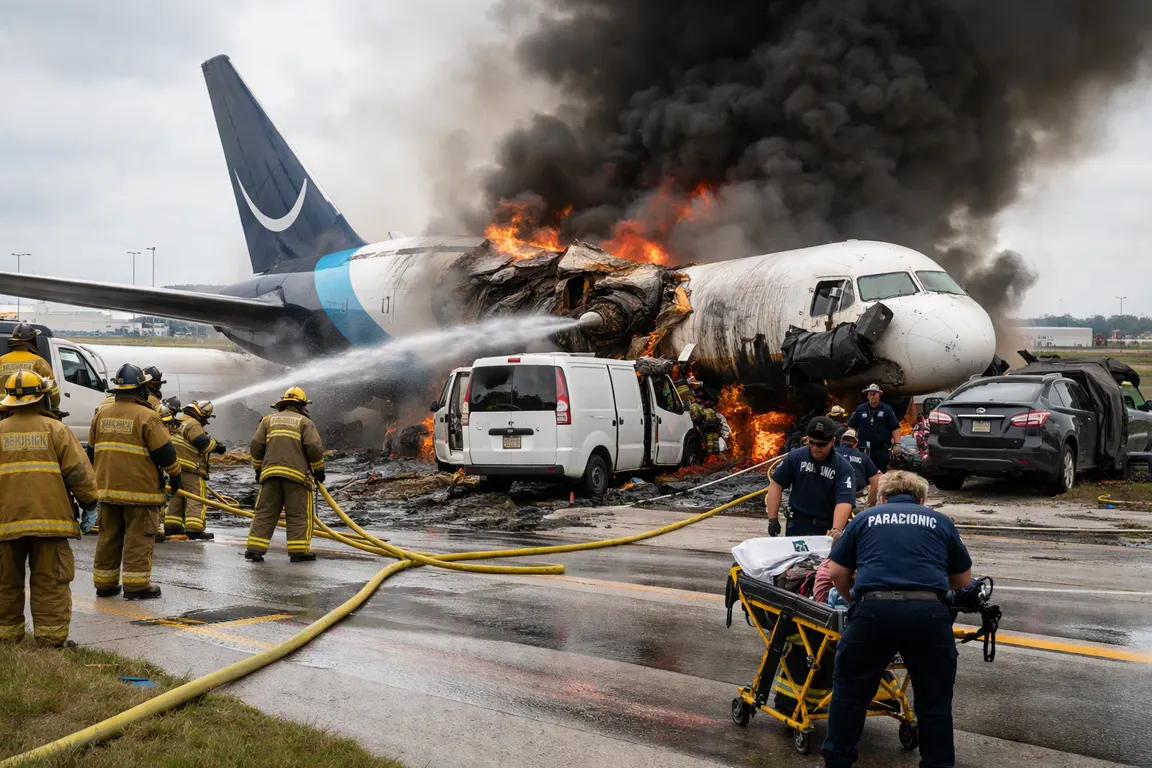
A Boeing 767‑300 cargo aircraft painted in Amazon Prime livery overshot the runway at Miami International Airport on March 12, 2024, striking a cleaning‑company van and a passenger SUV parked near the runway’s end. The collision killed five people and injured five others seriously.
The plane was on a routine landing when it failed to stop within the available runway length. It continued beyond the paved surface, hitting the two vehicles. All occupants of the cleaning‑crew van and the driver of the SUV were killed; the remaining five occupants suffered injuries that required on‑site medical treatment.
Emergency responders arrived within minutes, secured the scene and temporarily closed Runway 9L/27R while recovery crews removed the wreckage and tended to the victims. Federal investigators from the National Transportation Safety Board (NTSB) have recovered the flight data and cockpit voice recorders and opened a formal investigation.
Investigators will examine runway condition, aircraft braking performance, weather at the time of landing, and the timing of ground‑vehicle placement relative to the aircraft’s touchdown point. The NTSB has not released a preliminary cause, stressing that both mechanical and human factors will be considered.
Miami International Airport officials said the incident will trigger a review of ground‑vehicle clearance procedures. The airport’s operations manager noted that standard protocol requires vehicles to stay clear of the runway safety area until an aircraft has come to a complete stop and received clearance to vacate the runway. The presence of the van and SUV in the aircraft’s overrun path suggests a lapse in communication or timing.
Amazon’s air‑freight division, which contracts the aircraft to a third‑party carrier, issued a statement expressing condolences to the victims’ families and confirming cooperation with investigators. The company has not announced changes to its flight‑scheduling or ground‑handling practices, but analysts expect the crash to prompt a reassessment of risk‑management strategies across the cargo‑airline sector, where tight turnarounds and high aircraft utilization can pressure ground crews.
Families of the deceased are receiving counseling services provided by the airport and local charities, while the injured survivors are being treated at nearby hospitals. The incident has drawn attention from the broader logistics community, as any regulatory tightening could affect cargo throughput, insurance costs and the economics of time‑critical deliveries.
The NTSB’s preliminary report, expected within 90 days, will outline the evidence gathered so far and may include safety recommendations. In the meantime, Miami International Airport has pledged to expedite its internal review and work with the Federal Aviation Administration to align ground‑vehicle operations with best‑practice safety standards, aiming to prevent a repeat of this fatal overrun.