

Amazon cargo plane crash kills five at Miami airport
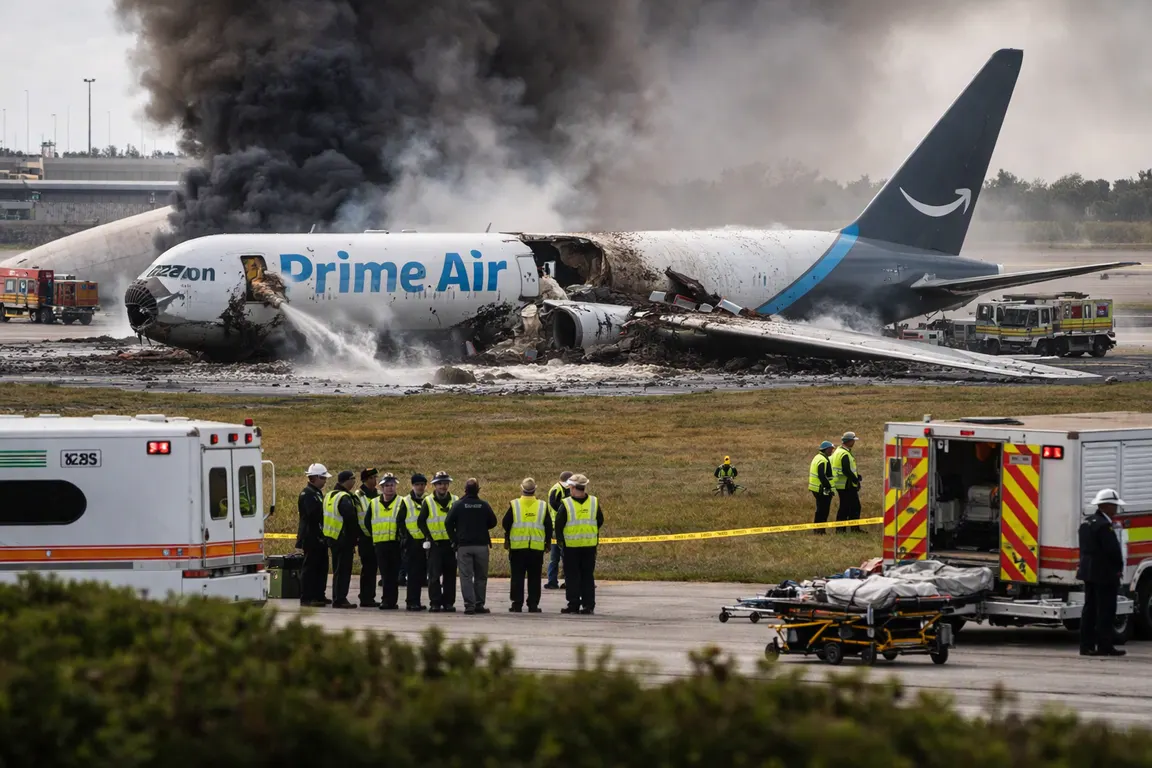
A federal investigation was opened Monday into the Sunday crash of an Amazon cargo plane, a Boeing 767 used by Prime Air, that overran runway 8L at Miami International Airport, killing five airport workers and injuring five others.
The aircraft, bound for a regional distribution hub, touched down well beyond the normal landing zone at a high speed, skidded off the paved surface and struck several ground vehicles before coming to rest near a parking lot. Video from witnesses shows the jet wobbling on impact and storm clouds overhead, though officials have not linked weather to the overrun.
The Federal Aviation Administration and the National Transportation Safety Board began a formal inquiry on Monday. Investigators will retrieve the flight‑data and cockpit‑voice recorders, examine runway surface conditions, and review the plane’s weight and balance calculations. They will also interview the flight crew, air‑traffic controllers and emergency responders. Early speculation from experts cited by The Guardian and NBC points to excessive landing speed and a late touchdown, but no cause has been confirmed.
Five airport workers and ground‑crew members were killed; five more, some seriously, were taken to local hospitals. Families have been notified, and the airport’s emergency operations center has coordinated medical care and counseling. Amazon issued a statement expressing condolences and pledging full cooperation, without commenting on its operational practices.
The accident raises broader questions about cargo‑plane operations at busy airports. Miami International handles a high volume of freight traffic, and runway 8L is a primary arrival path for both passenger and cargo aircraft. If investigators find that runway length, surface condition or procedural lapses contributed to the overrun, the FAA and airlines may need to revisit landing‑distance requirements for heavy freighters, crew training and approach briefings, or even consider runway extensions.
The runway closure triggered an immediate ground stop, grounding flights across the airport and causing widespread delays and diversions. Airport officials have begun a phased reopening, prioritizing safety inspections before resuming normal traffic flow. The FAA announced temporary measures, including more frequent runway inspections and revised landing guidance for heavy aircraft, while the investigation proceeds.
Amazon’s fleet of Boeing 767 freighters could face heightened scrutiny. Analysts note that any recommendation to modify loading procedures, weight limits or crew‑rest requirements could affect the company’s logistics network nationwide. The carrier has not disclosed any operational changes, but the probe’s findings could influence how Amazon and other freight operators schedule deliveries and manage risk.
Investigators have not ruled out weather, mechanical failure or human error as contributing factors. As data from the flight‑data recorder is analyzed, the aviation community will watch for recommendations that could tighten runway safety standards and improve cargo‑plane landing protocols. Until a cause is confirmed, the focus remains on supporting victims’ families, restoring airport operations and preventing similar tragedies in the future.