

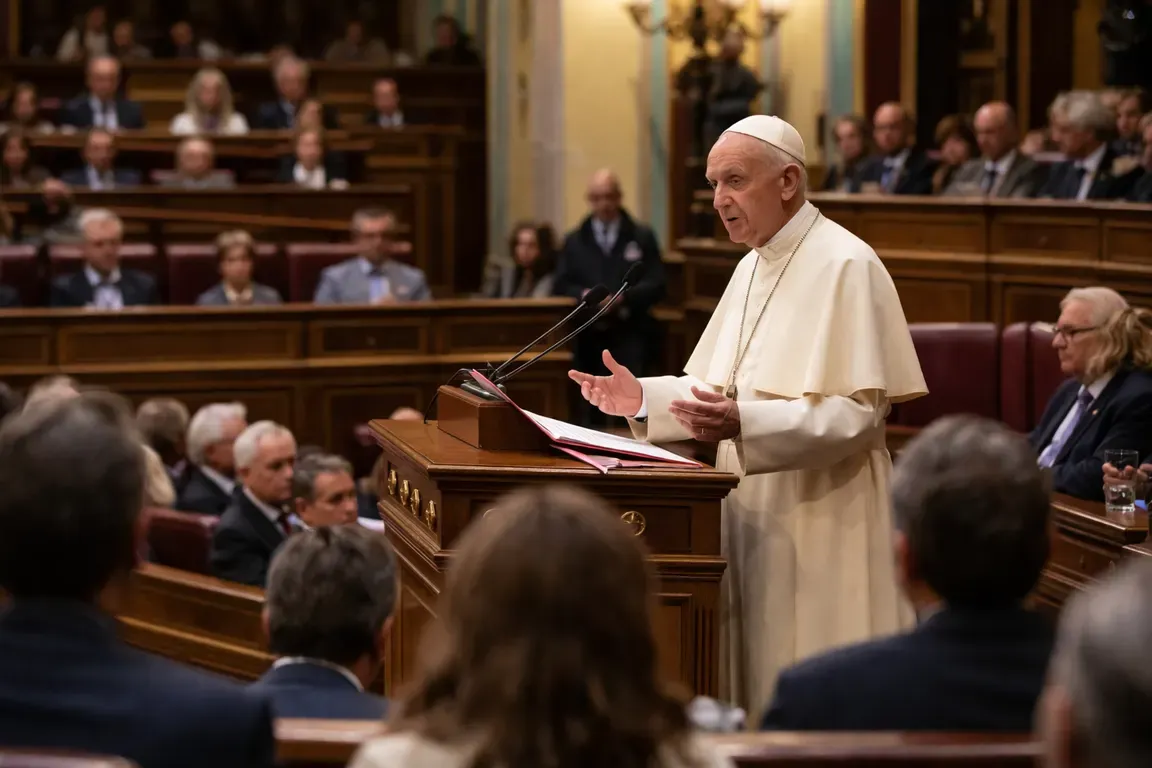
Pope Leo XIV addressed the Spanish parliament on Monday, calling for a unified global response to the 'tragic drama' of migration and urging lawmakers to defend life 'from conception to its natural end.' His visit and address come at a time when the Catholic Church is facing criticism for its handling of sexual abuse cases and as Spain is dealing with issues of migration and social polarization.
The Pope's words and actions are particularly significant given the estimated 200,000 minors who have suffered abuse by clergy in Spain since 1940. During his visit, the Pope met with victims of clerical sexual abuse, although some victim groups have complained about being excluded from the meeting. One group expressed disappointment that the Pope was not listening to a 'sufficiently large and solid representation of victims.'
The Pope's visit to Spain, which began on Saturday and will conclude on Friday, includes a trip to the Canary Islands to pay tribute to migrants who have lost their lives at sea. The Spanish government and the Catholic Church in Spain signed an agreement in March to compensate victims of clerical sexual abuse. The Pope's call for a global response to migration may be met with skepticism by European leaders, who have struggled to develop a unified approach to the issue.
As the Catholic Church continues to grapple with the fallout from clerical sexual abuse scandals, the Pope's visit and address offer a unique opportunity for him to confront these issues and offer a vision for a more compassionate and just society. The Pope's next step will be to follow through on his commitment to change, with many watching to see what concrete actions he will take to address the issue of clerical sexual abuse and support victims.
The Pope's visit has sparked mixed reactions, with some hailing his commitment to addressing migration and social issues, while others criticize the Catholic Church's handling of sexual abuse cases. The Spanish government's agreement to compensate victims of clerical sexual abuse is seen as a step in the right direction, but many argue that more needs to be done to address the root causes of these issues. As the Pope concludes his visit to Spain, attention will turn to whether his words will be followed by concrete actions to address the complex issues facing the Catholic Church and society at large.