

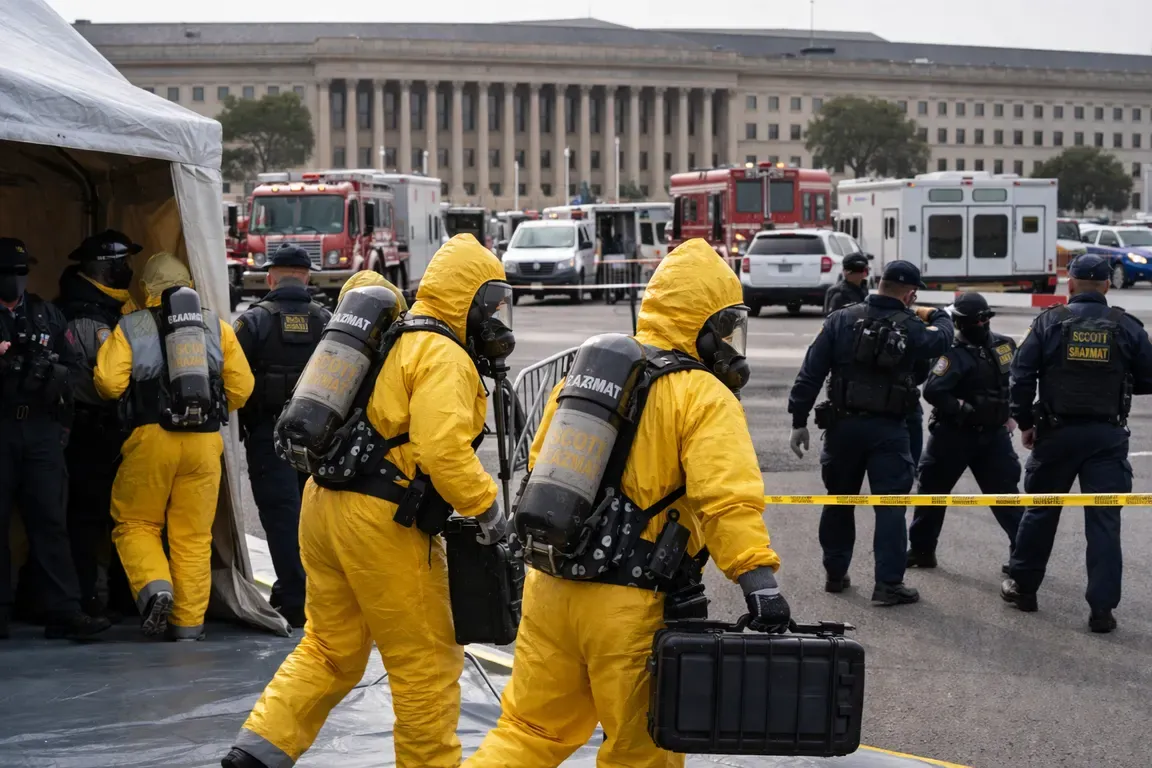
A suspected hazardous materials incident triggered a shelter-in-place order at the Pentagon on Thursday morning, prompting a response from hazmat teams and raising concerns about the safety of personnel and visitors during the Pentagon lockdown. The incident highlights the importance of emergency preparedness and response, as the Pentagon, a symbol of US military power, was temporarily locked down.
The Pentagon's systems detected an air quality issue, according to Pentagon spokesman Sean Parnell, who confirmed the incident and the response. Hazmat crews and emergency response teams were deployed to the Pentagon, and a shelter-in-place order was issued for the affected area. The order was later lifted after the situation was deemed safe.
The Department of Defense executed standard protection protocols, and personnel and visitors at the Pentagon were affected by the shelter-in-place order. The exact nature and cause of the air quality issue are not specified. The sequence of events began with the Pentagon's systems detecting an air quality issue, followed by the deployment of hazmat crews and emergency response teams, and the issuance of a shelter-in-place order.
Questions remain about the cause of the air quality issue and the measures in place to prevent similar incidents in the future. Pentagon spokesman Sean Parnell confirmed that the situation was under control, but the exact cause of the air quality issue remains unclear. The Pentagon will likely review its emergency response protocols and procedures to ensure that similar incidents can be prevented or mitigated in the future.
For now, the focus is on determining the cause of the air quality issue and ensuring the safety of personnel and visitors. An investigation into the incident is likely to follow, and the results may provide more information about the cause and the response. The incident may have caused concerns among personnel and visitors, and it is unclear how many people were affected by the shelter-in-place order. The Pentagon has returned to normal operations, but the incident serves as a reminder of the importance of emergency preparedness and response.