

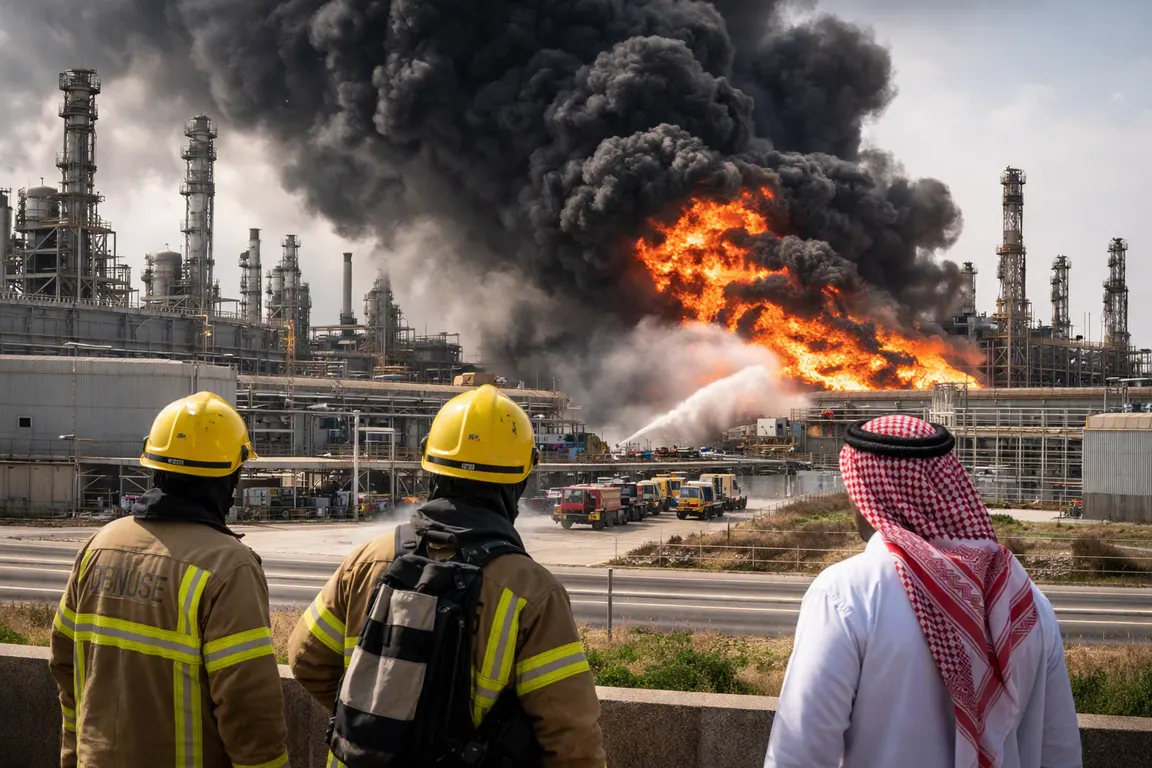
A recent attack on Saudi Aramco's Jazan refinery, claimed by Iran-backed Houthis, has sparked concerns over the safety of oil exports and regional stability. The refinery, located on Saudi Arabia's southwestern Red Sea coast, is capable of producing 400,000 barrels of oil per day. A fire resulting from the attack was later extinguished.
The attack also targeted the port of Mocha in western Yemen, causing several explosions and a large pillar of smoke. These incidents have raised concerns over the escalating tensions in the region, which could impact global energy markets. The US and Iran are engaged in negotiations to address regional issues, but progress has been slow.
The closure of the Strait of Hormuz, a critical maritime chokepoint, has already led to reduced vessel crossings, affecting trade and commerce in the region. Iran's Foreign Minister Abbas Araghchi stated that direct talks with the US are currently challenging due to US actions. The situation has significant implications for global energy markets and regional stability.
As the situation unfolds, the key question is what concrete steps will be taken to address the current tensions and ensure the safe passage of oil exports. The answer to this question will have significant implications for the region and the global economy. The safety and security of people in the area are also a major concern, as the escalating tensions between Iran and the US could have broader regional implications.
The attack on the refinery and port could impact global oil prices and disrupt energy markets. The reduced vessel crossings in the Strait of Hormuz have already affected trade and commerce in the region. The international community is watching the situation closely, as the outcome will have far-reaching consequences for the region and the world.