

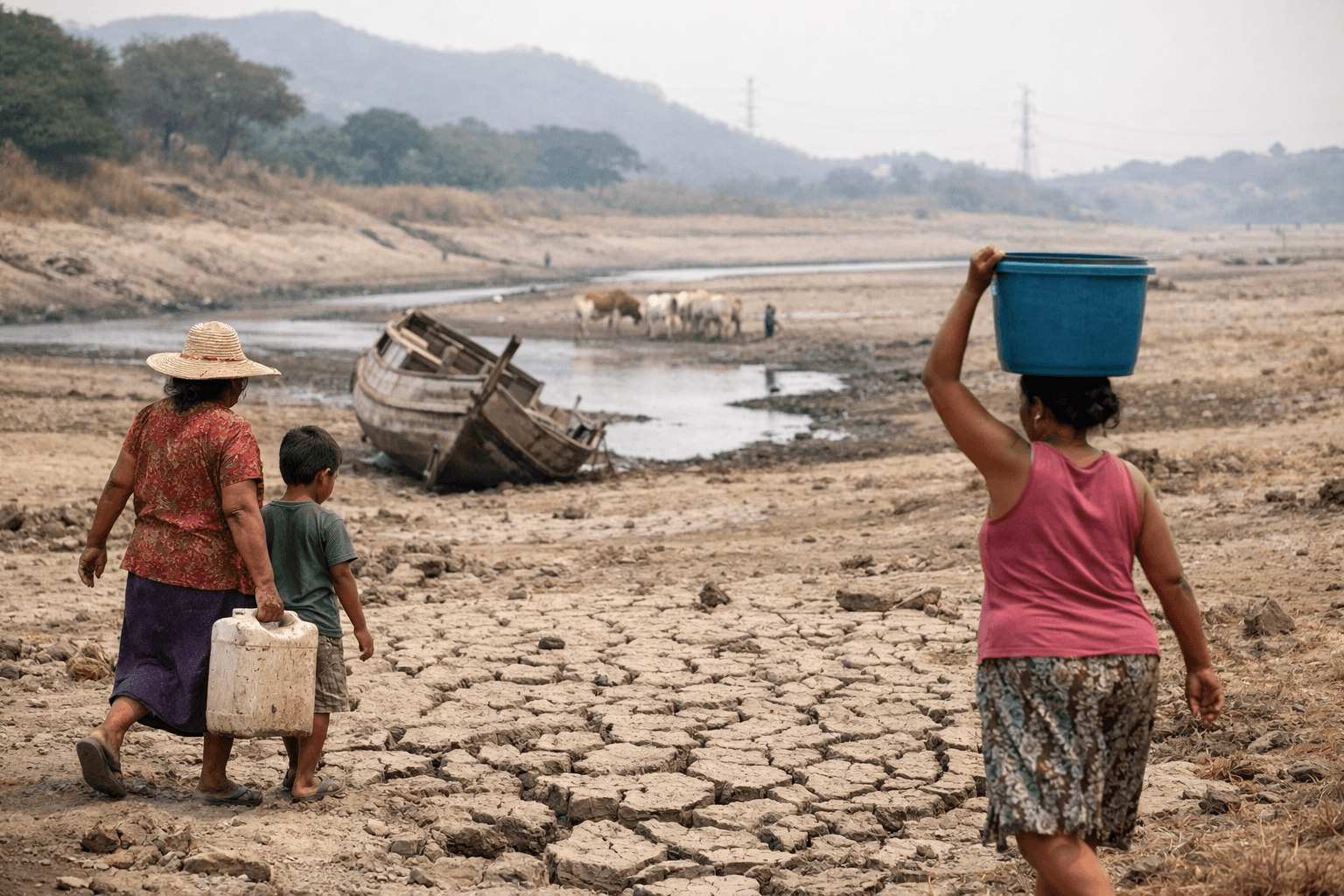
The World Meteorological Organization has confirmed the onset of El Niño, with an 80% chance of the phenomenon developing between June and August. This confirmation comes as UN chief Antonio Guterres has called El Niño an 'urgent climate warning' and urged countries to take climate action. El Niño is expected to bring extreme weather conditions, including floods, droughts, and heatwaves, affecting millions of people worldwide.
The WMO chief, Celeste Saulo, has warned that El Niño could exacerbate drought and heavy rainfall and increase the risk of heatwaves. The last El Niño contributed to making 2023 the second-hottest year on record and 2024 the all-time high at around 1.55C above the 1850-1900 pre-industrial average. The WMO has predicted below-normal rainfall in the northern Greater Horn of Africa and below-average monsoon rainfall in south Asia during the critical June-September rainy season.
As the world braces for the impact of El Niño, the question is whether countries are prepared to mitigate its effects and take climate action to reduce the risk of extreme weather events. Millions of people worldwide, particularly in climate-sensitive sectors like agriculture, water management, energy, and health, will be affected by El Niño. The WMO notes that there is no evidence that climate change increases the frequency or intensity of El Niño events, although it can amplify the associated impacts.
With the likelihood of El Niño developing by November being near or above 90%, countries must bolster their early warning systems and take immediate action to reduce the risk of extreme weather events. The next step for countries is to invest in climate-resilient infrastructure and develop strategies to support communities that will be most affected by El Niño. By taking proactive measures, countries can mitigate the effects of El Niño and reduce the risk of extreme weather events, ultimately protecting the lives and livelihoods of millions of people worldwide.