

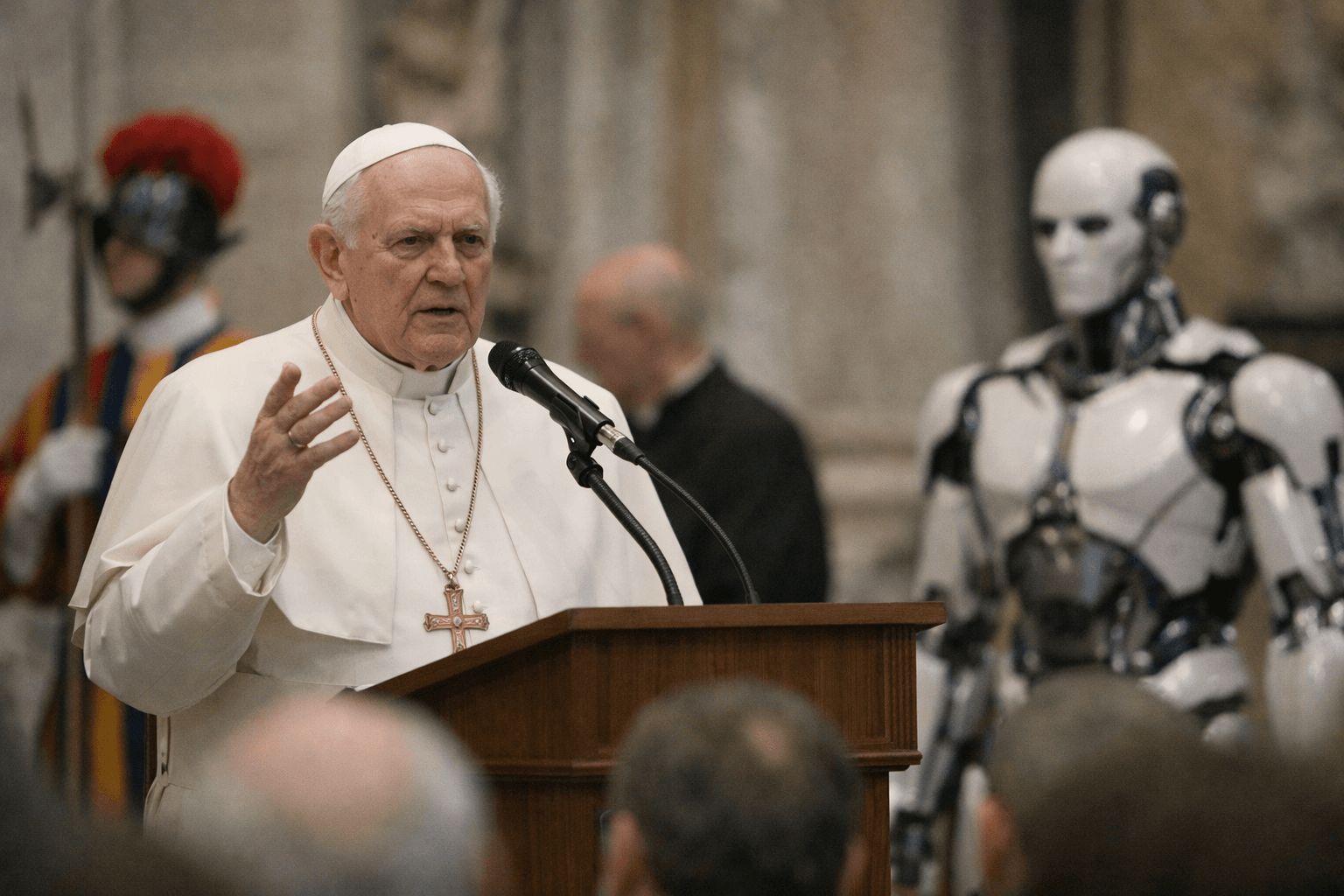
In a sweeping warning, Pope Leo XIV has called for the disarming of artificial intelligence, cautioning that its unchecked development poses a significant threat to human dignity. The pope's encyclical, Magnifica Humanitas, presents a stark assessment of the risks associated with AI, likening its potential impact to new forms of slavery. With this bold declaration, the pontiff has sparked a global conversation about the need for responsible AI development, one that prioritizes human well-being over technological advancement.
The development and use of artificial intelligence has become a contentious issue, with many experts warning about the potential risks and consequences of unchecked AI development. As the tech industry continues to push the boundaries of what is possible with AI, concerns about its impact on society have grown, from the exploitation of workers to the exacerbation of social and economic inequalities.
The pope's message is not just a warning, but a call to action, urging world leaders and the tech industry to reexamine their approach to AI development. By referencing cultural giants such as Plato, Beethoven, and JRR Tolkien, the pope illustrates the importance of human dignity and the need for a more nuanced approach to AI development. The Vatican's unprecedented apology for its role in the slave trade and its historical justification of slavery serves as a poignant reminder of the dangers of unchecked power and the importance of accountability. The presence of AI experts at the Vatican alongside the pope underscores the complexity of the issue and the need for collaboration in addressing it.
The implications of the pope's warning are far-reaching, with significant consequences for individuals and communities around the world. Content moderators, who are forced to watch disturbing material as part of their job, are just one example of those who may benefit from a more responsible approach to AI development. Children exploited to extract rare earth elements used in AI technology, communities disproportionately affected by the environmental impact of AI development, and individuals at risk of being displaced by automated jobs and algorithms all stand to gain from a renewed focus on human dignity.
As the world grapples with the challenges posed by AI, the pope's warning serves as a timely reminder of the need for caution and responsibility. The question now is whether the tech industry and world leaders will heed the pope's call to action, and what steps they will take to disarm AI and prioritize human dignity. The consequences of inaction are stark, and the potential benefits of a more responsible approach to AI development are significant, making the pope's warning a crucial turning point in the ongoing conversation about the future of artificial intelligence.