

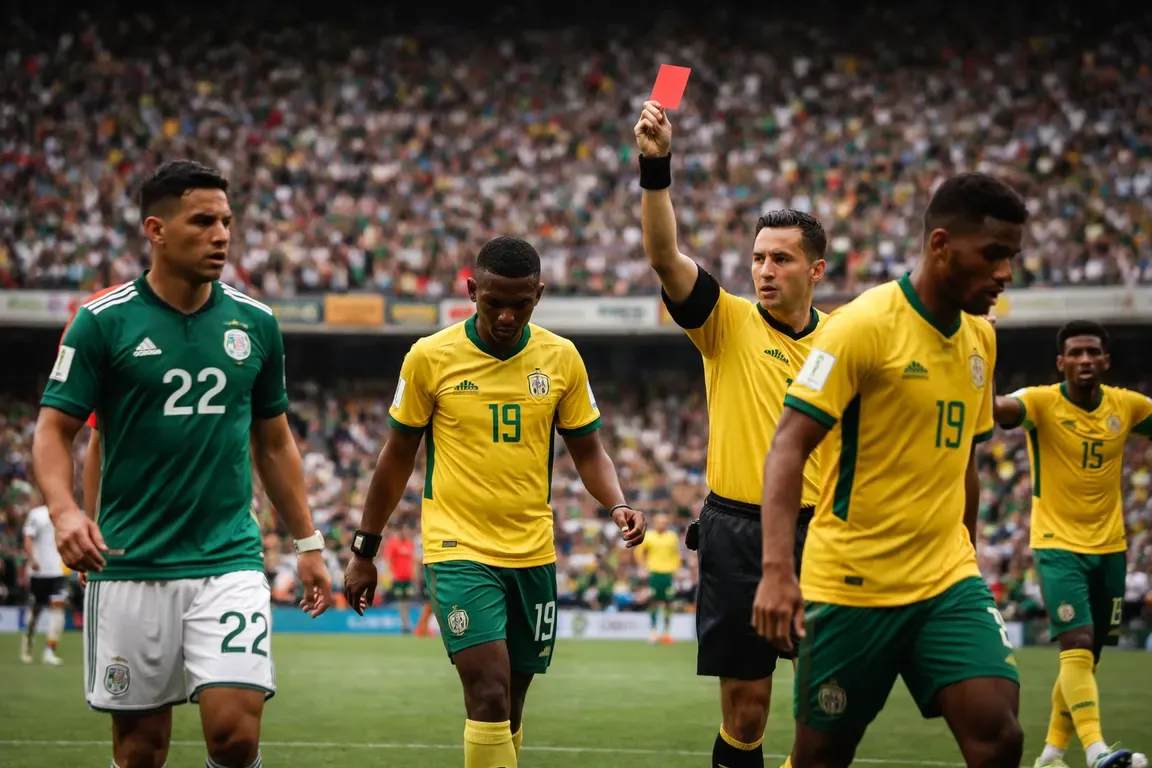
The World Cup 2026 has begun with a dramatic tone, marked by multiple red cards issued on the opening day. A total of three players were sent off in the Mexico vs. South Africa match at the Azteca Stadium, which Mexico won 2-0. This high number of red cards raises questions about the referees' strictness and potential impact on the tournament.
The match between Mexico and South Africa saw three red cards, a rare occurrence in a single World Cup match, according to reports from Al Jazeera and BBC News. Mexico, a co-host of the World Cup 2026, played against South Africa in the opening match, and the outcome has left both teams and fans questioning the implications of the red cards.
As the World Cup 2026 unfolds, the question on everyone's mind is whether the referees' strict approach will continue, and what this might mean for the teams and the fans. Teams may need to adapt their strategies to avoid receiving red cards, which could affect player morale and the overall dynamics of the tournament. The potential consequences for players and teams receiving red cards in the World Cup are significant, and fans are left wondering how this will impact the competitive balance of the tournament.
The next match for Mexico will be closely watched to see if the team can maintain their winning streak without receiving any red cards. As the tournament progresses, teams will be watching closely to see if the referees maintain their strict approach, and how this will affect the outcome of the matches. The high number of red cards on the opening day has set a precedent, but it remains to be seen how teams will respond.
The World Cup 2026 has started, and the opening day has already seen a significant impact from the referees' decisions. The question now is how the referees' approach will shape the rest of the tournament. With the tournament just beginning, fans and teams will be watching closely to see how the referees' approach evolves, and what this means for the competition.
The impact of the red cards on the teams and the fans will be a key aspect to watch as the tournament progresses. The World Cup 2026 is expected to be a highly competitive tournament, and the referees' decisions will play a crucial role in shaping the outcome. As the tournament continues, it will be important to see how the teams adapt to the referees' approach, and how this affects the overall dynamics of the competition.