

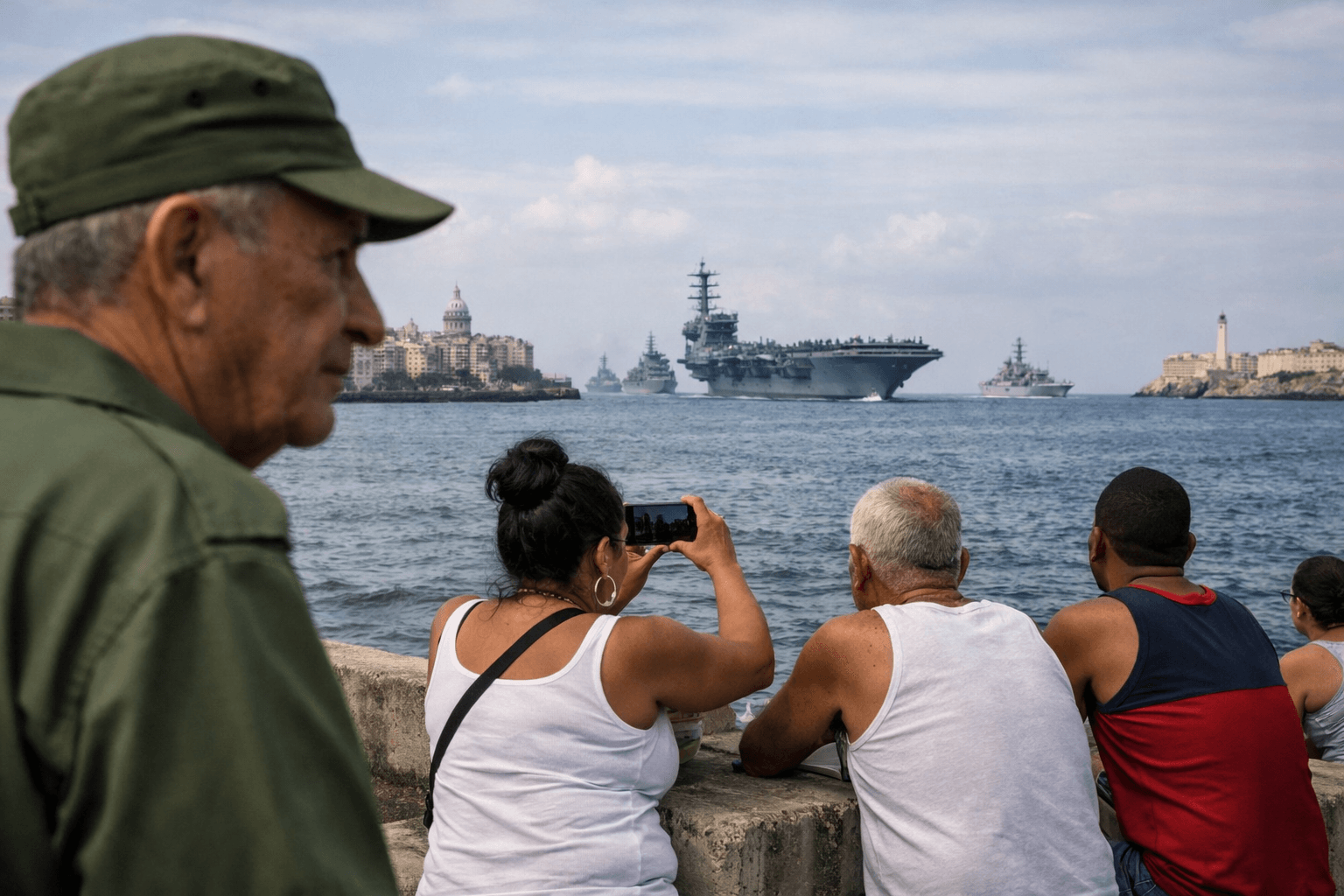
The indictment of former Cuban leader Raul Castro on charges of murder and conspiracy has sparked a new wave of tensions between the US and Cuba, leaving many to wonder if the US is seeking regime change on the island nation. As the USS Nimitz aircraft carrier and its escort warships enter the Caribbean, the Cuban government is bracing for a potential military confrontation that could have devastating consequences for its already struggling population. The move has been met with outrage from the Cuban government, which has called the indictment a fraudulent case and a public attack on a public figure.
The US and Cuba have a long and complex history, with the US imposing a trade embargo on the island nation in 1960. In recent years, the US has taken steps to normalize relations with Cuba, but the current administration has reversed some of these efforts, seeking to exert pressure on the Cuban government to implement reforms. The US has offered Cuba $100 million in aid in return for reforms, but the deal is contingent on circumventing the military-backed conglomerate Grupo de Administración Empresarial S.A., which dominates the island's economy.
The people of Cuba are already suffering from a severe economic crisis, with power outages of up to 20 hours a day, taps running dry, and runaway inflation causing the price of basic goods to soar. Fabian Fernandez, a 30-year-old accountant in Havana, is already struggling to make ends meet and is worried about the potential consequences of the US actions. I'm not sure how much more we can take, he said. The economy is already in shambles, and if the US imposes more sanctions or takes military action, it could be catastrophic. The Cuban government has urged citizens to protest outside the US embassy in Havana, and many are taking to the streets to express their outrage and frustration.
The US actions towards Cuba have sparked concern from the international community, with many countries urging calm and diplomacy. The European Union has called for a peaceful resolution to the tensions, while Russia and China have expressed support for the Cuban government. As the situation continues to escalate, it remains to be seen how the US will achieve its goals in Cuba, and what the ultimate cost will be for the people of the island nation. The current administration's willingness to use military force to achieve its objectives has raised concerns about the potential for a wider conflict, and the impact on the broader region.
The consequences of the US actions towards Cuba could be far-reaching, with the potential to destabilize the entire region. As the situation continues to unfold, one thing is clear: the people of Cuba are caught in the middle, and their lives are hanging in the balance. With the US showing no signs of backing down, and the Cuban government refusing to give in to pressure, the stage is set for a potentially devastating confrontation that could have lasting consequences for the island nation and the world.