

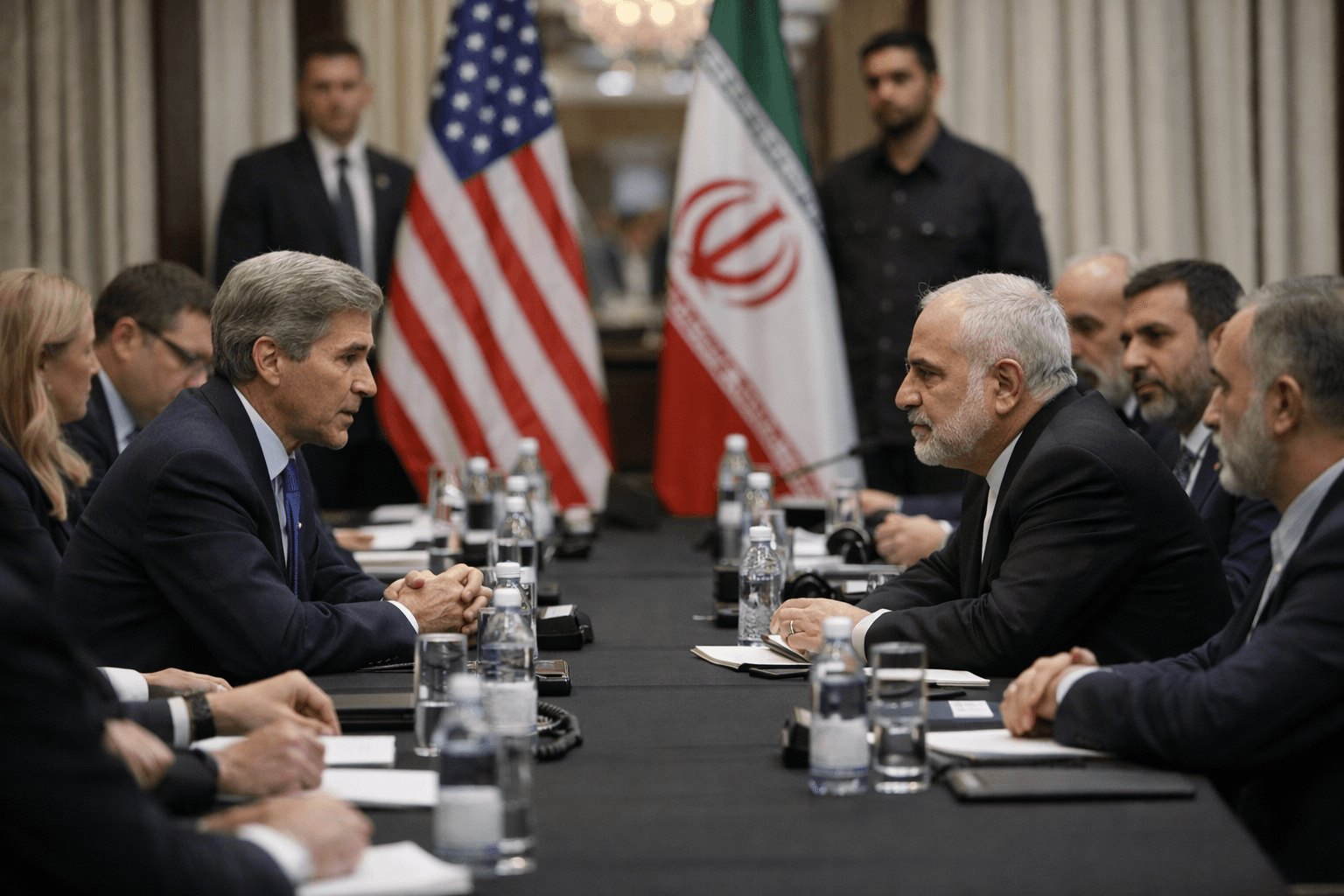
As the United States and Iran engage in high-stakes negotiations to end their long-running conflict, concerns are growing that a potential peace deal may not fully address the underlying issues, leaving the region vulnerable to further instability and violence. The talks, which are expected to take days, have been shrouded in uncertainty, with both sides sending mixed signals about the progress of negotiations. With the fate of the region hanging in the balance, the world watches with bated breath as the two nations attempt to hammer out a deal that could have far-reaching consequences for global security and the economy. \n\n The US and Iran have been locked in a longstanding conflict, with tensions escalating in recent years over issues such as nuclear proliferation, sanctions, and regional influence. The current negotiations are seen as a critical opportunity to reduce tensions and prevent further escalation, but the complexities of the issues involved and the differing views of the parties make a successful outcome uncertain. The conflict has already had a devastating impact on ordinary Iranians, with sanctions leading to food and medicine shortages, and the risk of further military escalation posing a significant threat to civilian lives. \n\n The key sticking points in the negotiations, including sanctions relief and the safe passage of the Strait of Hormuz, are likely to prove major obstacles to a comprehensive deal. The US is seeking to ensure the safe passage of the critical waterway, which is a vital conduit for global oil trade, while Iran is demanding significant sanctions relief as a condition of any agreement. However, with the US proposing a phased approach, with initial steps focusing on de-escalation and confidence-building measures, it remains to be seen whether the two sides can find common ground. \n\n The potential risks and consequences of an incomplete or rushed agreement are significant, with the region vulnerable to further instability and violence. A deal that does not fully address the underlying issues could lead to a resurgence of tensions, while a rushed agreement could lead to unintended consequences, such as the disruption of global oil supplies. The impact on the global economy could be severe, with higher fuel prices and reduced economic growth a distinct possibility. As the negotiations reach a critical juncture, the world waits with bated breath to see whether the US and Iran can find a way to overcome their differences and forge a lasting peace. \n\n The outcome of the negotiations will have significant implications for the region and the world, with the potential for a lasting peace hanging precariously in the balance. As the talks continue, one thing is certain: the fate of the region and the global economy hangs in the balance, and the world will be watching with great interest to see what the future holds.