

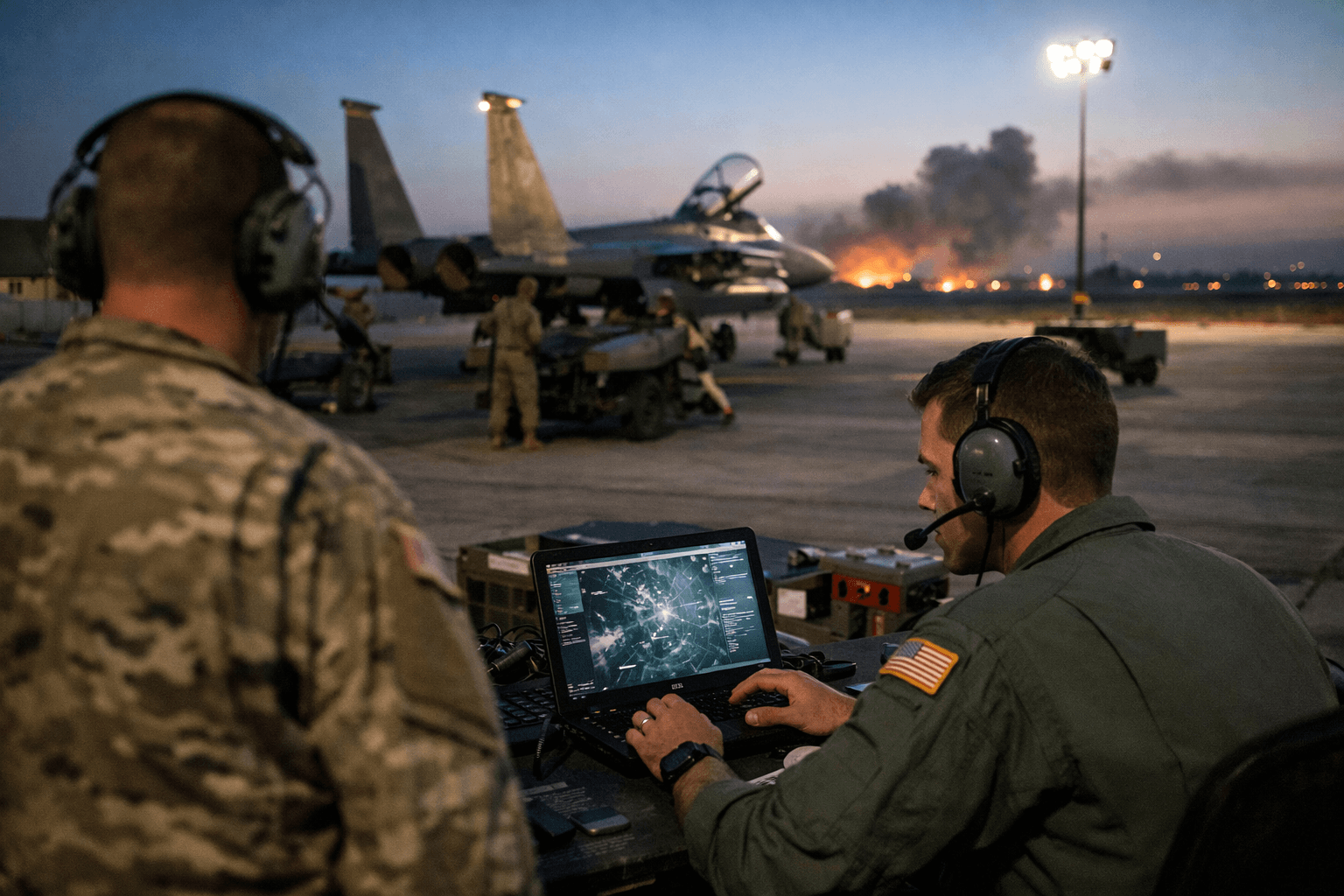
The US launched airstrikes on Iranian radar stations and drone command centers, prompting threats of retaliation from Iran's Revolutionary Guard. The exchange of blows has raised concerns that already fragile peace negotiations may collapse, potentially destabilizing the region.
The US Central Command said it conducted 'self-defense strikes' on military targets in southern Iran, which included sites on Qeeshm Island in the Strait of Hormuz. Iran's military responded by targeting a base, and Kuwait activated its air defenses after an alleged Iranian attack, which Iran has not commented on.
The sequence of events is unclear, but it appears the US launched initial strikes, followed by Iranian retaliation and further US strikes. The US and Iran are engaged in a series of retaliatory attacks, with American aircraft firing on Iranian sites over the weekend.
The potential destabilization of the region is a major concern, as it could affect trade and global oil prices. The risk of civilian casualties and displacement is also a significant factor. The impact on US-Iran relations and the broader Middle East is being closely watched.
As the US and Iran exchange blows, the fragile peace process hangs in the balance. The next step will be crucial, as both countries must decide whether to continue down the path of retaliation or pursue a diplomatic solution. The question remains what triggered the latest round of strikes and how the escalating conflict will affect the region and global oil prices.