

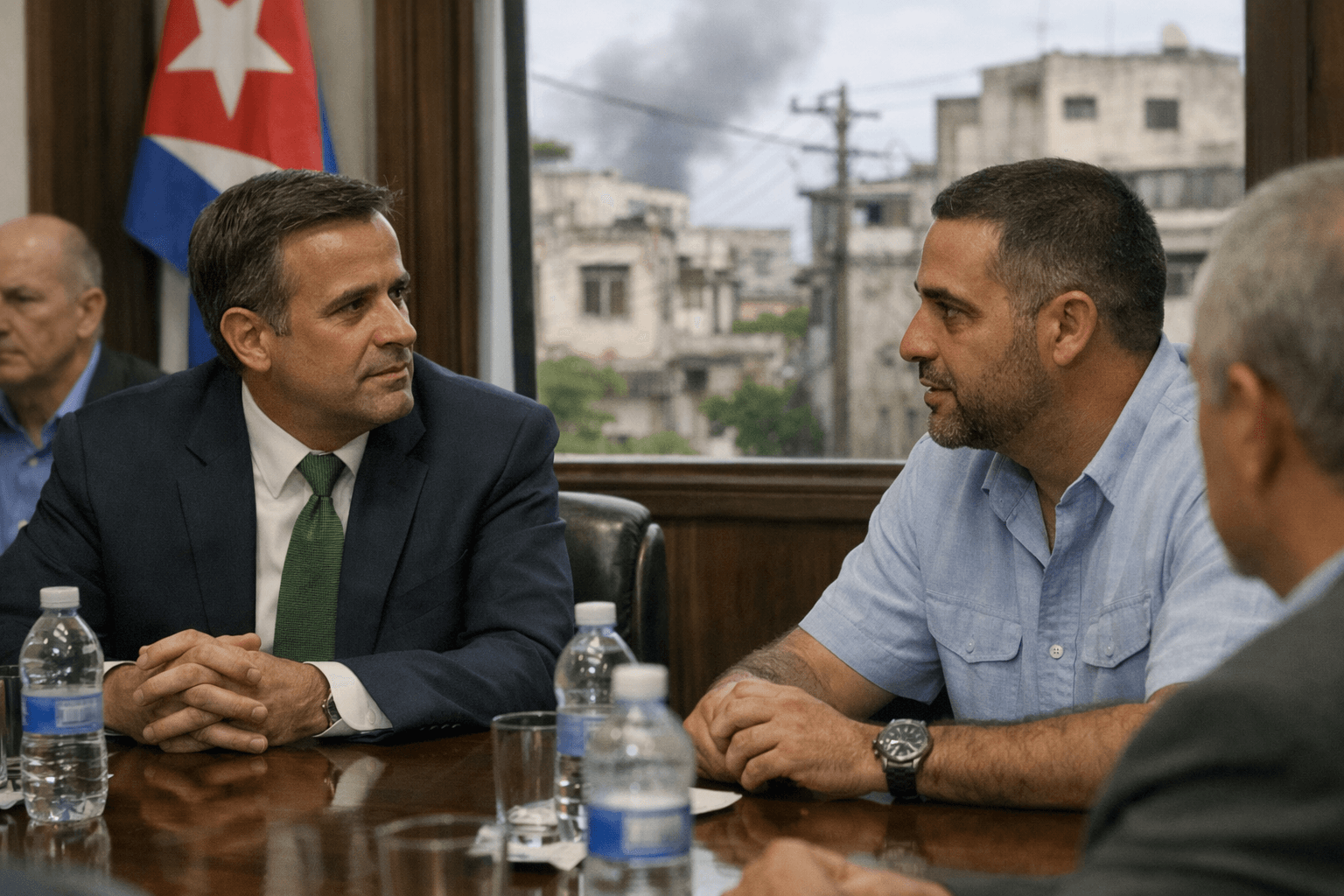
A surprise visit by CIA Director John Ratcliffe to Havana has raised hopes for a potential breakthrough in US-Cuba relations, as the island nation struggles to cope with a worsening energy crisis. The meeting, which included discussions with Raul Guillermo Rodriguez Castro, the grandson of Raul Castro, and other high-ranking Cuban officials, marks a significant shift in the diplomatic landscape between the two nations. With the US offering $100 million in humanitarian assistance and support for satellite internet, conditional on Cuban government approval, the stage is set for a potential thaw in relations that have been strained for decades. \n\n The US and Cuba have a long and complex history, with the US maintaining a trade embargo on the island since 1960. However, in recent years, there have been efforts to normalize relations, including the reopening of the US embassy in Havana in 2015. The current energy crisis, exacerbated by the US oil blockade, has created an opportunity for the US to offer aid and potentially improve relations. \n\n The energy crisis in Cuba has had a devastating impact on the daily lives of Cubans, with reduced work hours, food spoilage, and power grid collapse becoming increasingly common. Hospitals have had to rely on backup generators, and many businesses have been forced to close due to the lack of power. The eastern provinces have been particularly affected, with many residents struggling to access basic necessities like food and medicine. The US offer of humanitarian assistance could potentially alleviate some of these issues, but it is conditional on the Cuban government permitting it, and it remains to be seen how the Cuban government will respond. \n\n The role of Raul Guillermo Rodriguez Castro in future negotiations between the US and Cuba is likely to be significant, given his family ties and his position within the Cuban government. His relationship with his grandfather, Raul Castro, will undoubtedly influence the outcome of any negotiations, and it is likely that he will play a key role in shaping Cuba's response to the US offer of aid. The US, meanwhile, will need to balance its desire to improve relations with Cuba with its ongoing commitment to the oil blockade and trade embargo, a delicate balancing act that will require careful diplomacy and negotiation. \n\n As the situation in Cuba continues to deteriorate, the need for a resolution to the energy crisis becomes increasingly urgent. The US offer of humanitarian assistance provides a glimmer of hope, but it is just the first step in a long and complex process. With the US and Cuba having taken the first tentative steps towards renewed cooperation, the world will be watching to see if this marks the beginning of a new era in US-Cuba relations, or if it will ultimately prove to be just another false start.