

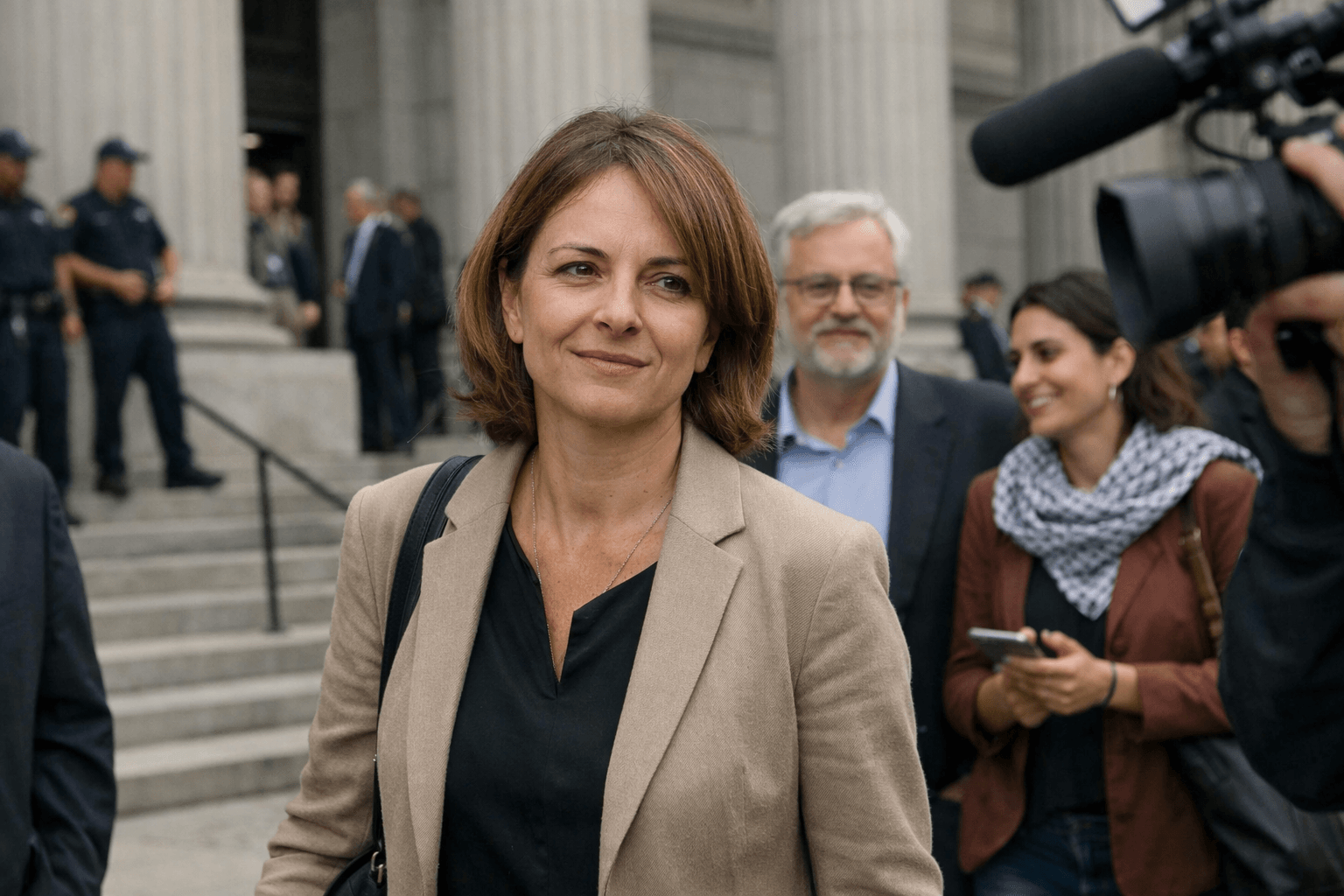
A US court has dealt a significant blow to the government's efforts to silence critics of Israel, ordering the lifting of sanctions on Francesca Albanese, a UN expert on Palestinian rights. The decision marks a major victory for free speech, particularly in the context of international human rights advocacy. Albanese, the UN Human Rights Council special rapporteur on the occupied Palestinian territories, was sanctioned by the US last year for her vocal criticism of Israel's treatment of Palestinians. The sanctions, which included blacklisting Albanese globally, made it impossible for her to use major credit cards or carry out bank transactions.
The Israeli-Palestinian conflict has been ongoing for decades, with the US historically supporting Israel's position. The US government's decision to sanction Albanese reflects the complex and often contentious nature of this conflict, as well as the challenges of balancing free speech with diplomatic relationships. The role of the UN Human Rights Council and its special rapporteurs in monitoring human rights abuses is crucial to understanding this story. The council's special rapporteurs are responsible for investigating and reporting on human rights abuses in specific countries or regions, providing critical oversight and accountability.
The US District Judge Richard Leon's decision to grant a preliminary injunction against the sanctions is a significant development in the case. The judge stated that protecting the freedom of speech is 'always' in the public interest, highlighting the importance of free speech in promoting human rights and accountability. The lifting of sanctions on Albanese will allow her to resume her work, including investigating human rights abuses in the Palestinian territories. Albanese has been a vocal critic of Israel's military campaign in Gaza, accusing the country of carrying out genocide, and has faced backlash for her comments, including allegations of antisemitism. The US Treasury Department removed the sanctions designation on Albanese from its website following the court order, allowing her to access financial services again.
The implications of the US court's decision are far-reaching, with potential consequences for the broader debate about censorship and the role of the US in promoting human rights globally. The case sets a precedent for the protection of free speech in the face of government pressure, particularly for individuals and organizations who criticize Israel's actions. The US government's decision to sanction Albanese in the first place reveals its priorities and values, particularly with regards to its relationship with Israel. The lifting of sanctions on Albanese is a significant victory for human rights advocacy, but it also highlights the ongoing tension between the US government's support for Israel and its commitment to protecting human rights.
The lifting of sanctions on Albanese will have a direct impact on her ability to carry out her work as a UN special rapporteur, allowing her to resume her investigations into human rights abuses in the Palestinian territories. The decision may also have implications for the Israeli-Palestinian conflict, as it sets a precedent for the protection of free speech and promotes accountability for human rights abuses. As the US government continues to navigate its complex relationship with Israel, the case of Francesca Albanese serves as a reminder of the importance of protecting free speech and promoting human rights, even in the face of diplomatic pressure.