

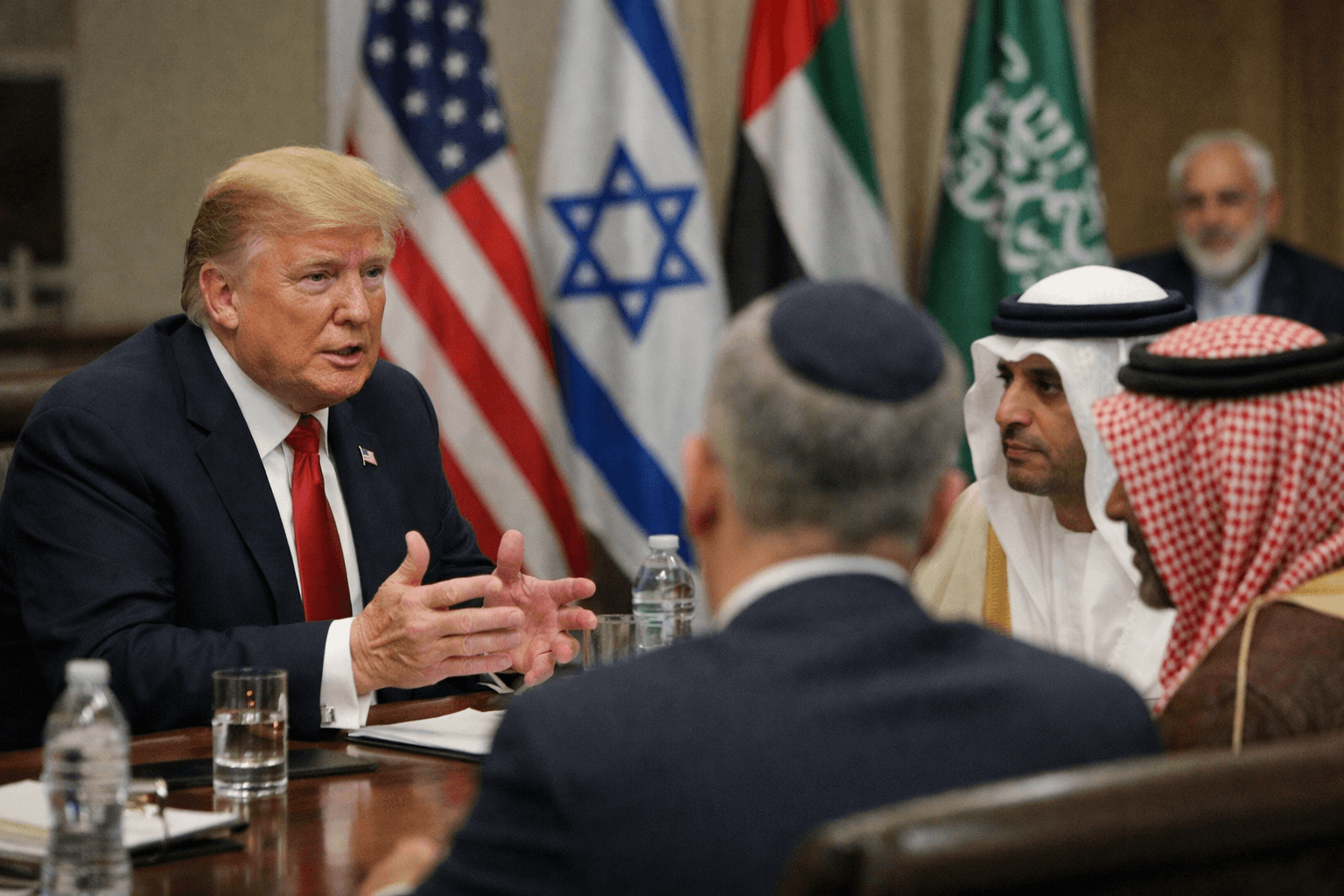
As the United States navigates a treacherous landscape of Middle East diplomacy, President Trump is attempting to leverage his signature Abraham Accords to extract concessions from Iran, sparking a high-stakes game of geopolitical poker that could either usher in a new era of peace or exacerbate existing tensions. The Abraham Accords, a series of treaties aimed at normalizing ties between Israel and majority-Muslim nations, have already seen the United Arab Emirates, Bahrain, Sudan, and Morocco sign on. Trump's explicit linking of the accords' expansion to the success of Iran negotiations has raised eyebrows, with Republicans in Congress warning against making concessions to Iran in any deal to end the war.
The complex history of Middle East diplomacy, including the Israeli-Palestinian conflict and the Iran nuclear deal, provides the backdrop for Trump's push to expand the Abraham Accords. The accords represent a significant shift in regional dynamics, marking a departure from the traditional Arab-Israeli conflict and towards a more nuanced, interest-based approach to diplomacy. With the potential Iran deal aiming to revive the 2015 Joint Comprehensive Plan of Action, which the US withdrew from in 2018 under Trump's presidency, the stakes are high.
The expansion of the Abraham Accords and the Iran negotiations will have far-reaching consequences for various groups, including the Israeli and Palestinian populations, the Iranian people, and the millions of refugees and displaced persons in the region. Trump has identified specific countries, including Saudi Arabia and Indonesia, as potential signatories to the Abraham Accords, which could significantly shift the regional balance of power. The US is seeking specific concessions from Iran, including limits on its nuclear program and regional influence, in exchange for relief from economic sanctions. However, pro-Israel groups have criticized Trump's approach, arguing that the US should not compromise on Iran's nuclear program in exchange for normalization agreements.
As the international community watches with bated breath, the potential risks and benefits of the US approach are becoming clear. On one hand, a successful expansion of the Abraham Accords could usher in a new era of peace and cooperation in the region, with economic benefits and increased stability for all parties involved. On the other hand, a failed deal could exacerbate existing tensions, leading to further conflict and instability. The outcome of Trump's high-stakes gamble remains to be seen, but one thing is certain: the fate of the Middle East hangs in the balance.
The implications of Trump's approach will be felt for years to come, with the potential to either usher in a new era of peace or perpetuate existing conflicts. As the world waits with anticipation, the question on everyone's mind is: will Trump's gamble pay off, or will it lead to further instability in the region? Only time will tell, but one thing is certain: the Middle East will never be the same again.