

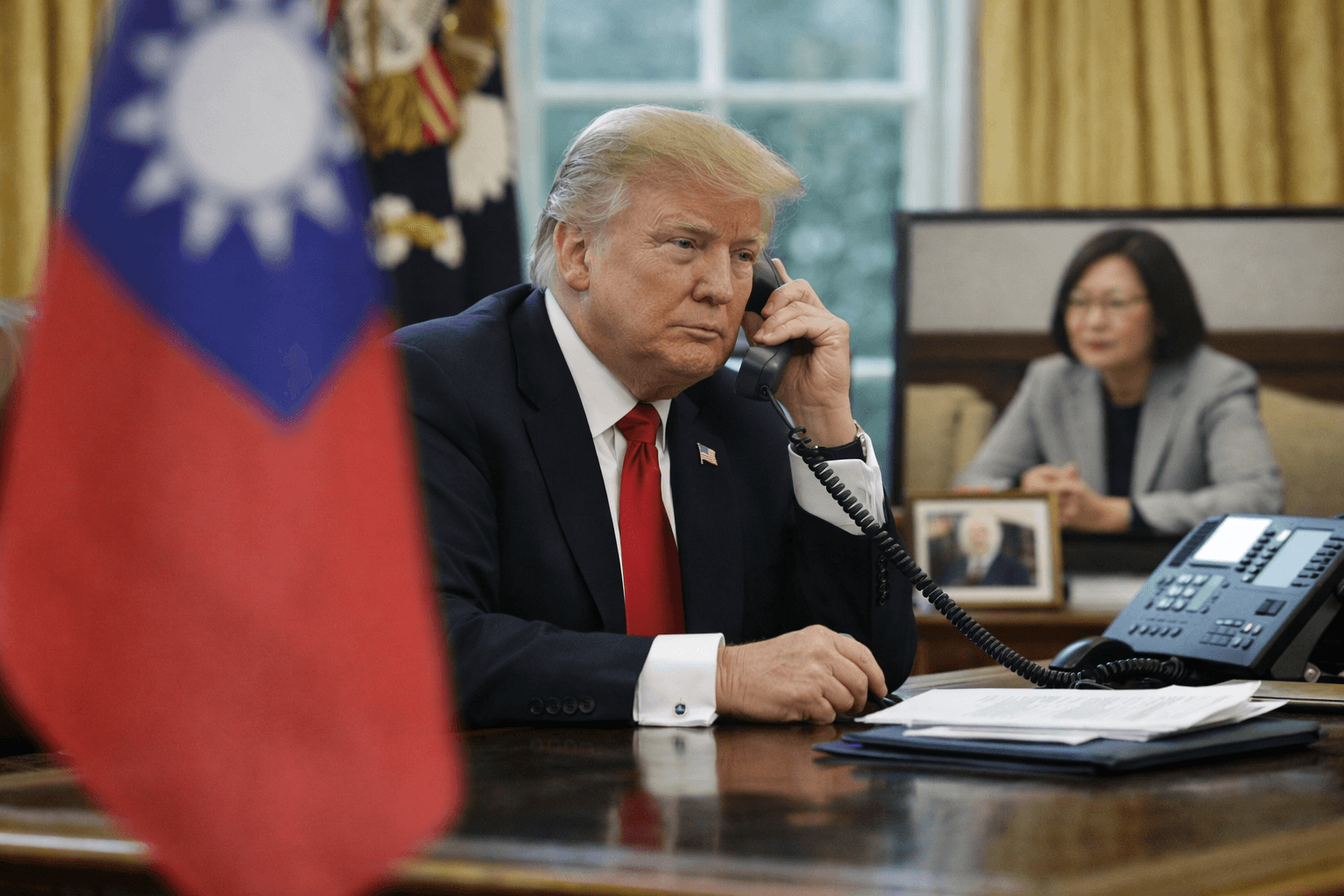
In a move that could upend decades of diplomatic protocol and infuriate China, US President Donald Trump has reiterated his intention to speak directly with Taiwan's leader, a conversation that would mark a significant shift in US-Taiwan relations and potentially destabilize the delicate balance of power in the region. This proposed phone call, which would be the first direct communication between a US President and a Taiwanese leader since 1979, has sparked concerns about the implications for regional stability and the potential consequences for Taiwan's 23 million citizens. Trump's unpredictable approach to international diplomacy has raised questions about the future of US-Taiwan relations and the potential fallout with China. \n\n The US has a complex relationship with Taiwan, officially recognizing the People's Republic of China as the sole legitimate government of China since 1979, while maintaining unofficial relations with Taiwan through the Taiwan Relations Act. This act requires the US to provide Taiwan with the means to defend itself, which has led to periodic arms sales and diplomatic tensions with China. The proposed phone call between Trump and Taiwan's leader would be a significant departure from this protocol, and China's foreign ministry has firmly opposed any official exchanges between the US and Taiwan. \n\n The potential consequences of a phone call between Trump and Taiwan's leader are far-reaching, with China likely to respond with anger and potentially escalate tensions in the region. Taiwan's foreign ministry has stated that its leader would be happy to discuss matters with Trump, emphasizing Taiwan's commitment to maintaining the stable status quo in the Taiwan Strait and viewing China as the disruptor of peace and stability. The US has also been considering arms sales to Taiwan, which could be used as a bargaining chip with China, according to Trump's recent statements. \n\n The US must balance its