

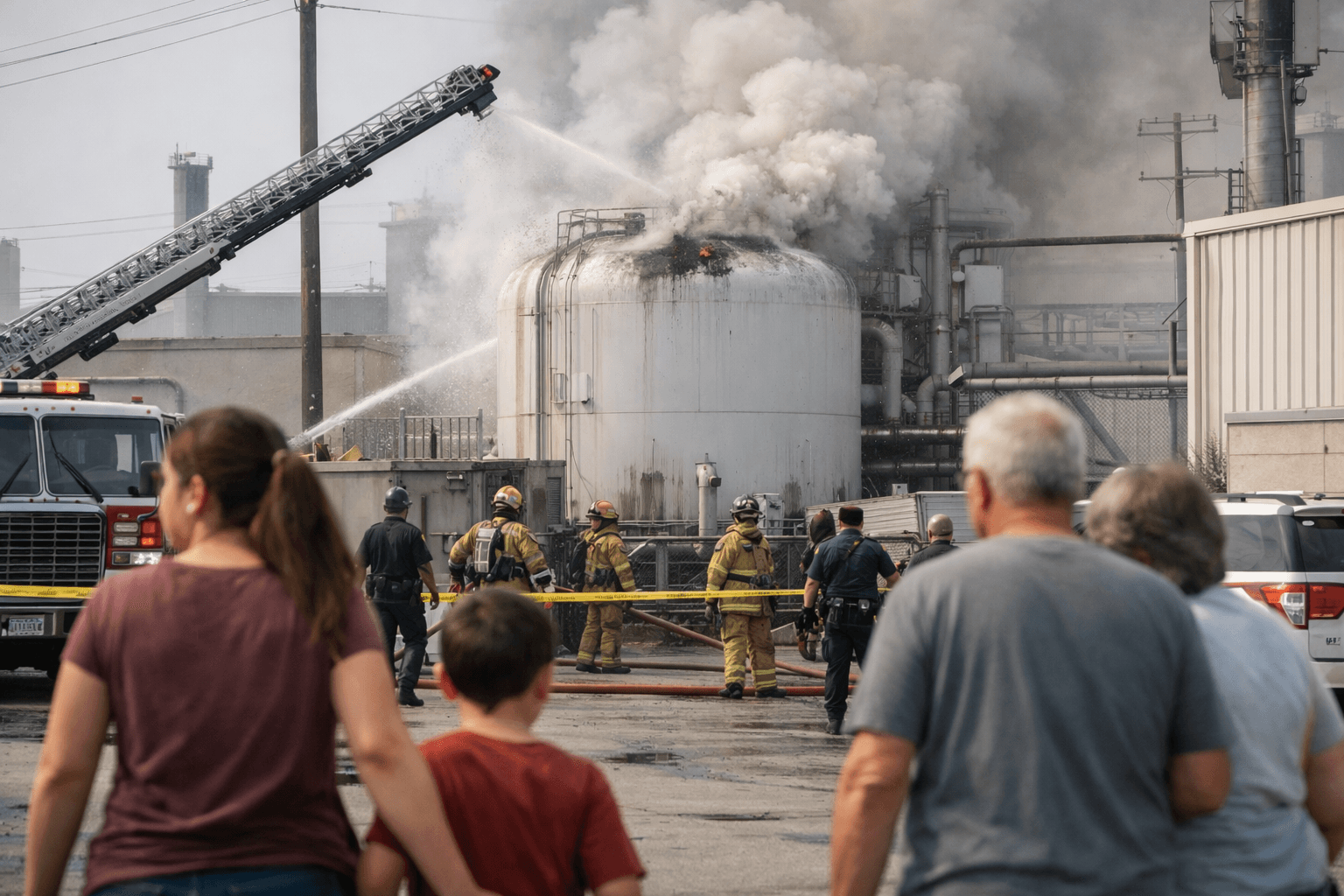
A sense of urgency grips Garden Grove, California, as a 7,000-gallon tank of methyl methacrylate, a highly volatile and flammable liquid, teeters on the edge of explosion, forcing thousands to flee their homes. The tank's temperature has risen 13 degrees in just 24 hours, from 77°F to 90°F, sparking fears of a catastrophic disaster. As emergency responders scramble to cool the tank and prevent an explosion, residents like Marco Solano are left to wonder if they will have a home to return to. Solano, who has been forced to spend the night at his parents' home, is frustrated and worried about the potential health risks, exacerbating his existing anemia and ulcerative colitis.
Methyl methacrylate is a hazardous chemical that can cause serious respiratory problems, neurological issues, and skin irritation, making its storage in densely populated areas a significant risk to public health and safety. The chemical is used to make plastic parts at GKN Aerospace, a facility that manufactures parts for commercial and military aircraft. The incident in Garden Grove highlights the need for robust safety protocols and emergency preparedness measures to mitigate such risks.
Approximately 40,000 residents have been ordered to evacuate the area, with evacuation orders expanded to parts of five other Orange County cities. The Orange County Fire Authority has set up a blast zone map, indicating areas within 335 meters of the tank would sustain severe damage in the event of an explosion. Containment barriers have been set up to prevent the chemical from getting into storm drains or reaching creeks or the nearby ocean in the event of a spill. Governor Gavin Newsom has declared a state of emergency in Orange County, making state resources available to local agencies and allowing state-owned properties and fairgrounds to be used for shelters if necessary.
As the situation continues to unfold, residents are forced to sleep in their cars or seek shelter in nearby facilities, highlighting the human cost of the incident. The evacuation order has not only affected residents but also local businesses, which are likely to suffer significant losses. Authorities are working to provide support to displaced residents, including food, shelter, and medical care. The cause of the incident is still under investigation, and it is likely that changes will be made to safety protocols for storing hazardous chemicals in densely populated areas to prevent similar incidents in the future.
The clock is ticking, and the fate of Garden Grove hangs in the balance as emergency responders work tirelessly to prevent a disaster. With the tank's temperature continuing to rise, the situation remains precarious, and residents can only wait and hope that the efforts to cool the tank are successful. The incident serves as a stark reminder of the importance of robust safety protocols and emergency preparedness measures to mitigate the risks associated with storing hazardous chemicals in densely populated areas.