

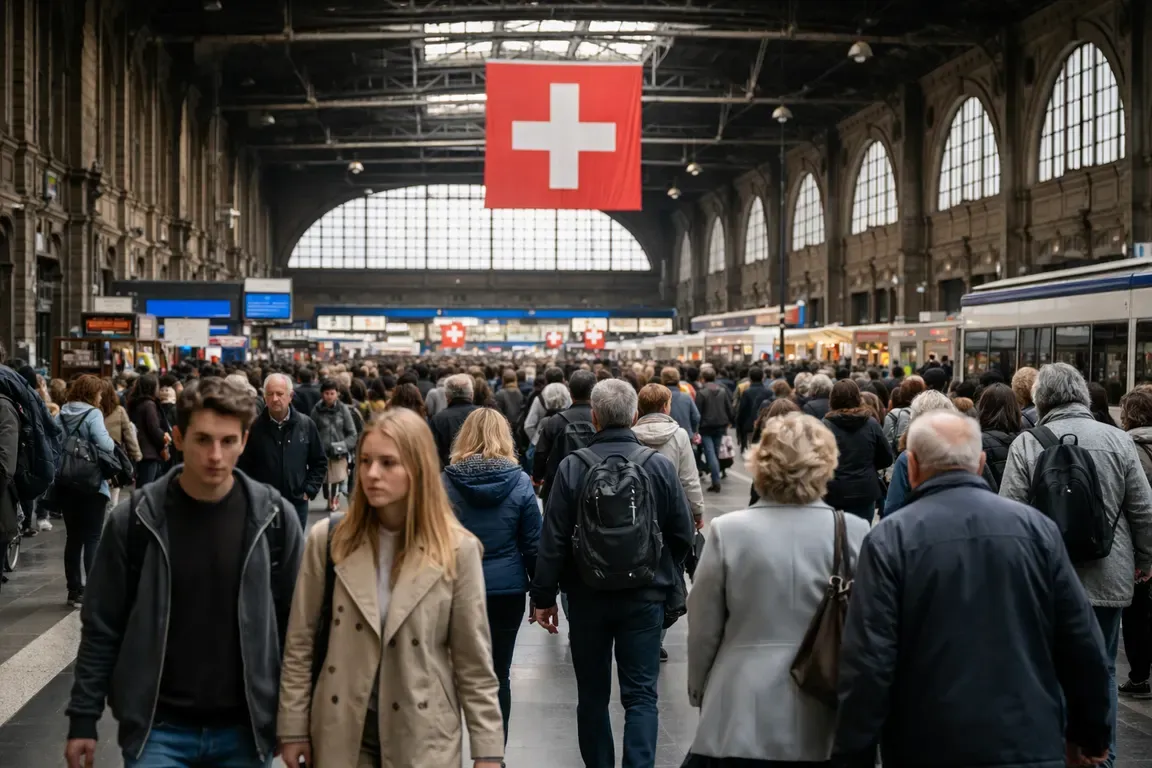
Swiss voters have rejected a proposal to cap the country's population at 10 million, a move that could have had significant implications for the country's economy and relations with the European Union, particularly the Swiss Population Cap. The rejection of the proposal means that Switzerland will not have to restrict asylum, residency permits, or scrap its EU deal on free movement, which is crucial for the country's export-oriented economy.
The proposal, put forward by the right-wing Swiss People's Party, was intended to be reached by 2050, according to official projections, which also indicate that the population is on track to reach 10 million by the early 2040s. 55% of participants voted against the proposal, according to early projections.
The Swiss government and parliament had urged voters to reject the proposal, citing the potential negative impact on the economy. Switzerland has a system of direct democracy, with voters deciding on national referendums four times a year, allowing citizens to have a direct say in the country's decision-making process.
The right-wing Swiss People's Party argued that the proposal was necessary to address concerns about affordability and sustainability, while others saw it as a measure to limit migration. The rejection of the proposal will have a significant impact on the lives of migrants and asylum seekers who would have been affected by the proposed restrictions.
The Swiss economy, heavily reliant on exports, will also be affected by the rejection, as the free movement of people and goods with the EU remains intact. The vote took place on Sunday, with early projections indicating that the proposal had been rejected.
The implications of the rejection are still being assessed, but it is clear that the decision will have far-reaching consequences for the country's population growth and development. As the country moves forward, it will be important to consider the potential long-term consequences of the rejection and how it will impact the lives of Swiss citizens and migrants alike.