

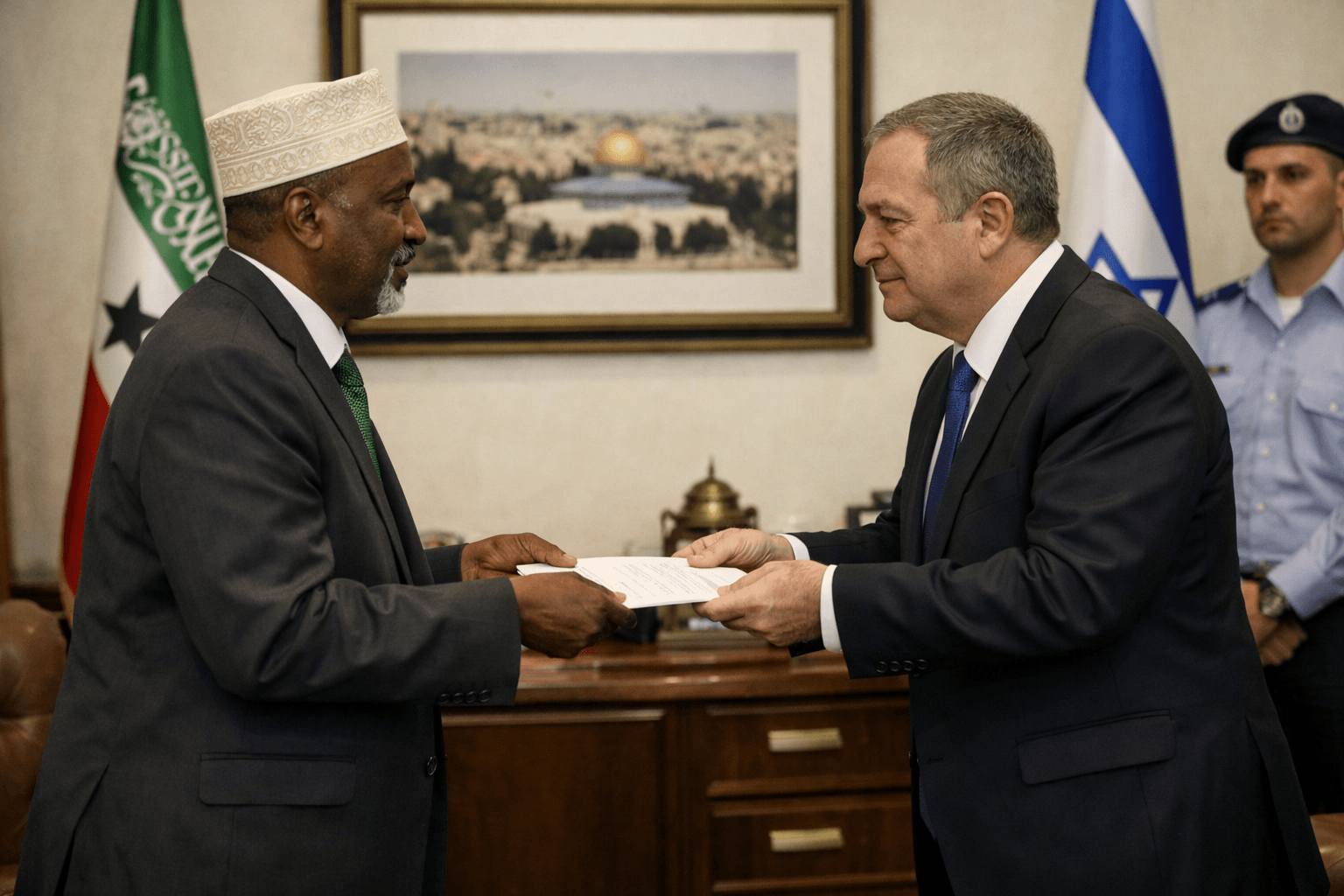
Somaliland's Delicate Dance With Recognition. As Somaliland celebrates its first Independence Day since being recognized by Israel, the breakaway region is grappling with the complex consequences of its newfound international legitimacy. The presentation of credentials by Somaliland's first ambassador to Israel marks a significant milestone in the region's bid for international recognition, but it also sparks concerns about further conflict and instability. For Somalilanders like Dahir Omar Bile, a 42-year-old from Hargeisa, the implications of Israel's recognition are a mixed bag, bringing both hope for economic and military cooperation and fear of reigniting the conflict in the North East State.
Somaliland declared its independence from Somalia in 1991, after a brutal civil war, but has struggled to gain international recognition since then. Despite having its own government, military, and institutions, Somaliland has been considered part of Somalia by the African Union and United Nations. The region has been relatively stable compared to the rest of Somalia, with a functioning democracy and a strong sense of national identity, but its bid for independence has been met with resistance from the international community.
The recognition by Israel has sparked a wave of celebration in Somaliland, with many seeing it as a step towards international legitimacy. However, others are more cautious, warning that it could lead to further conflict and instability in the region. The conflict in the North East State, which broke away from Somaliland in August 2023, has already had a devastating impact on civilians, with thousands killed, displaced, or forced to flee their homes. Amnesty International has accused Somaliland's army of committing war crimes during the conflict, including shelling hospitals, schools, and civilian neighborhoods.
The international community, including the African Union and United Nations, strongly opposes Somaliland's secession, fearing it could encourage other breakaway movements in the region. As Somaliland navigates its newfound recognition, it must balance the competing interests and concerns of its citizens. The government must address the concerns of the North East State and other regions, while also managing the expectations of those who welcome Israel's recognition. The strategic location of Somaliland on the Gulf of Aden, close to Yemen, makes it a valuable hub for trade and military operations, with countries like the United States, United Arab Emirates, and Ethiopia taking notice.
However, the region's stability and security are fragile, and the international community must be careful not to exacerbate the situation. With the conflict in the North East State still simmering, the human costs of further violence and instability are too high to ignore. The road ahead for Somaliland is uncertain, but one thing is clear: the region's bid for international recognition has reached a critical juncture. As Somaliland celebrates its independence, it must also confront the complex consequences of its newfound legitimacy, and work towards a future that balances the competing interests and concerns of its citizens, while also addressing the human costs of the conflict and promoting stability and security in the region.