

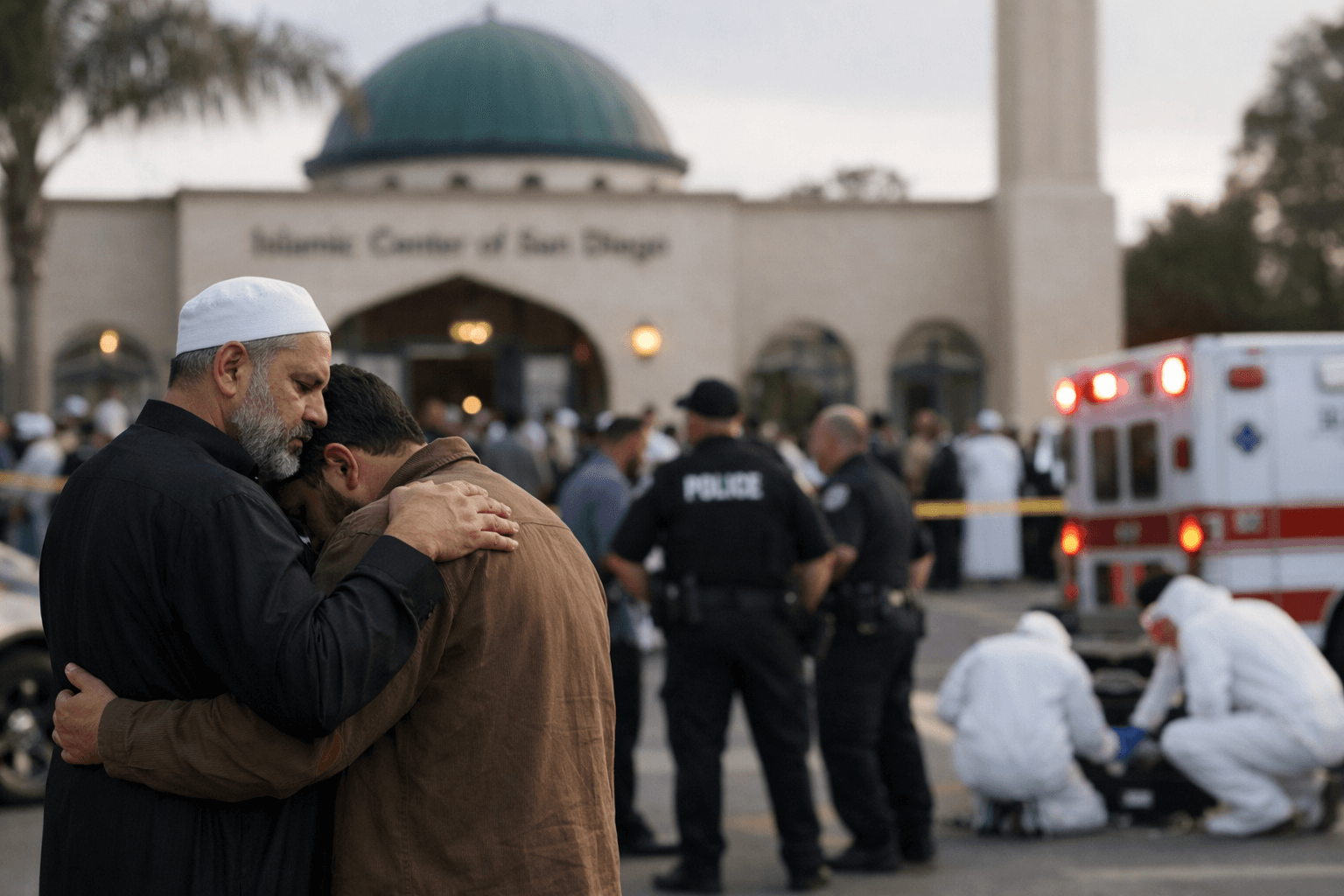
In a horrific act of violence, two teenage gunmen unleashed a deadly attack on a San Diego mosque, killing three men, including a heroic security guard who potentially saved countless lives. The attack, which occurred at the Islamic Center of San Diego, the largest mosque in San Diego County, has left the local Muslim community shaken and has raised questions about the role of online hate rhetoric and social media in radicalizing the perpetrators. The mosque, known for its strong focus on interfaith relations, community building, and social causes, had hosted a group of non-Muslims earlier that day, highlighting the center's commitment to community outreach and understanding.
The United States has seen a rise in hate crimes targeting places of worship, including mosques, synagogues, and churches, and this attack comes amidst a broader context of increased polarization, xenophobia, and Islamophobia. The Islamic Center of San Diego, as a prominent institution in the community, has been engaged in efforts to promote interfaith understanding and social cohesion, making the attack all the more disturbing. The attack has also raised concerns about the effectiveness of law enforcement agencies in preventing such incidents, particularly in light of the fact that authorities had been alerted to one of the suspect's potential suicidal intentions and missing weapons prior to the attack.
The two teenage gunmen, aged 17 and 18, opened fire on the mosque, killing three men, including the security guard who is credited with preventing a worse outcome. The suspects were found dead a few blocks away from the mosque, with evidence suggesting they had engaged in generalized hate rhetoric prior to the attack. The mosque's security guard, whose actions are described as heroic, played a pivotal role in minimizing the damage and potentially saving lives. The attack has left the families of the victims, including the security guard's loved ones, grieving the loss of their relatives, while children who were at the mosque, including those attending the Al Rashid School, were evacuated and reunited with their parents, but may be traumatized by the experience.
As the community struggles to come to terms with the attack, many are questioning what motivated the two teenage gunmen to carry out this horrific act, and what role online hate rhetoric and social media played in their radicalization. The authorities' response to the initial alert about the suspect's potential suicidal intentions and missing weapons has also come under scrutiny, with many wondering what lessons can be learned from this incident. The attack has also highlighted the need for support systems for the families of the victims, the Muslim community, and the children who witnessed the traumatic event. The broader community is coming together to promote healing and solidarity, with many non-Muslim residents expressing solidarity and support for their Muslim neighbors.
The attack on the San Diego mosque is a stark reminder of the devastating consequences of hate and the importance of promoting interfaith understanding and social cohesion. As the community begins to heal and rebuild, it is clear that this incident will have a lasting impact on the city and the nation, and will inform and shape efforts to prevent hate crimes and promote interfaith understanding in the years to come.