

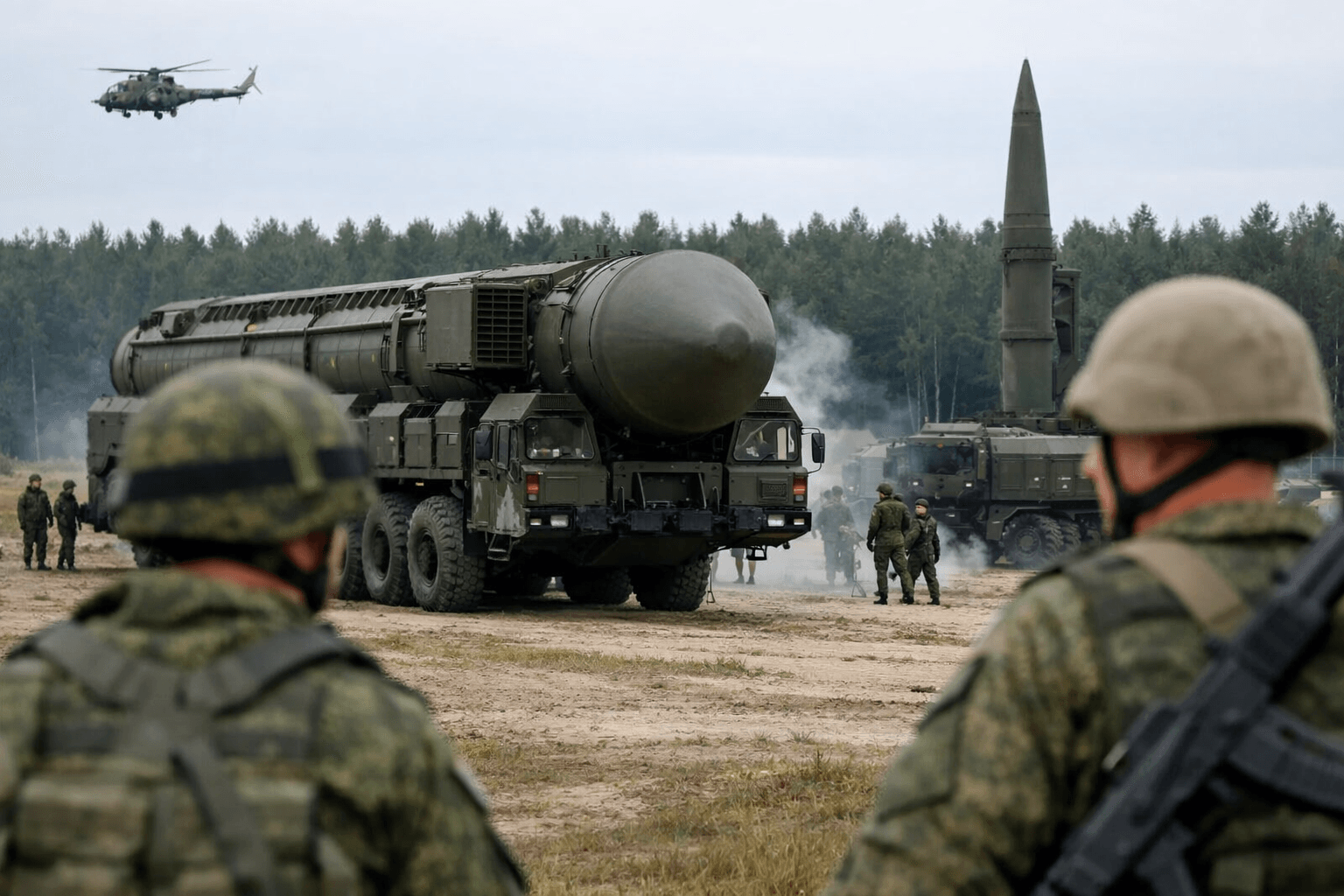
Russia and Belarus have concluded a series of joint nuclear drills, sending a stark warning to the West that Moscow is prepared to use its nuclear arsenal to defend its interests. The massive exercises, which involved over 64,000 troops and an array of nuclear-capable missiles, have sparked fears of a catastrophic escalation in the conflict in Ukraine. With tensions between Russia and the West already at a boiling point, the drills have raised the stakes, leaving many to wonder what's next for the region.
The ongoing conflict in Ukraine, now in its fifth year, has led to a significant escalation of tensions between Russia and the West. The recent surge in Ukrainian drone strikes, including those targeting Moscow's suburbs, has prompted Russia to hold joint nuclear drills with Belarus, a key ally. The drills are seen as a demonstration of Russia's nuclear capabilities and a warning to Western allies to refrain from providing further support to Ukraine.
The joint nuclear drills were a massive undertaking, featuring a broad assortment of short- and medium-range nuclear weapons, including aerial bombs, warheads for short- and medium-range missiles, and artillery munitions. Russian President Vladimir Putin and Belarusian counterpart Alexander Lukashenko participated in the drills via video conference, with Putin stating that the use of nuclear weapons is an extreme measure for ensuring national security. The exercises included the test-firing of Yars and Sineva ICBMs, as well as medium-range sea-launched Zircon and air-launched Kinzhal missiles, all of which hit their designated practice targets. Belarusian troops also test-fired a short-range Iskander ballistic missile inside Russia, demonstrating the country's capability to launch nuclear-capable missiles.
The implications of Russia's revised nuclear doctrine, adopted in 2024, are far-reaching and have significant consequences for the region. By placing Belarus under the Russian nuclear umbrella and lowering the threshold for the possible use of Moscow's nuclear arsenal, Russia has effectively expanded its nuclear deterrence capabilities. The West is likely to respond with caution, but the potential consequences of a nuclear conflict in the region are devastating. The threat of nuclear war hangs over the region, with the potential for widespread radioactive contamination, displacement of populations, and long-term health effects. As the world waits with bated breath, one thing is certain: the conflict in Ukraine has just taken a perilous turn.
The drills have already had a tangible impact on civilians, with residents of the Lithuanian capital of Vilnius taking shelter and the airport being closed temporarily due to a drone sighting. As the situation continues to unfold, the international community will be watching closely, hoping to mitigate the risks of a nuclear conflict and find a peaceful resolution to the conflict in Ukraine.