

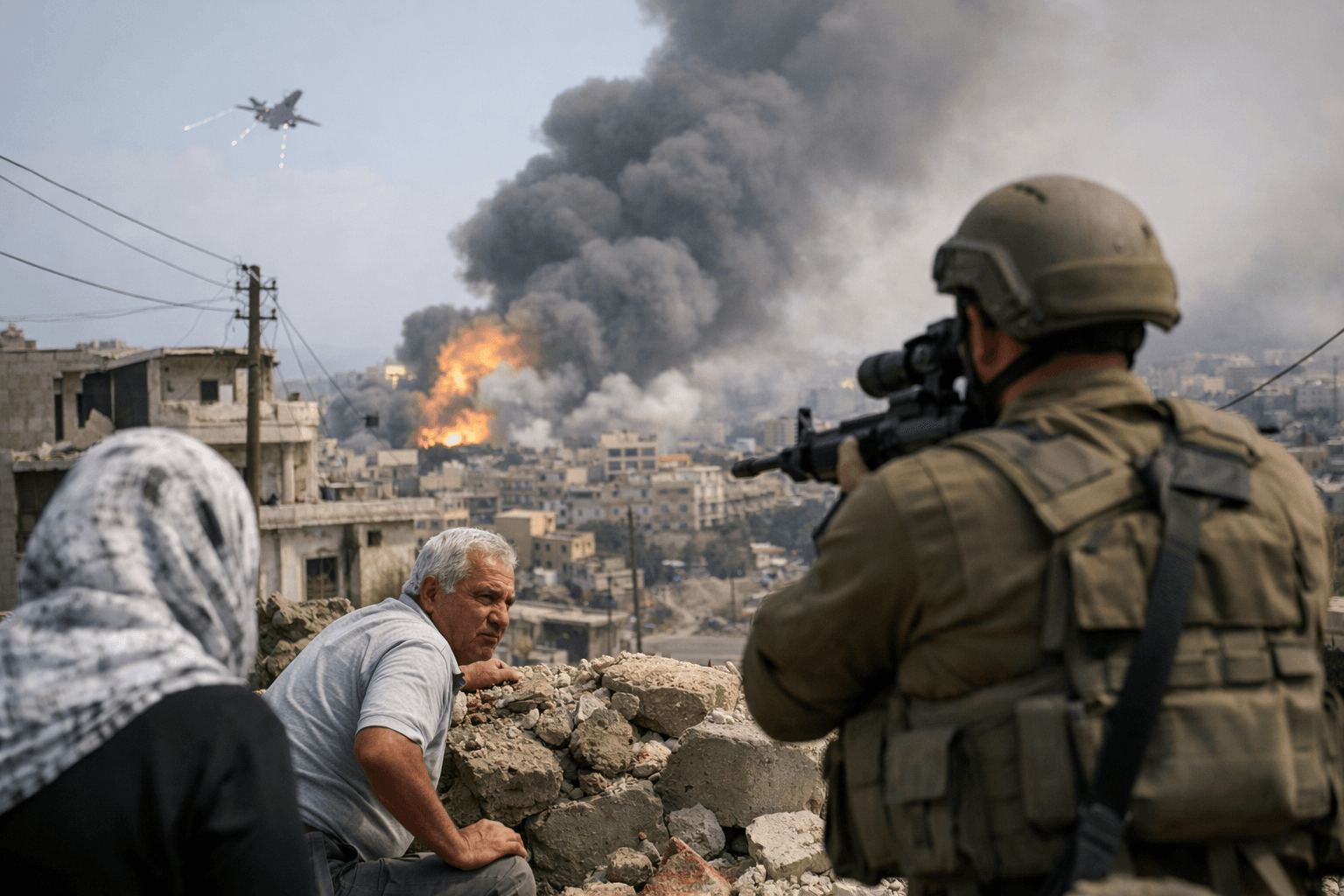
The fragile ceasefire in Lebanon is on the verge of collapse, as Israel intensifies its operation against Hezbollah strongholds and the US strikes Iranian targets, threatening to derail diplomatic efforts to secure a peace deal with Iran. The escalating conflict has sparked a complex web of interests and alliances, with the US struggling to balance its push for a peace deal with its military involvement in the region. As the violence escalates, the humanitarian situation in Lebanon and Israel continues to deteriorate, with civilians caught in the crossfire and forced to flee their homes. \n\n The decades-long dispute between Israel and Hezbollah has been fueled by territorial, ideological, and influence-related tensions, with the Iranian-backed militant group playing a key role in the Syrian civil war and launching attacks on Israeli targets. The US has been seeking to negotiate a peace deal with Iran, which could have significant implications for the region, including the potential to reduce tensions between Iran and its Arab neighbors. \n\n As the conflict rages on, the Israeli military has deployed additional troops to the Lebanese border, with reports of artillery and airstrikes targeting Hezbollah positions in southern Lebanon. The militant group has responded with rocket and drone attacks on Israeli troops, with at least 10 rockets fired into northern Israel in the past 24 hours. The conflict has been ongoing for three months, resulting in over 500 civilian deaths and 1,000 injuries, according to the Lebanese Red Cross. In the Lebanese town of Nabatieh, residents have reported hearing constant artillery fire and seeing buildings reduced to rubble, while in Israel, the town of Kiryat Shmona has been hit by multiple rocket attacks, with residents describing the sound of explosions and the smell of smoke filling the air. \n\n The US is facing a daunting challenge in balancing its push for a peace deal with Iran with its military involvement in the conflict. A potential deal could involve the lifting of economic sanctions on Iran in exchange for limits on its nuclear program, but the escalating violence threatens to undermine the negotiations. The conflict is also having a significant economic impact, with trade and commerce disrupted and many businesses forced to close. As the situation continues to deteriorate, it remains to be seen how the US will navigate the complex web of interests and alliances in the region, and what the consequences will be for the people of Lebanon and Israel. \n\n The outcome of the conflict will have far-reaching implications for the region, with the potential to either reduce tensions or spark a wider war. As the international community watches with bated breath, one thing is certain: the fate of the Middle East hangs in the balance, and the consequences of failure will be devastating.