

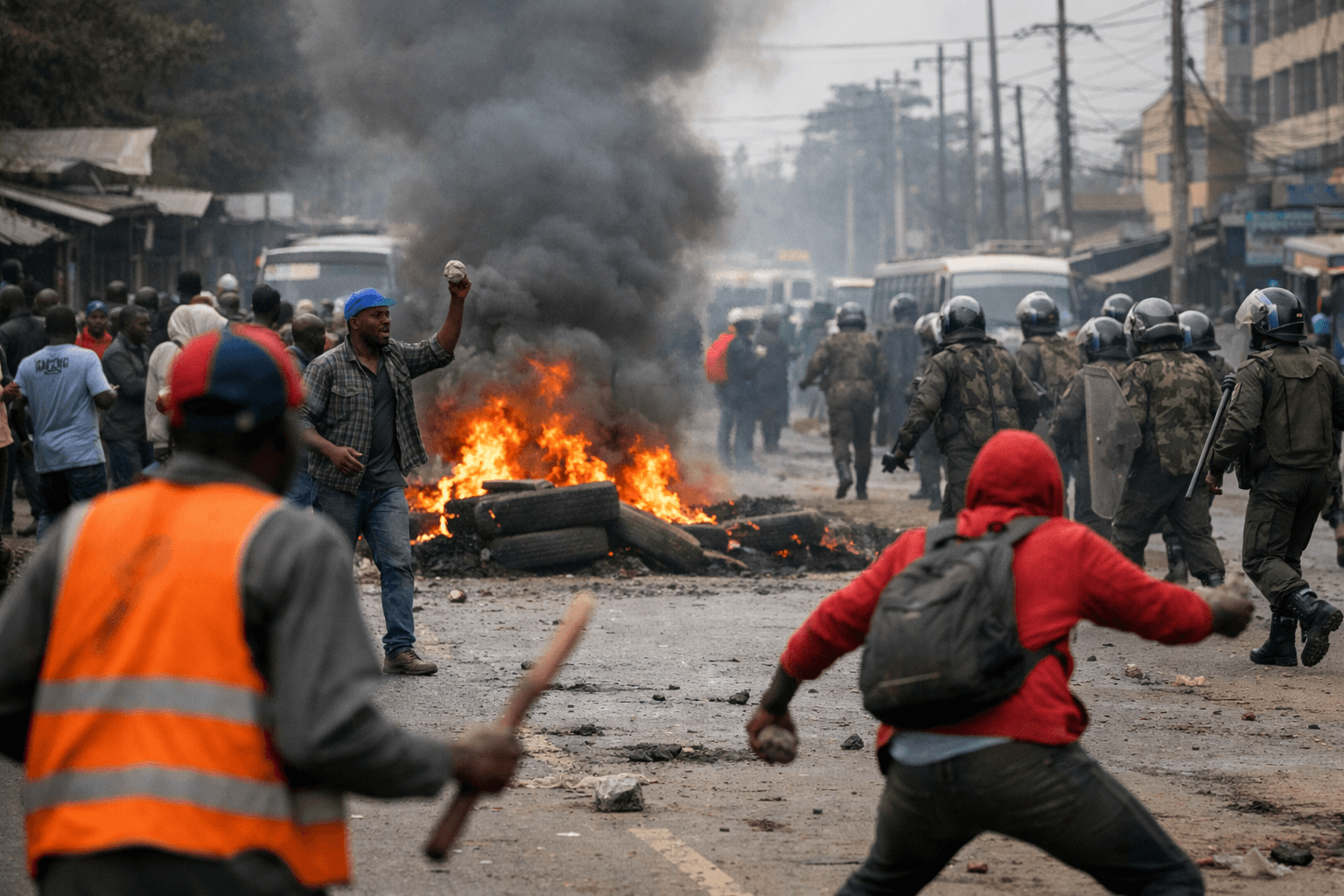
The streets of Nairobi have descended into chaos as protests over soaring fuel prices have turned deadly, with at least four people killed and 30 injured in the clashes between transport workers and police. The fuel price hike, triggered by rising global oil prices due to the Middle East war, has sparked widespread outrage and highlighted the country's vulnerability to external factors. As the situation continues to unfold, the Kenyan government is faced with the daunting task of balancing the country's economic stability with the public's demand for relief. \n\n Kenya's dependence on imported fuel has made it heavily susceptible to price fluctuations, with a significant portion of its fuel imports passing through the Strait of Hormuz. The country's economy is heavily reliant on fuel, and the recent price hike has had a devastating impact on the daily lives of ordinary Kenyans. The strike by matatu minibuses, the primary form of public transport in Nairobi, has left thousands of commuters stranded, with many forced to walk long distances or seek alternative, often more expensive, modes of transport. \n\n The human impact of the protests has been severe, with many citizens struggling to cope with the increased costs of transportation. Jane Wanjiru, a local resident, was forced to walk 5 kilometers to get to work due to the strike, highlighting the daily struggles faced by ordinary Kenyans. The closure of schools and cancellation of events have further disrupted the lives of citizens, particularly those in the low-income bracket who are most affected by the fuel price hike. The government's decision to suspend fuel quality standards to maintain supply in the face of shortages has also raised concerns about the potential environmental and health impacts. \n\n As the protests continue, the Kenyan government is under pressure to provide relief to the public. Treasury and Economic Planning Minister John Mbadi has stated that the strike is completely uncalled for and that the government will discuss possible relief measures while balancing the macroeconomic fundamentals. However, the government's options are limited, and it remains to be seen how it will address the public's concerns. One possible solution is for Kenya to explore alternative energy sources, such as renewable energy, to reduce its dependence on imported fuel and mitigate the impact of global price fluctuations. \n\n The international community, particularly countries involved in the Middle East conflict, will be watching the situation in Kenya closely. The crisis has highlighted the need for a more sustainable and diversified energy policy, not just in Kenya but across the African continent. As the situation continues to unfold, it remains to be seen how the Kenyan government will balance the country's economic stability with the public's demand for relief, and what measures it will take to address the underlying issues that have led to this crisis.