

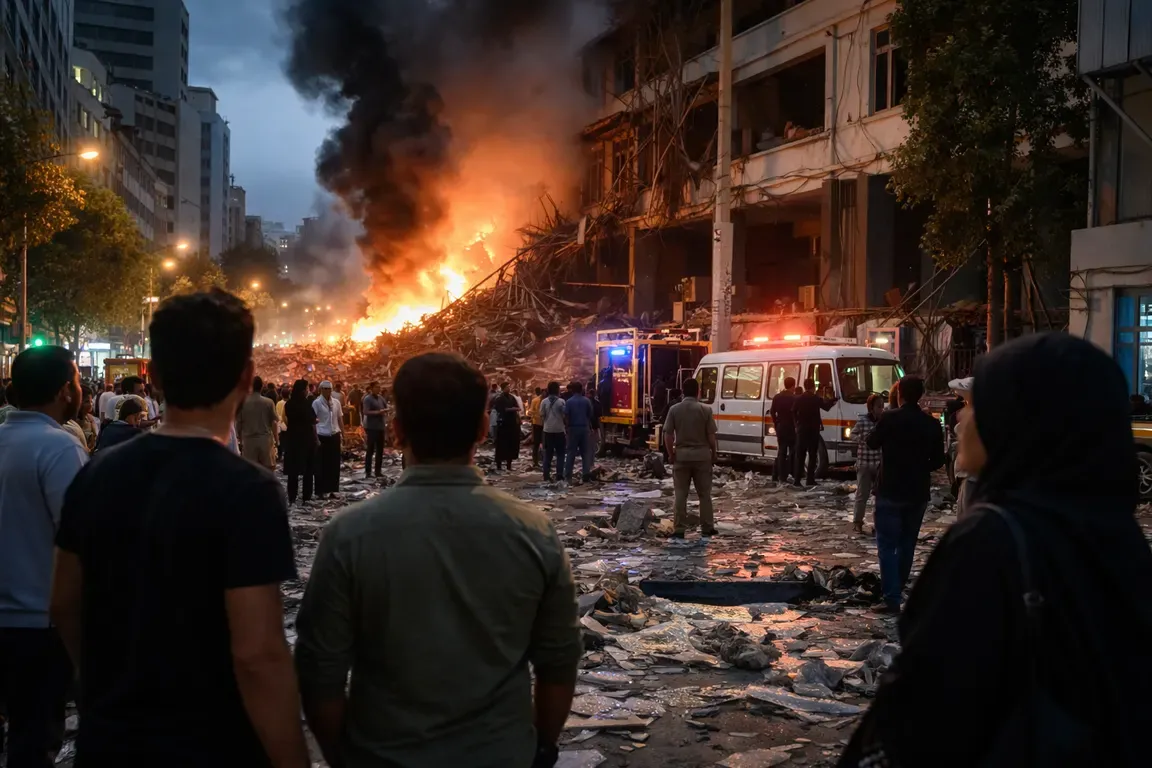
Israel and Iran have exchanged strikes for the first time since the April ceasefire, raising concerns about a potential larger conflict in the Middle East, amid the ongoing Israel Iran Conflict.
The recent exchange began with Israel striking targets in western and central Iran, followed by Iran firing missiles at Israel overnight. Israel responded by targeting military sites in Iran, with the Israeli military intercepting 11 missiles from Iran and no casualties reported.
The US is struggling to conclude a deal with Tehran to end the conflict, with Iran insisting that any deal must also address the parallel conflict in Lebanon. President Donald Trump called Israeli Prime Minister Benjamin Netanyahu to ask him not to retaliate, according to reports.
The escalating tensions between Israel and Iran have the potential to affect people in the region, with the possibility of a larger conflict causing harm to civilians and disrupting economic activity. Iran has also announced it is closing its airspace over the country's west, further escalating the situation.
As the Middle East teeters on the brink of a larger conflict, the question remains whether the US can successfully negotiate a deal to end the fighting between Israel and Iran. Other countries, such as the UK, may play a role in trying to broker a peace deal, but the details of any potential agreement remain unclear.
The implications of the recent exchange of strikes between Israel and Iran are far-reaching, with the potential for a larger conflict causing harm to civilians and disrupting economic activity. The next step for the US and other countries involved will be to try to negotiate a deal to end the conflict, but the path forward remains uncertain.