

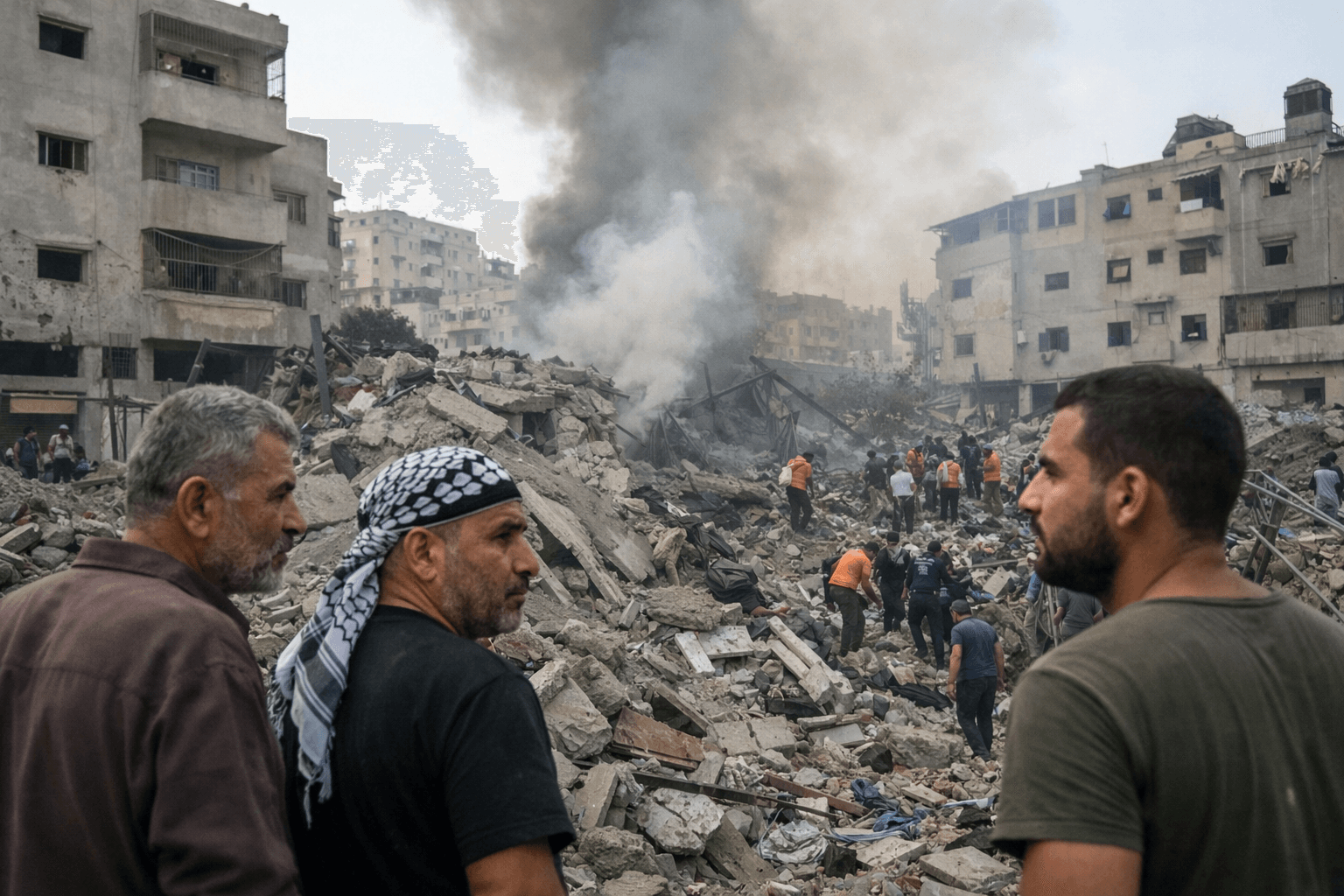
The recent killing of Mohammed Odeh, the alleged leader of Hamas's military wing, has marked a significant escalation in Israel's targeted campaign against the group's leaders, raising concerns about the impact on civilians and the potential for further violence in the region. Odeh's death, along with his wife and two children, is the latest in a series of targeted killings by Israel, which has claimed the lives of at least 910 people in Gaza since a ceasefire took hold in October 2025. The Israeli military's strategy of targeting Hamas leaders has sparked widespread debate about its effectiveness and the humanitarian consequences for civilians in the Gaza Strip. \n\n The conflict between Israel and Hamas has been ongoing for years, with periods of relative calm punctuated by outbreaks of violence. The October 7, 2023 attack by Hamas, which resulted in the deaths of 1,221 people, marked a significant escalation in the conflict, prompting Israel to launch a series of retaliatory strikes against the group's leaders and infrastructure. The killing of Odeh is part of this broader strategy, with Prime Minister Benjamin Netanyahu pledging to eliminate those behind the October 7 attack. \n\n The implications of Israel's targeted killings of Hamas leaders are far-reaching, with many analysts warning that the strategy could lead to further escalation and violence in the region. The killing of Odeh, in particular, is likely to have a significant impact on Hamas's military capabilities, as he was widely regarded as one of the group's most senior and experienced leaders. However, the strategy has also raised concerns about the humanitarian situation in the Gaza Strip, where civilians are increasingly bearing the brunt of the conflict. The Gaza Strip's health ministry has reported a significant shortage of medical supplies, making it difficult for hospitals to treat injured patients, while many residents are forced to live in fear of violence and with limited access to basic necessities like food, water, and healthcare. \n\n As the conflict continues to escalate, the international community is facing growing pressure to intervene and broker a peaceful resolution. The killing of Odeh has sparked widespread condemnation, with many calling for an end to the violence and a return to negotiations. However, with both sides dug in and refusing to back down, a peaceful resolution to the conflict seems increasingly unlikely. The humanitarian situation in the Gaza Strip will only continue to deteriorate unless a lasting solution is found, leaving thousands of civilians to suffer the consequences of a conflict that shows no signs of abating. \n\n The killing of Mohammed Odeh and his family is a stark reminder of the human cost of the conflict, and the need for a lasting and peaceful solution to the violence in the Gaza Strip. As the international community struggles to respond to the crisis, one thing is clear: the conflict between Israel and Hamas will only continue to escalate unless a new path is forged, one that prioritizes the protection of civilians and the pursuit of peace.