

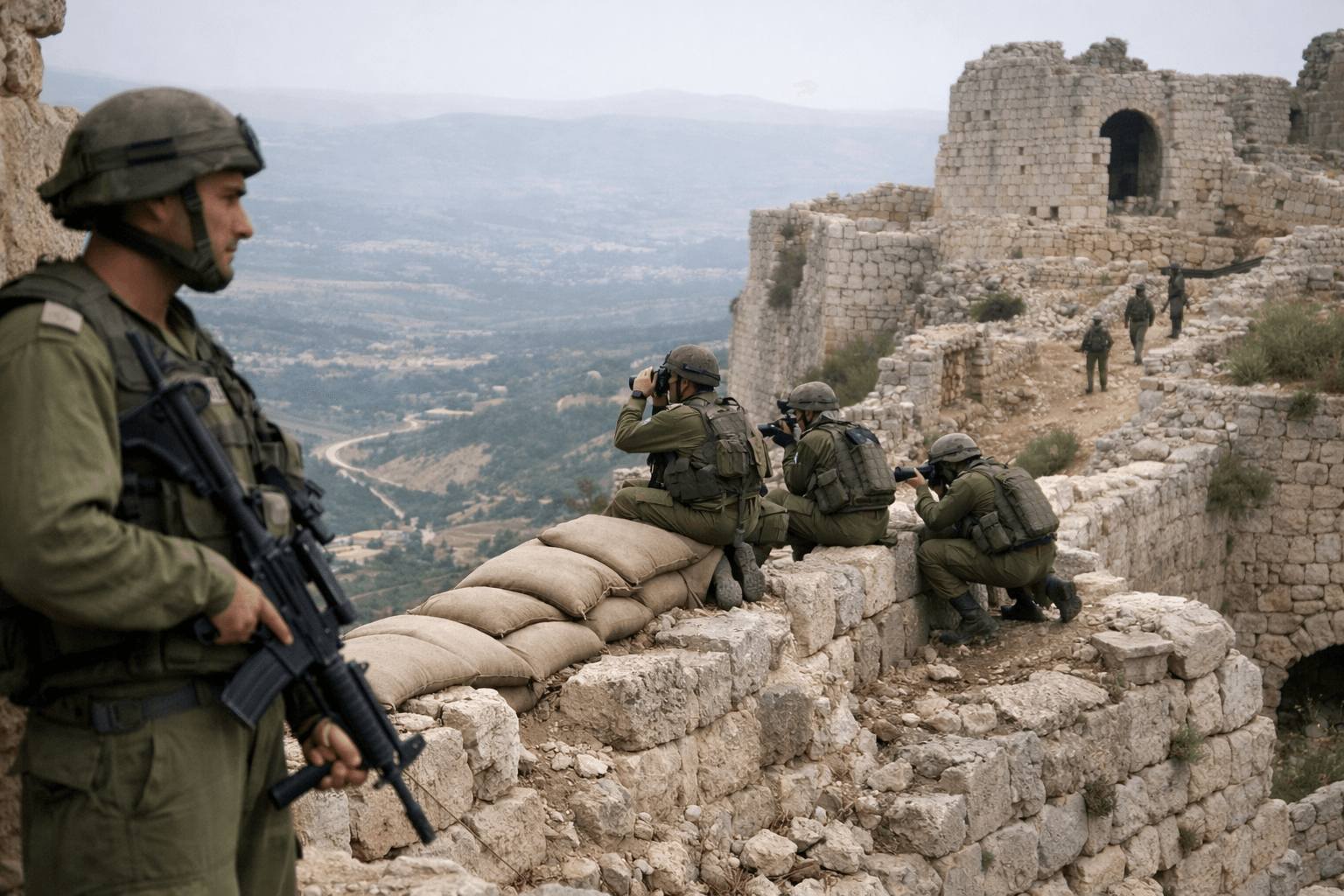
Israel has expanded its military presence in Lebanon with the capture of the Beaufort Castle, a 12th-century crusader castle that overlooks southern Lebanon and northern Israel. The strategic location of the castle has raised concerns about the potential for a prolonged occupation. The Israeli military has warned people south of the Zahrani River to leave the area, as the Litani River marks a significant boundary in the Israeli military's northward expansion.
The conflict involves Israel and Hezbollah, with the Beaufort Castle capture bringing up bitter memories of Israel's past occupation of Lebanon. According to reports from Al Jazeera and the New York Times, the castle's capture is a strategic gain and a symbolic reclamation of a site that once stood as a beacon of Israel's past occupation. The local population in southern Lebanon is directly affected, with warnings to leave areas south of the Zahrani River, and the potential for a prolonged conflict impacting the broader region.
As Israeli forces push past Lebanon's Litani River, the significance of this move is still being assessed, with NPR and BBC News reporting on the major offensive in southern Lebanon. The capture of the Beaufort Castle and the expansion past the Litani River are expected to affect the conflict with Hezbollah. The potential humanitarian impact on the local population in southern Lebanon is a major concern, with the international community watching for a response to these developments.
The immediate and long-term implications of Israel's expanded military presence in southern Lebanon are unclear. However, the capture of the Beaufort Castle marks a significant escalation in the conflict. The next step will be to see how Israel's broader strategy in the region plays out, and what international response can be expected to these developments. The situation is unfolding, and the international community is waiting to see how the conflict will evolve.