

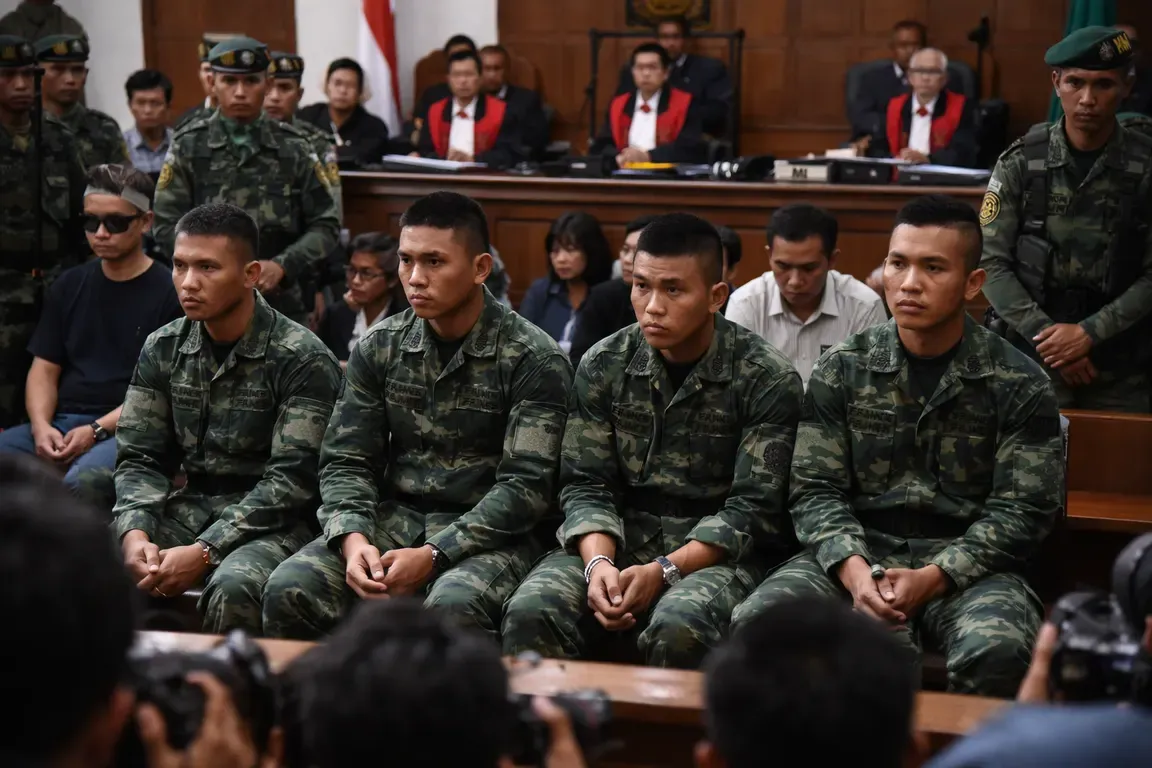
Four Indonesian soldiers were sentenced to up to three years in prison for an acid attack on rights activist Andrie Yunus, who was left blind in one eye. The case has sparked concerns over the military's influence and accountability in the country.
The sentences, ranging from one-and-a-half to three years in prison, were handed down in a military court, despite calls for the trial to be held in a civilian court. The attack occurred in March, and the soldiers, members of the military's Strategic Intelligence Agency, were arrested shortly after.
The trial's legitimacy has been disputed, with Amnesty International describing it as a 'blatant whitewash.' The sentences have significant implications for human rights in Indonesia, raising questions about the country's commitment to human rights and the rule of law. Two of the soldiers were dismissed from the armed forces as part of their punishment.
Critics argue that those who planned the crime have not been identified, and the sentences do not reflect the severity of the attack. The case highlights the tensions between Indonesia's military and civil society, and the sentences have been seen as too lenient by some. The Indonesian government has faced pressure to address the issue of military accountability, and this case has brought attention to the need for reform.
As the case comes to a close, questions remain about the military's role in the attack and the government's commitment to human rights. The sentences will be closely watched by human rights groups, who will be looking for signs of greater accountability from the military. The fact that the trial was held in a military court has raised concerns about the military's influence and accountability in the country, and the outcome is likely to have far-reaching implications for the country's human rights record.