

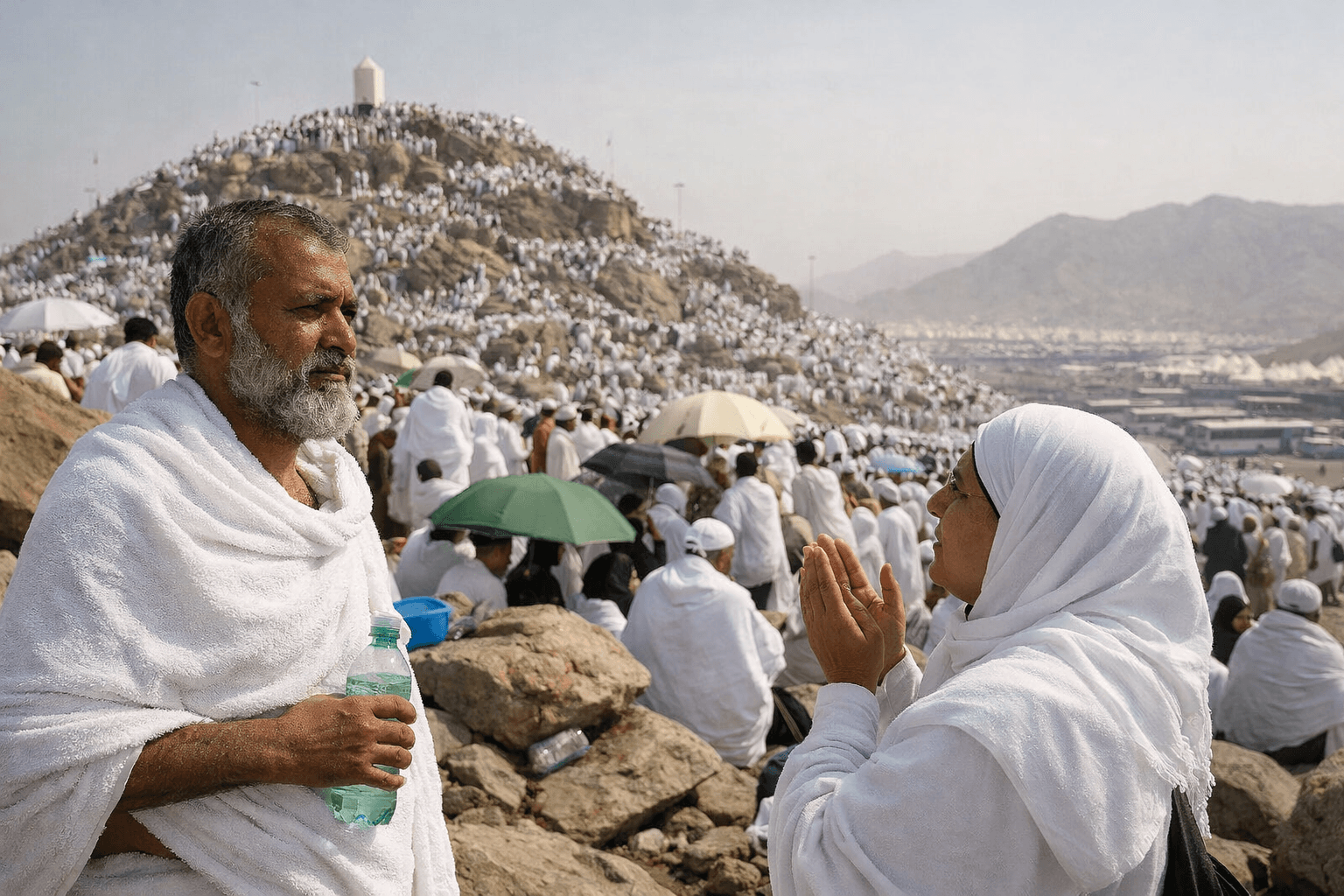
As the Hajj reaches its peak, over 1.5 million Muslims have converged on Mount Arafat, braving scorching desert temperatures to fulfill one of the most sacred duties in Islam. Despite the ongoing war in the Middle East, which has drawn in the US, Israel, and Iran, pilgrims from around the world, including over 30,000 Iranians, have gathered to reaffirm their faith. The sheer scale of the gathering is a testament to the enduring power of faith in the face of war and adversity, as pilgrims from diverse backgrounds come together to seek spiritual enlightenment. \n\n The Hajj pilgrimage is a mandatory religious duty for Muslims who have the means to perform it at least once in their lifetime. This year's pilgrimage takes place against the backdrop of an ongoing war that has resulted in drone and ballistic missile strikes on major infrastructure and energy installations across the Gulf, including in Saudi Arabia. The conflict has had a significant impact on the number of Iranian pilgrims, with only about a third of the expected 86,000 making the journey due to the wartime situation. \n\n As the pilgrims gather on Mount Arafat, they are preparing for the symbolic stoning of the devil ritual in Mina, which is set to take place on Wednesday. The ritual is a crucial aspect of the Hajj pilgrimage, and pilgrims have been collecting pebbles in Muzdalifah in preparation. Despite the challenges posed by the war, Saudi officials report an increase in the number of pilgrims traveling from abroad compared to 2025. The Al Saud dynasty, which has long derived legitimacy from its role as the Custodian of the Two Holy Mosques, is overseeing the pilgrimage, which is seen as a crucial aspect of Saudi Arabia's religious and cultural identity. \n\n For pilgrims like Ahmoud Abou Elezz, a 35-year-old Egyptian engineer, the Hajj is an experience like no other. It's an indescribable feeling, he said, describing the sense of community and spirituality that pervades the gathering. However, the war and resulting travel restrictions have also meant that many pilgrims, particularly from Iran, have been unable to make the journey, highlighting the human cost of conflict on religious freedom and cultural exchange. The significant decrease in Iranian pilgrims has not only affected the individuals who were unable to attend but also the communities they represent, underscoring the broader impact of geopolitics on personal and collective religious experiences. \n\n As the Hajj pilgrimage comes to a close, the resilience and determination of Muslims to fulfill one of the five pillars of Islam will have been tested and proven. Despite the challenges posed by the ongoing war, the pilgrimage has remained a powerful symbol of faith and spirituality, transcending the boundaries of geopolitics and conflict. The experience will undoubtedly leave a lasting impact on the pilgrims, and the world will be watching as they return home, inspired and renewed by their journey.