

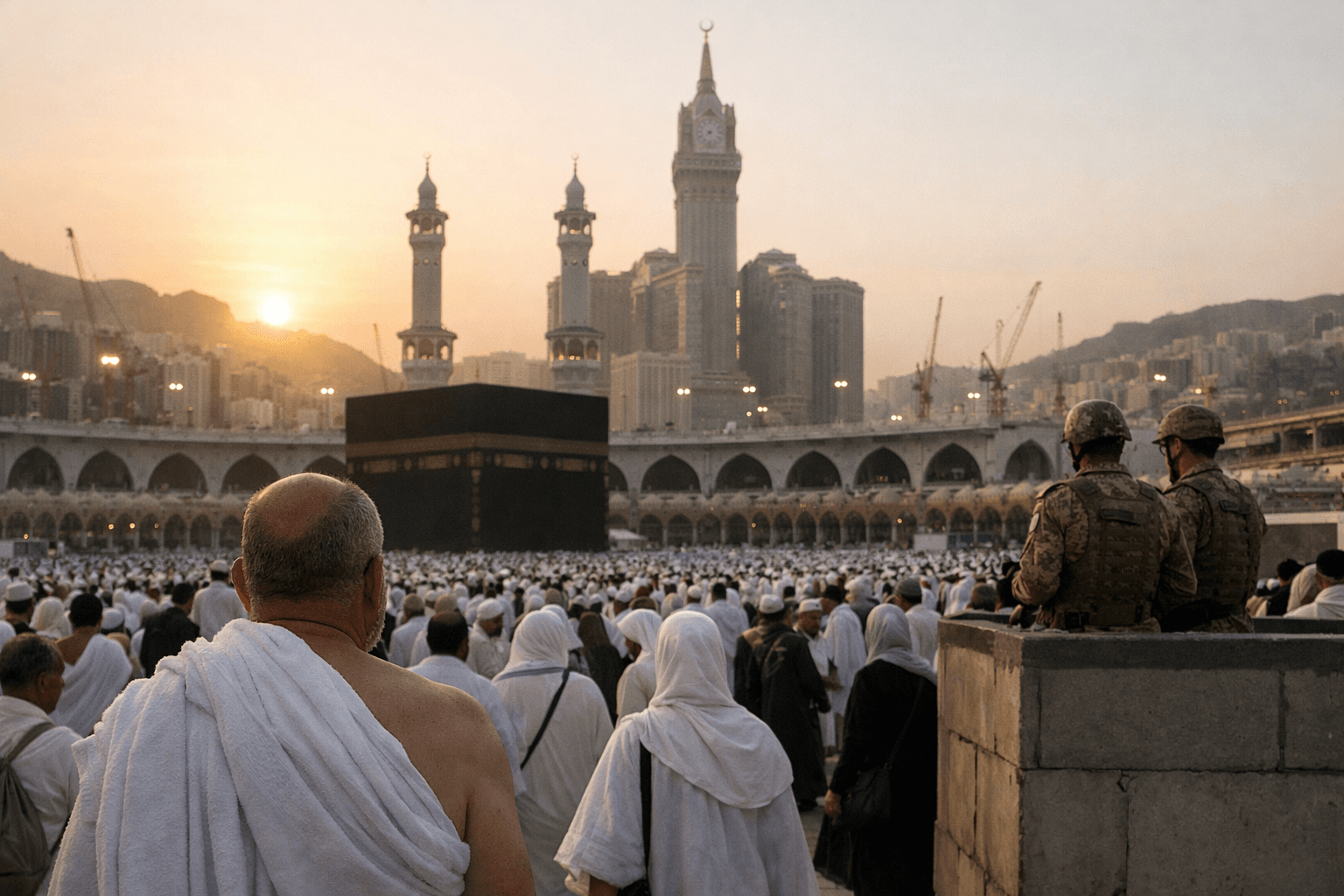
As the sun rises over the holy city of Mecca, over 1.5 million Muslims from around the world gather to begin the annual Hajj pilgrimage, a spiritual journey that is both a test of faith and a logistical challenge. The event, which takes place against the backdrop of a tenuous ceasefire in the Iran war and related regional tensions, has drawn an increased number of foreign pilgrims, with many expressing hope that peace will prevail soon. Despite the ongoing conflict in the region, pilgrims from Iran and other countries have traveled to Saudi Arabia to participate in the sacred rituals, which are a mandatory religious duty for Muslims who have the means to perform them.
The Hajj pilgrimage is one of the Five Pillars of Islam, a series of rituals and ceremonies that commemorate the life and teachings of the Prophet Mohammed. The pilgrimage takes place in the holy city of Mecca, Saudi Arabia, and involves a series of physically demanding tasks, including walking seven times around the Kaaba, a large black cubic structure at the center of Mecca's Grand Mosque, and walking seven times between the two hills of Safa and Marwa. The climax of the Hajj is the gathering on Mount Arafat, about 10 kilometers from Mina, where it is believed the Prophet Mohammed delivered his final sermon.
Saudi authorities have taken extensive measures to ensure the safety and security of pilgrims during the Hajj, positioning advanced air defense batteries on the outskirts of Mecca to protect the holy sites. The Saudi government has also increased the number of security personnel and medical staff on site, in an effort to mitigate the risks associated with the large crowds and high temperatures. Temperatures are forecast to top 40C for much of the week, posing a significant challenge to pilgrims, particularly the elderly and those with health conditions. Pilgrims from Iran, who have been affected by the conflict in the region, have expressed concern about the safety of their family members back home, while pilgrims from Saudi Arabia have worried about the impact of the conflict on their community.
The logistical and organizational challenges of hosting such a large and complex event are significant, with Saudi authorities working to provide food, water, and shelter to the massive crowds. The Saudi government has invested heavily in infrastructure, including roads, bridges, and medical facilities, to support the pilgrimage. Despite these challenges, the Hajj remains a powerful symbol of faith and unity for Muslims around the world, with pilgrims from diverse backgrounds coming together to perform the sacred rituals. As the pilgrimage comes to a close, many are left to wonder what the future holds for the region, and whether the Hajj can serve as a catalyst for peace and reconciliation.
The successful completion of the Hajj pilgrimage will be a significant achievement for Saudi authorities, who have worked tirelessly to balance the spiritual and security aspects of the event. As pilgrims return to their homes around the world, they will carry with them the memories and lessons of the Hajj, and the hope that one day, the region will be at peace.