

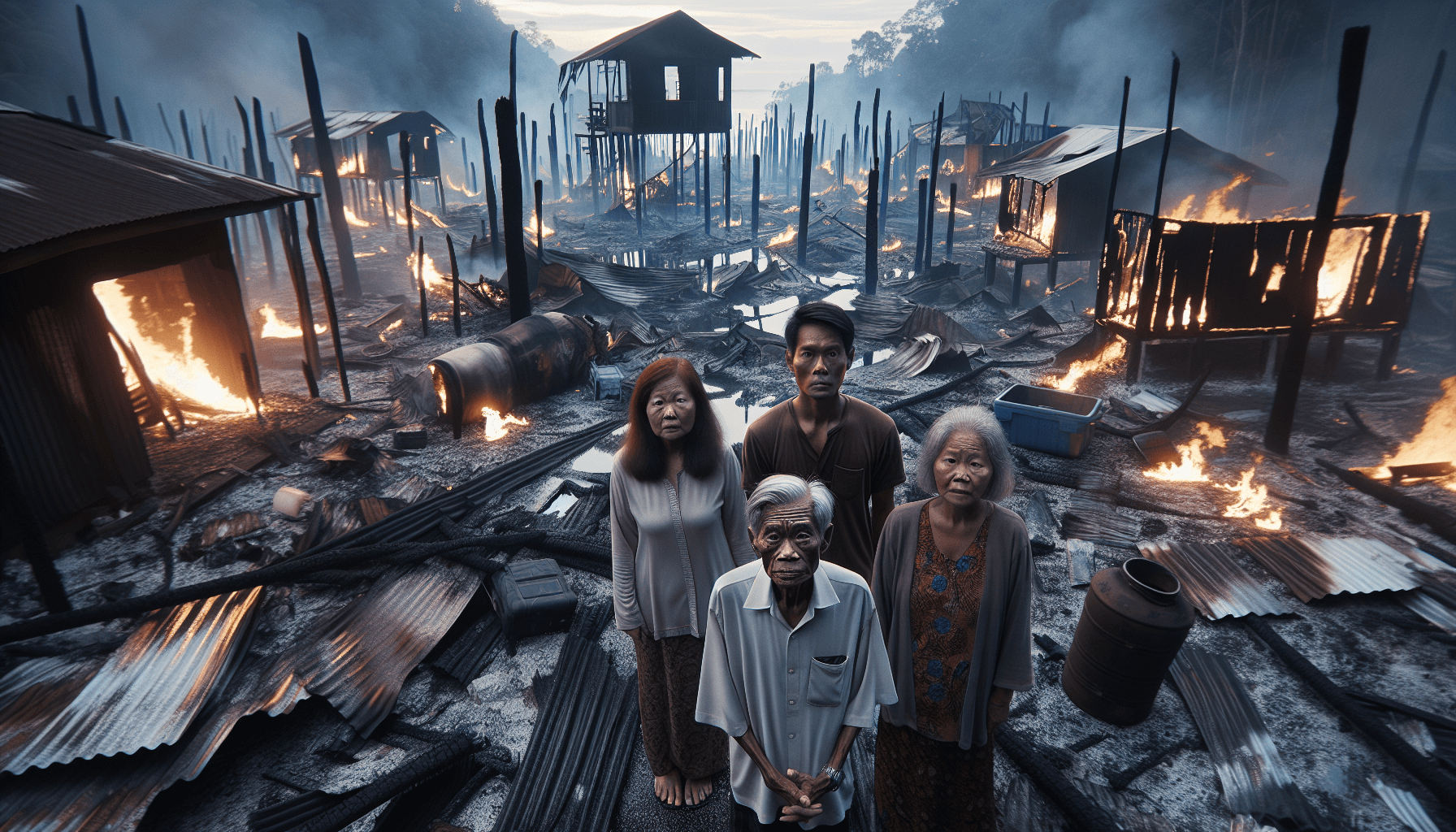
Malaysia Coastal Village Reduced to Ashes Overnight
A devastating fire swept through a coastal village in Malaysia's Sabah state, leaving nearly 9,000 residents without homes and highlighting the urgent need for more resilient housing and disaster response systems in the country's poorest areas. The blaze, which occurred in a "water village" in the Sandakan district, destroyed approximately 1,000 makeshift homes, many built on stilts over water, and affected mostly indigenous and stateless communities. The fire has not only destroyed homes but also livelihoods, as many residents relied on the water and surrounding areas for their income.
The village affected by the fire is home to some of Malaysia's poorest residents, who live in closely packed, wooden stilt houses that lack access to basic amenities and services. These communities are often vulnerable to disasters, and the fire has underscored the need for more robust emergency response systems in such areas. The narrow access routes and low sea tide hindered firefighting efforts, but thanks to the swift response from the Sabah Fire and Rescue Department, no injuries or fatalities were reported.
The fire has left thousands of people without homes, including families with children and elderly individuals, who are now in need of temporary shelter, food, and other essential supplies. For example, a family who lived in one of the destroyed stilt homes may now have to rely on temporary accommodation provided by the government, while they wait for their home to be rebuilt. The psychological impact of losing one's home and belongings should also not be underestimated, as it can lead to long-term trauma and stress. The Malaysian government has pledged to provide assistance and temporary accommodation to those affected, but the road to recovery will be long and challenging. The destruction of these homes will also affect the livelihoods of the residents, as many relied on the water and surrounding areas for their income, such as fishing and tourism.
The international community can play a crucial role in supporting the relief efforts and providing long-term solutions for the affected communities. Organizations can provide aid, such as food, shelter, and clothing, as well as expertise in disaster response and recovery. The Malaysian government can also work with international organizations to develop more resilient housing and emergency response systems, which can help prevent similar disasters in the future. Furthermore, the government can implement policies to improve the living conditions of marginalized communities, such as providing access to basic amenities and services, and promoting sustainable livelihoods.
The fire in the coastal village of Sabah state is a wake-up call for the Malaysian government and the international community to take action and address the vulnerabilities of marginalized communities living in makeshift homes. The impact of the fire will be felt for a long time, but with the right support and assistance, the affected communities can rebuild their lives and create a more resilient future.