

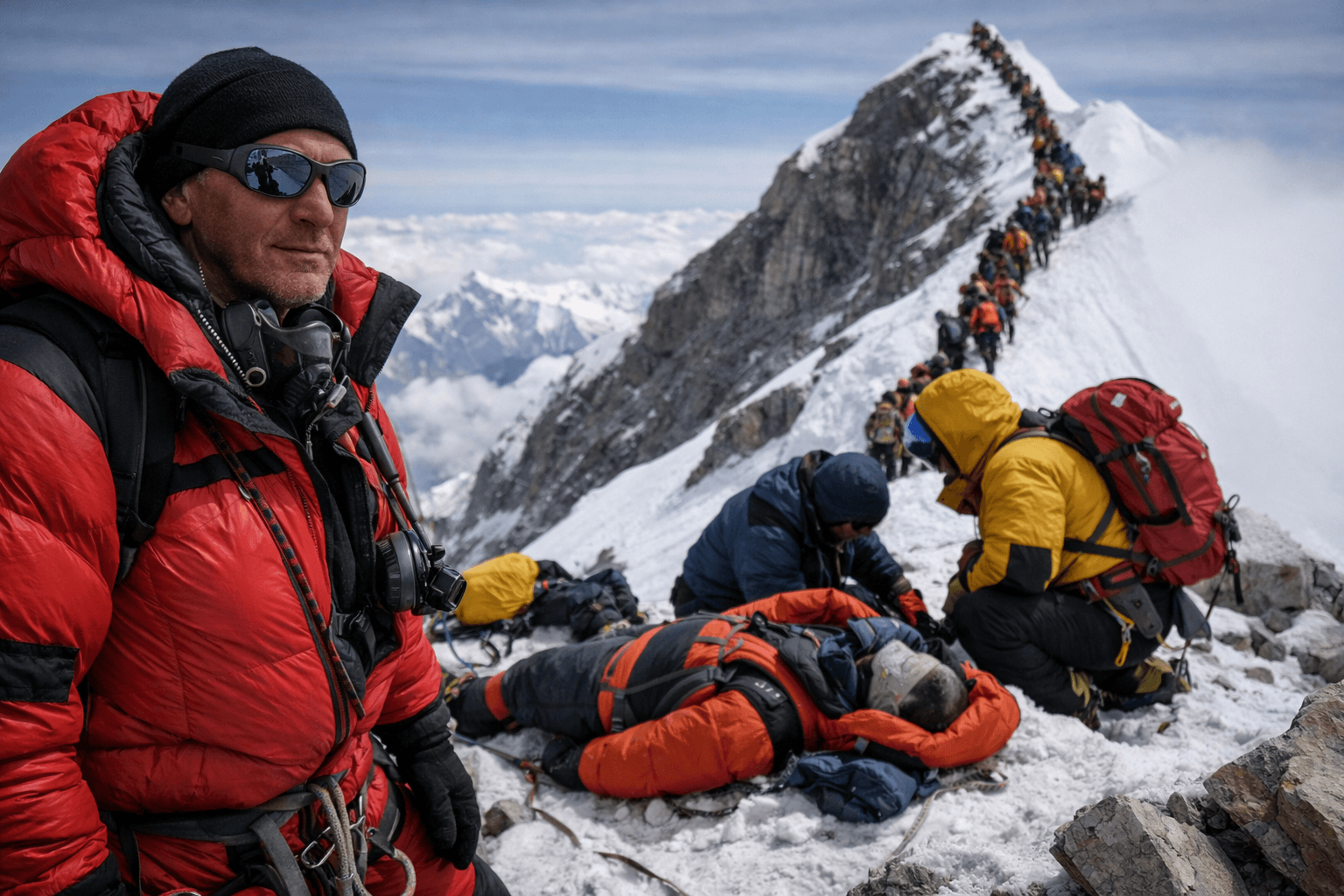
As Kenton Cool, a 52-year-old British climber, stood atop Mount Everest for a record 20th time, the world marveled at his remarkable achievement. However, the celebration was tempered by the sobering reality of the climbing boom's human cost. At least 5 climbers have lost their lives on the mountain this season, including 2 Indian mountaineers, highlighting the risks and dangers that come with tackling the world's highest peak. The question on everyone's mind is: what price are we willing to pay for these record-breaking feats? \n\n Mount Everest, located in the Himalayas on the border between Nepal and Tibet, is a formidable challenge that has captivated adventurers for decades. The climbing season typically runs from March to May, with the best weather conditions usually occurring in late April and early May. This year, a record 492 permits were issued to mountaineers, leading to concerns about overcrowding and safety on the mountain. \n\n The climbing boom has made mountaineering a lucrative business in Nepal, with hundreds of adventurers flocking to the country each spring to tackle the world's highest peaks. While the revenue generated from permits is an important source of income for the country, it also puts a strain on the mountain's infrastructure and resources. The result is a perfect storm of overcrowding, increased risks, and environmental concerns. Nepali climber Kami Rita Sherpa, 56, broke his own world record with a 32nd summit of Everest, while Lhakpa Sherpa, 52, broke her own women's record with her 11th summit. However, these achievements are bittersweet, as the climbing community grapples with the human cost of the climbing boom. \n\n The main factors contributing to the overcrowding on Everest are the increasing number of permits issued and the lack of experience among some climbers. To address these concerns, the Nepali authorities need to implement more stringent regulations and safety protocols, such as mandatory training and experience requirements for climbers. Additionally, the climbing community must prioritize responsible climbing practices, such as respecting the mountain's environment and adhering to safety guidelines. The families of climbers who have lost their lives on the mountain also need support and assistance, highlighting the need for a more comprehensive approach to managing the risks associated with climbing Everest. \n\n As the climbing season comes to a close, the world is left to ponder the true cost of these record-breaking achievements. The pursuit of adventure and human excellence is a fundamental aspect of our nature, but it must be balanced with a deep respect for the mountain and its power. The climbing community must come together to address the concerns surrounding overcrowding and safety on Everest, ensuring that the world's highest peak remains a challenge to be revered, not a gamble with lives.