

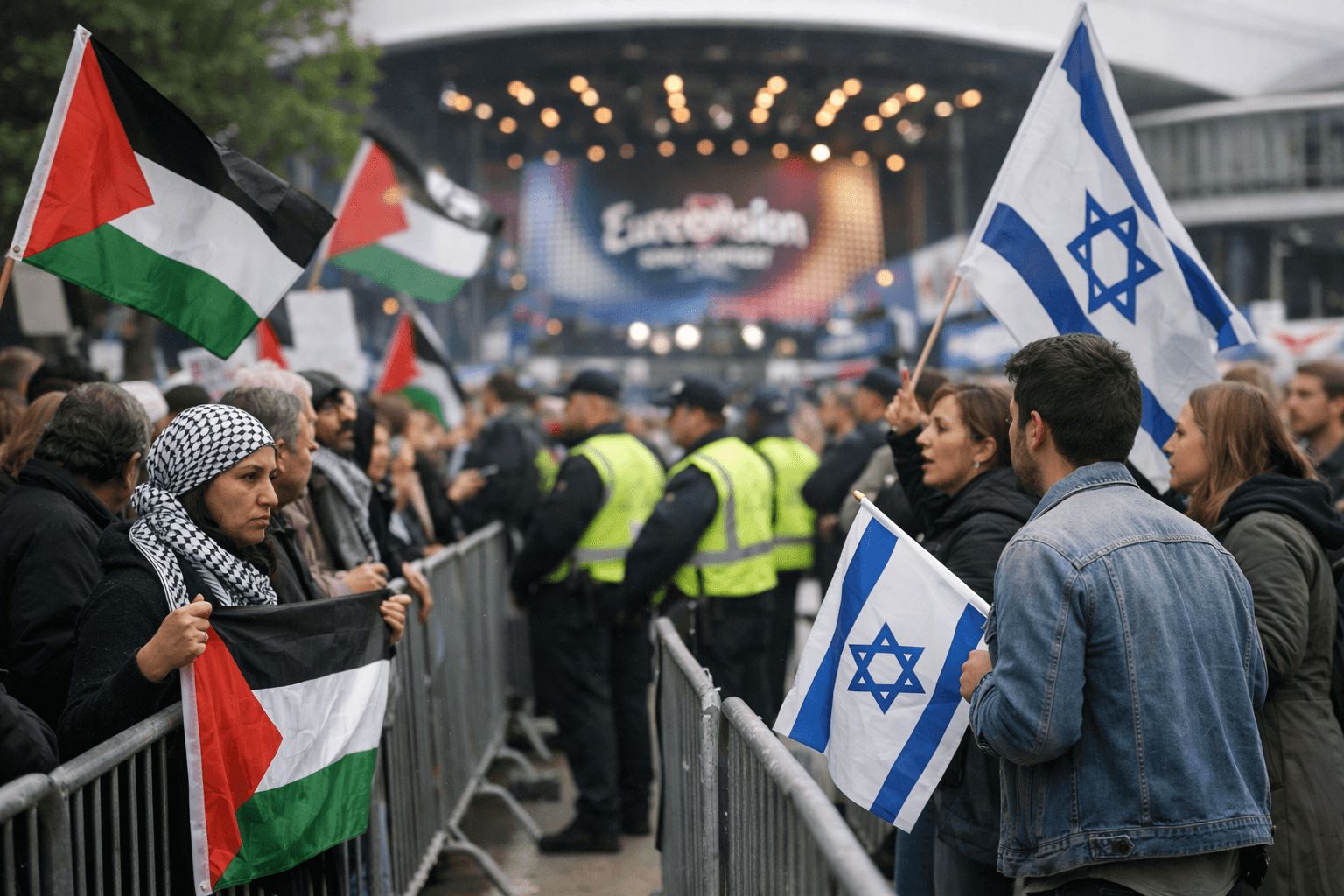
As the Eurovision song contest reaches its grand finale in Vienna, the usual spectacle of glittering costumes and catchy tunes is being overshadowed by a very different kind of drama. The contentious issue of Israel's participation has sparked a firestorm of protests, boycotts, and debates that threaten to upstage the music itself. Five countries, including Iceland, Ireland, and Sweden, are boycotting the contest in response to Israel's involvement, while others are using the platform to express support for Palestinian rights. The European Broadcasting Union, which organizes the contest, is walking a delicate tightrope, trying to balance the need for neutrality with the demands of participants and viewers who want to see the contest take a stronger stance on the issue.
The Eurovision song contest has a long history of being a platform for artistic expression and cultural exchange, but its apolitical nature has been challenged in recent years by the participation of countries with contentious political situations. The Israeli-Palestinian conflict has been a longstanding and deeply divisive issue, with many countries and organizations taking sides or advocating for boycotts and sanctions. This year's contest is no exception, with the EBU facing criticism for its handling of the situation and participants facing backlash for their decision to take part.
The boycotts and protests are having a significant impact on the tone and atmosphere of the contest, with some fans reporting feeling torn between their love of the music and their support for Palestinian rights. The Icelandic entry, which features a song with lyrics referencing the Israeli-Palestinian conflict, is just one example of how some artists are using the platform to express their views. Meanwhile, the EBU has implemented security measures to mitigate potential disruptions, including a ban on political statements during the live broadcast. However, this move has been criticized by some as inadequate or insensitive to the political context.
The controversy surrounding Israel's participation in Eurovision has significant implications for the future of the contest and its relationship with participating countries. The EBU will need to navigate the complex political landscape surrounding the contest, finding a way to balance the need for artistic expression with the need for sensitivity to the political context. For now, the focus is on the music, but the real drama is unfolding behind the scenes, where the intersection of art, politics, and activism is creating a very different kind of spectacle. The outcome of this drama will have a lasting impact on the contest and its fans, and will likely shape the course of future events.