

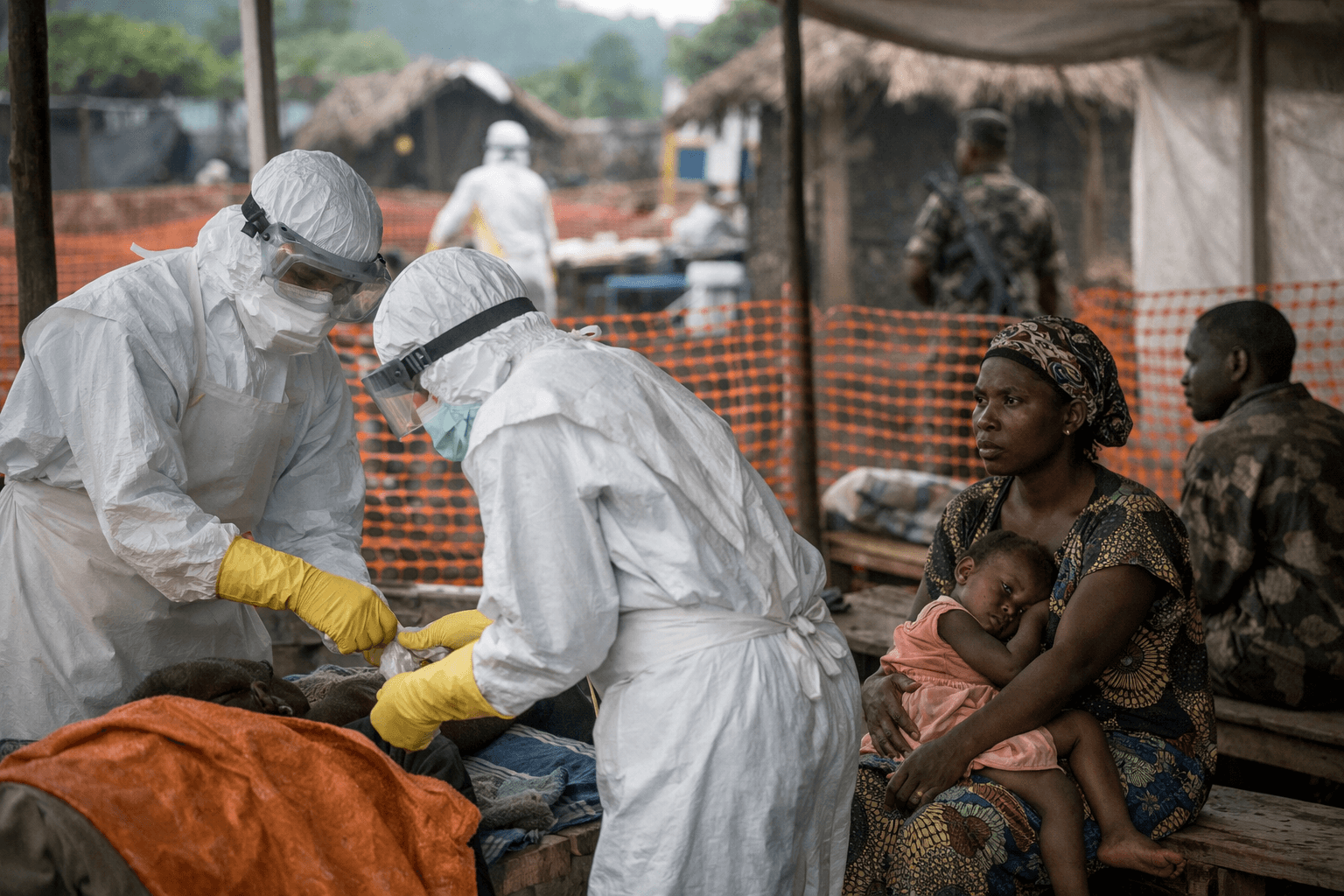
Test-The Democratic Republic of Congo is grappling with a rapidly spreading Ebola outbreak, exacerbated by the region's long-running conflicts and poor infrastructure. As the death toll rises, health workers are racing against time to contain the virus in a region where the rare Bundibugyo strain of Ebola is spreading rapidly. With 131 deaths and 513 suspected cases reported, the World Health Organization has declared the outbreak a public health emergency of international concern. The epicenter of the outbreak is in the northeastern Ituri province, a gold-mining hub with poor road networks and a history of clashes between local militias.
The Congo has experienced numerous Ebola outbreaks in the past, including the 2018-2020 outbreak that claimed nearly 2,300 lives. The country's eastern region is prone to conflicts, and the current outbreak is occurring in an area with limited access to healthcare and poor infrastructure. The Bundibugyo strain of Ebola is rare and has been responsible for outbreaks in Uganda in 2007 and in the Congo in 2012. This context is crucial in understanding the complexity of the current outbreak and the challenges faced by health workers.
In the affected areas, health workers are facing numerous challenges in responding to the outbreak. The poor road networks and lack of infrastructure are making it difficult for them to access the affected areas, while the conflict in the region is posing a significant threat to their safety. For example, local youth organization members are digging graves and burying people who died without gloves or protection, highlighting the risks faced by healthcare workers and the community. The outbreak is also causing fear and panic, with many people believing that the disease is mystical, leading to delayed reporting and treatment. The international community has announced some support, with the US screening air passengers from outbreak-hit areas and Germany preparing to receive and treat a US citizen who has contracted the virus.
The World Health Organization has approved $3.4 million from the Contingency Fund for Emergencies to support the response efforts, and the Africa CDC has mobilized $2 million. However, funding remains a significant challenge, and more support is needed to contain the outbreak. The conflict in the region is also impacting the response efforts, with health workers struggling to access the affected areas. The likelihood of the outbreak spreading to other countries is high, and measures are being taken to prevent it. The US has temporarily suspended visa services, and other countries are also taking precautions. As the situation continues to unfold, it is clear that a coordinated and sustained response is needed to contain the outbreak and prevent further spread.
The outbreak is having a devastating impact on the affected communities, with patients, healthcare workers, and families all being affected. The fear and panic caused by the outbreak are leading to delayed reporting and treatment, which is further exacerbating the situation. As the international community responds to the outbreak, it is essential to consider the long-term implications of the crisis and the need for sustained support to the affected regions. The current outbreak highlights the need for a comprehensive and sustained response to address the complex challenges posed by Ebola in conflict-ridden areas.