

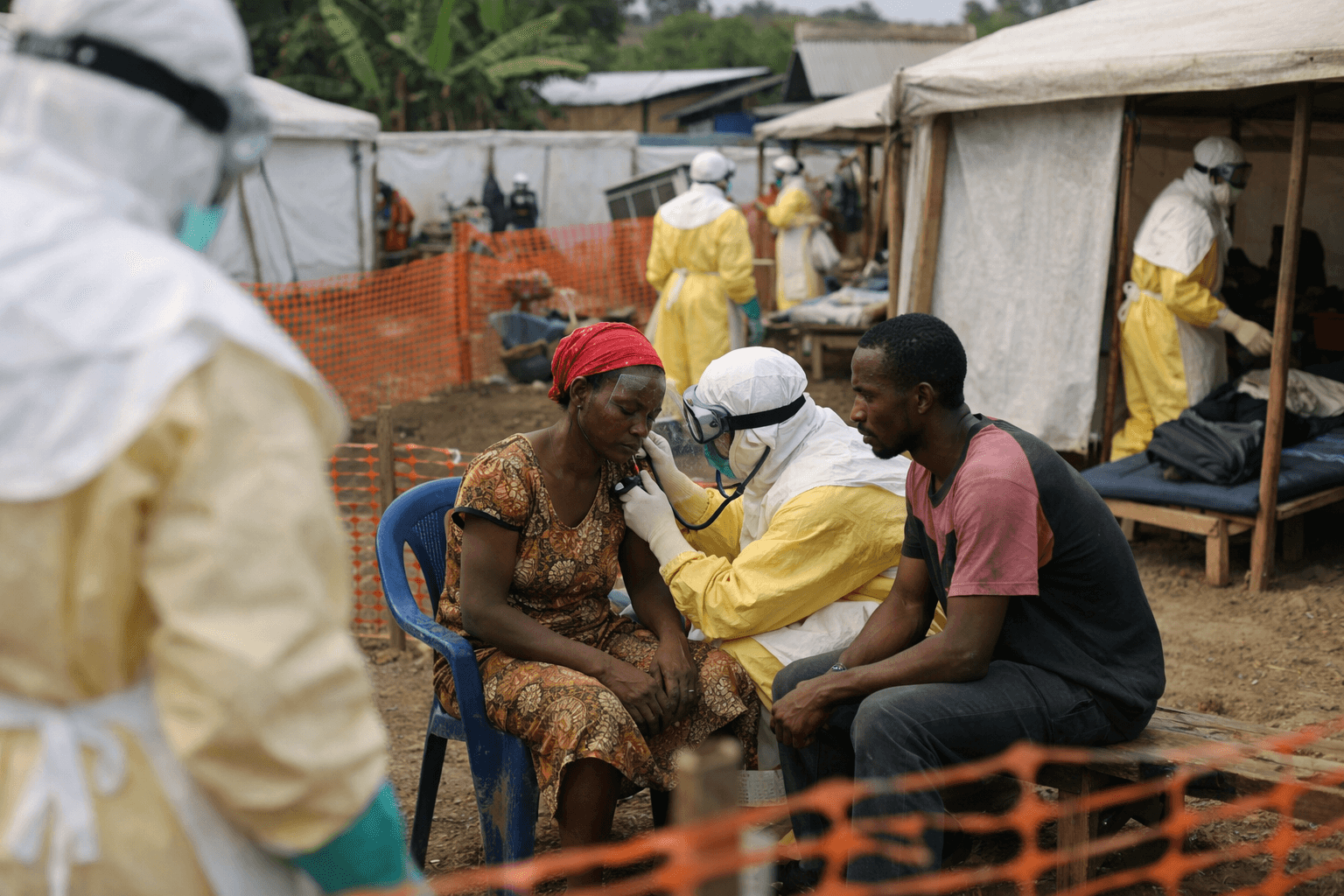
The Ebola outbreak in the Democratic Republic of Congo has taken a devastating turn, with the World Health Organization upgrading the risk assessment from 'high' to 'very high' as the disease spreads rapidly across the country. The outbreak, caused by the Bundibugyo virus, has already claimed over 170 lives and infected hundreds more, with a total of 750 suspected cases and 177 suspected deaths. As the situation continues to deteriorate, the complex web of local customs, armed conflicts, and limited resources is posing a significant challenge to authorities struggling to contain the disease. The Democratic Republic of Congo has been experiencing ongoing armed conflicts over mineral resources, which has led to the displacement of nearly a million people in the northeastern corner of the country. This has further weakened the region's already fragile health infrastructure and surveillance capacity, making it challenging to respond to the Ebola outbreak. The International Rescue Committee has had to stop its surveillance activities in three out of five areas in Ituri due to funding cuts, exacerbating the problem.
In the Ituri province mining town of Mongbwalu, where the outbreak is believed to have originated, many families have been affected, and the demand for coffins has soared. Lokana Moro Faustin, a resident of the town, lost his 16-year-old daughter to the disease and was not able to give her a proper goodbye due to Ebola restrictions. The provincial government has banned funeral wakes and gatherings of more than 50 people to curb the spread of the disease, but this has had a significant impact on local communities. Healthcare workers, such as nurses and doctors, are also at risk of infection due to the lack of basic protective equipment, and their safety is a major concern as they work to contain the outbreak.
The United States has pledged $23 million in funding to bolster the response in Congo and Uganda, while the United Nations has released $60 million from its Central Emergency Response Fund to accelerate the response in the region. As the outbreak spreads to rebel-held areas, the response efforts are further complicated by the lack of communication between the government and rebel groups. The restriction on gatherings and funeral wakes is likely to affect the local communities significantly, and there are concerns that these measures may not be enough to contain the spread of the disease. The safety of healthcare workers remains a major concern, and it is essential that they are provided with the necessary protective equipment to ensure their safety as they work to contain the outbreak. With the situation continuing to deteriorate, it is clear that a more comprehensive and coordinated response is needed to bring the outbreak under control.