

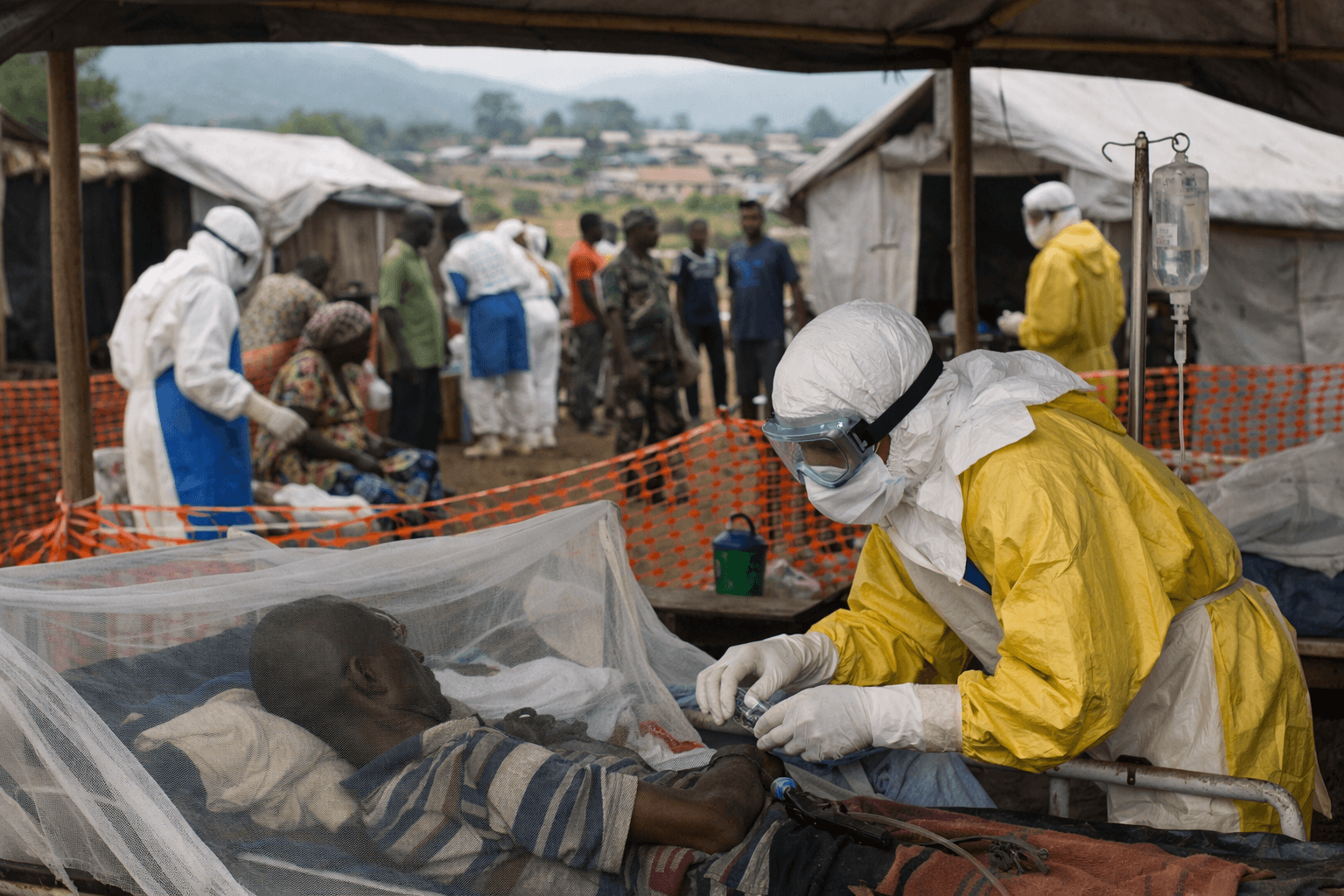
The Democratic Republic of the Congo is grappling with a rapidly spreading Ebola outbreak, which has raised the World Health Organization's health risk to 'very high.' At the epicenter of the crisis, in Ituri province, the provincial government has banned public gatherings in a bid to mitigate the spread of the virus. However, the situation is further complicated by the convergence of conflict, misinformation, and strained resources, threatening the lives of those infected and the healthcare workers tasked with saving them. The outbreak has already affected healthcare workers, highlighting the vulnerability of the healthcare system and the personal risks faced by those providing care.
The Democratic Republic of the Congo has long been plagued by conflict, political instability, and poor healthcare infrastructure, creating a perfect storm for the rapid spread of infectious diseases like Ebola. The current outbreak is occurring in a region with limited access to healthcare, sanitation, and other essential services, exacerbating the crisis. The affected provinces in eastern Congo have been ravaged by conflict, which has led to the displacement of people, making it difficult to track and contain the outbreak.
The response efforts are being hindered by the spread of misinformation, which is hampering the ability to contain the outbreak and provide effective treatment. The United Nations is intensifying its response by deploying emergency personnel, funding, and supplies to the affected areas. However, more needs to be done to protect healthcare workers, who are at high risk of infection, and to ensure the continuity of healthcare services in the affected areas. For instance, the case of a healthcare worker being among the first cases reported underscores the need for urgent action to safeguard the healthcare system. The international community must provide additional support to contain the outbreak and provide effective treatment to those affected, including increased funding, personnel, and medical supplies.
The long-term consequences of the Ebola outbreak in the Democratic Republic of the Congo could be devastating, with the potential to overwhelm the already strained healthcare system and exacerbate the humanitarian crisis. The global community must work to prevent similar crises in the future by addressing the underlying issues of conflict, instability, and poor healthcare infrastructure. This can be achieved through increased investment in healthcare infrastructure, support for conflict resolution efforts, and initiatives to improve access to essential services.
The situation in the Democratic Republic of the Congo is dire, and immediate action is needed to contain the outbreak and prevent further loss of life. The international community must come together to provide the necessary support to the affected areas, including funding, personnel, and medical supplies, to ensure that the outbreak is brought under control and that the healthcare workers who are risking their lives to save others are protected.