

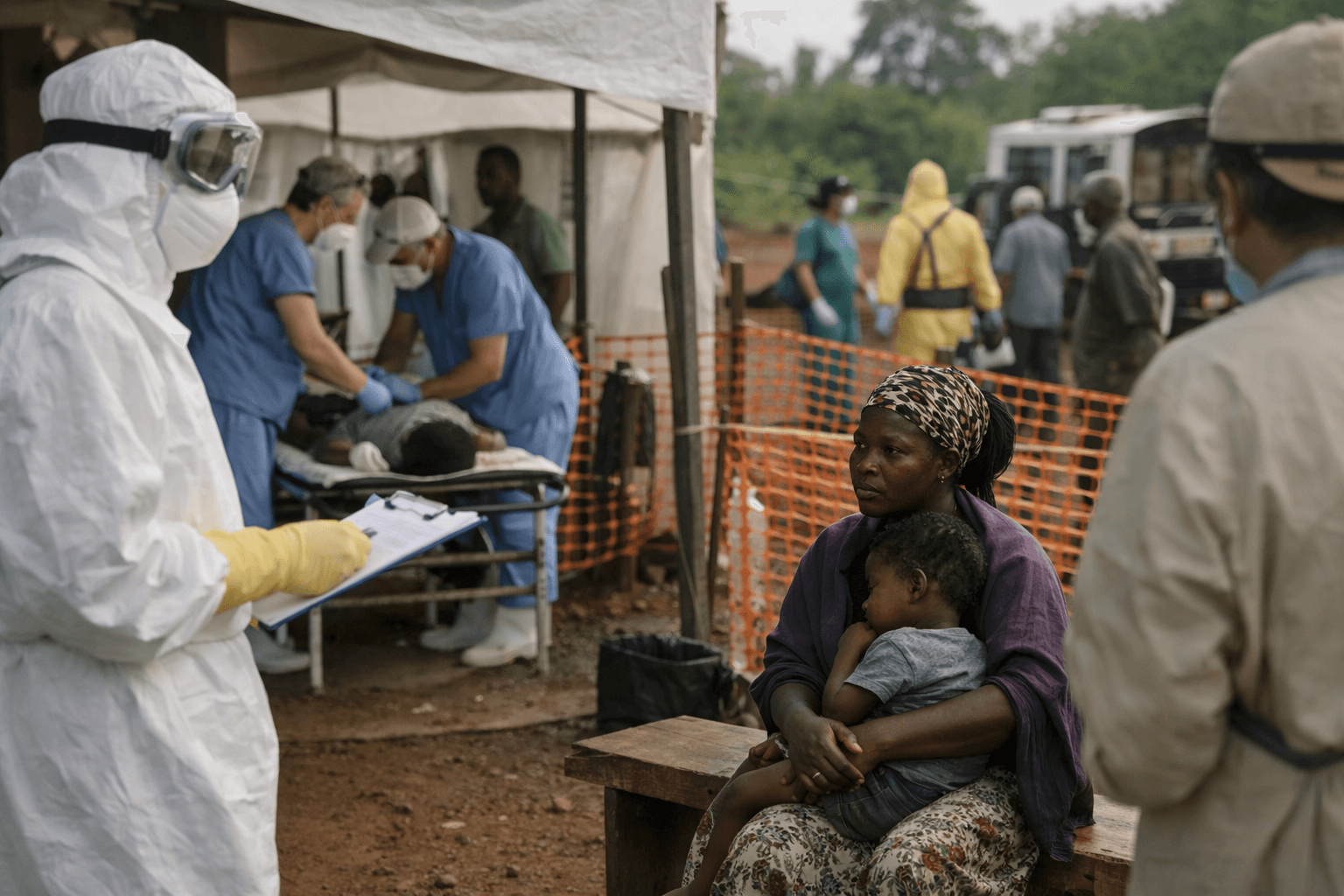
The Democratic Republic of Congo is facing a daunting challenge as the Ebola outbreak, which has already claimed over 1,400 lives, spreads to neighboring countries, including Uganda, where three new cases have been confirmed. The World Health Organization has deployed over 500 staff to the affected areas, but the response efforts are being hindered by armed conflict, limited resources, and distrust among local communities. As the outbreak continues to spread, the international community is racing against time to contain the crisis, with the city of Goma, a major urban center with over 1 million inhabitants, being a particular concern due to its potential for rapid spread. The Ebola outbreak in the Democratic Republic of Congo is not a new phenomenon, but the current crisis is particularly challenging due to the combination of armed conflict, limited resources, and distrust among local communities. The country's healthcare system is already strained, and the outbreak is putting additional pressure on the existing infrastructure, with only 1.5 healthcare workers per 1,000 people, making it challenging to provide adequate care and respond to the crisis.
In the affected areas, the outbreak is having a devastating impact on local communities, with many people experiencing trauma, anxiety, and fear. In the city of Butembo, a major hotspot, over 100 healthcare workers have been infected, and many more have been forced to flee due to violence. Local businesses are also suffering, with trade and commerce severely impacted by the outbreak. The psychological toll on affected communities is significant, and it is essential that the international community provides support to cope with the crisis. The WHO has established an emergency operations center to coordinate the response, but more needs to be done to address the underlying issues that have contributed to the outbreak.
The spread of the outbreak to neighboring countries has raised concerns about the potential for rapid spread in densely populated areas. Uganda, Rwanda, South Sudan, and Burundi are all at high risk of cross-border transmission, and it is essential that these countries take measures to prevent the spread of Ebola. The Congolese government has established an emergency operations center to coordinate the response, and the international community is providing support, but more needs to be done to address the complex web of challenges facing the response efforts. The long-term plan to rebuild the healthcare infrastructure and address the underlying issues that have contributed to the outbreak is crucial to ensuring that the region is better prepared to respond to future health crises.
As the international community continues to respond to the crisis, it is clear that a comprehensive approach is needed to contain the outbreak and address the underlying issues. The outbreak is a stark reminder of the need for investment in healthcare infrastructure and the importance of addressing the root causes of such crises. The people of the Democratic Republic of Congo and neighboring countries are in desperate need of support, and it is essential that the international community provides a coordinated and effective response to the crisis.