

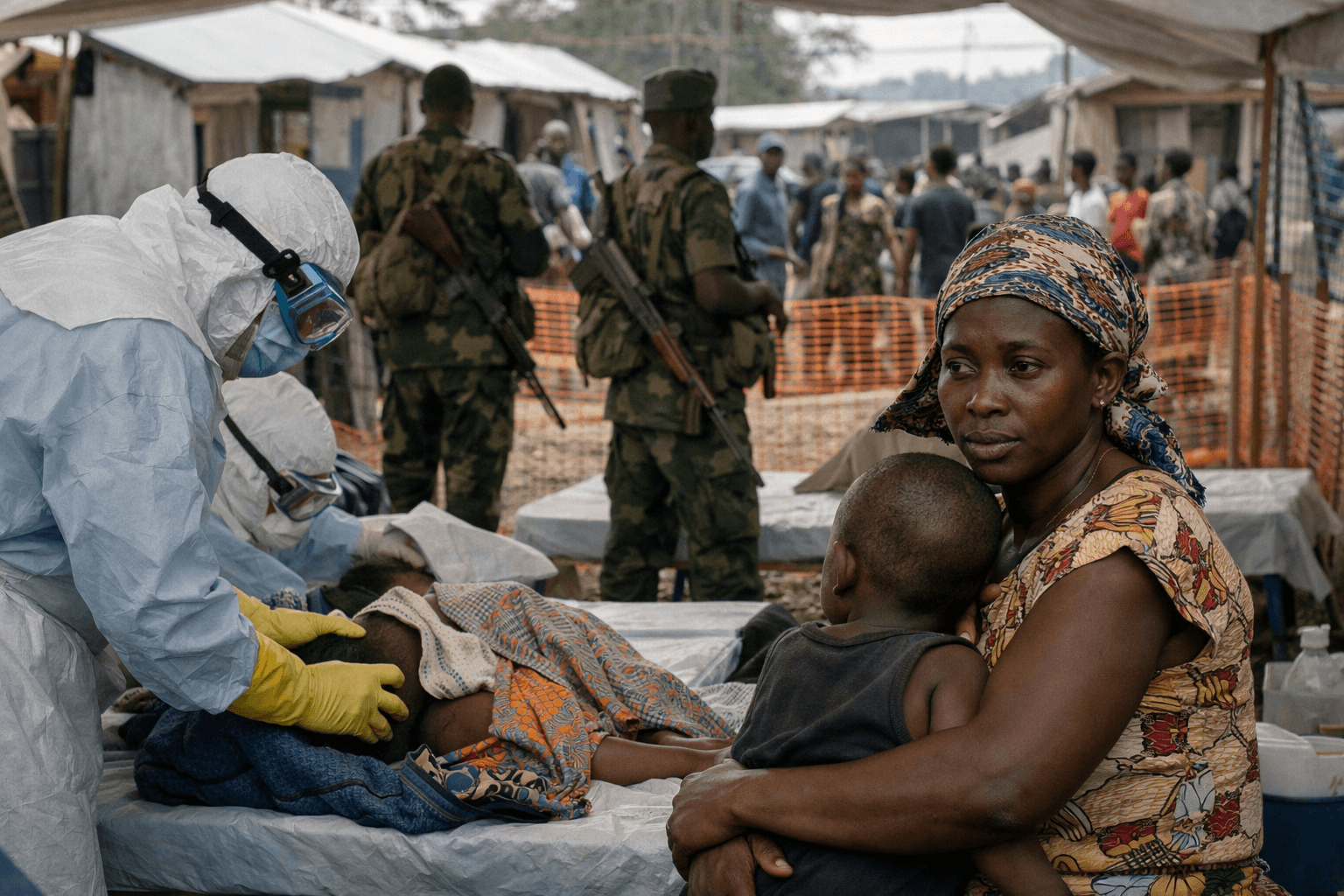
The Ebola outbreak in the Democratic Republic of Congo has become a perfect storm of chaos, with the deadly disease spreading rapidly amidst armed conflict, mistrust, and inadequate funding. As the death toll rises, with 139 fatalities and over 600 probable cases, the international community is struggling to contain the outbreak. The rare Bundibugyo strain of Ebola, which does not show up on tests for the more common Zaire strain, has complicated detection and response efforts. The situation is further exacerbated by the burning of a hospital by protesters, highlighting the challenges faced by responders and the need for community engagement and understanding. The DRC has experienced numerous Ebola outbreaks in the past, but the current outbreak is particularly challenging due to the remote location, lack of infrastructure, and ongoing armed conflict in the region.
The country's experience with Ebola has not been sufficient to prepare for the current outbreak, and the international community's response has been hindered by funding cuts and logistical challenges. The World Health Organization has declared the outbreak a public health emergency of international concern, but determined it is not a pandemic emergency, with the European Commission stating the risk of infection in the EU is very low. As the outbreak spreads to areas controlled by the M23 rebel group, responders are facing significant challenges in accessing affected communities.
The aid cuts by Western nations have left responders ill-equipped to handle the outbreak, with the WHO examining potential candidate vaccines or treatments to rein in the spread. Healthcare workers are struggling to respond to the crisis without adequate resources. They dig graves and bury dead people without gloves or any protection, highlighting the dire need for support and equipment. The burning of the hospital has also highlighted the fear and mistrust among the local community, which is exacerbating the crisis.
The long-term consequences of the aid cuts by Western nations are a major concern, as they will impact the ability to respond to future outbreaks. The international community must find a way to effectively respond to the Ebola outbreak in the DRC, despite the complex security situation and lack of funding. This will require a coordinated approach, with increased funding and support for healthcare workers and responders. The potential consequences of the outbreak spreading to other regions are also a concern, and the international community must work to prevent this from happening. As the situation continues to deteriorate, it is clear that a comprehensive and sustained response is needed to contain the outbreak and prevent further suffering.