

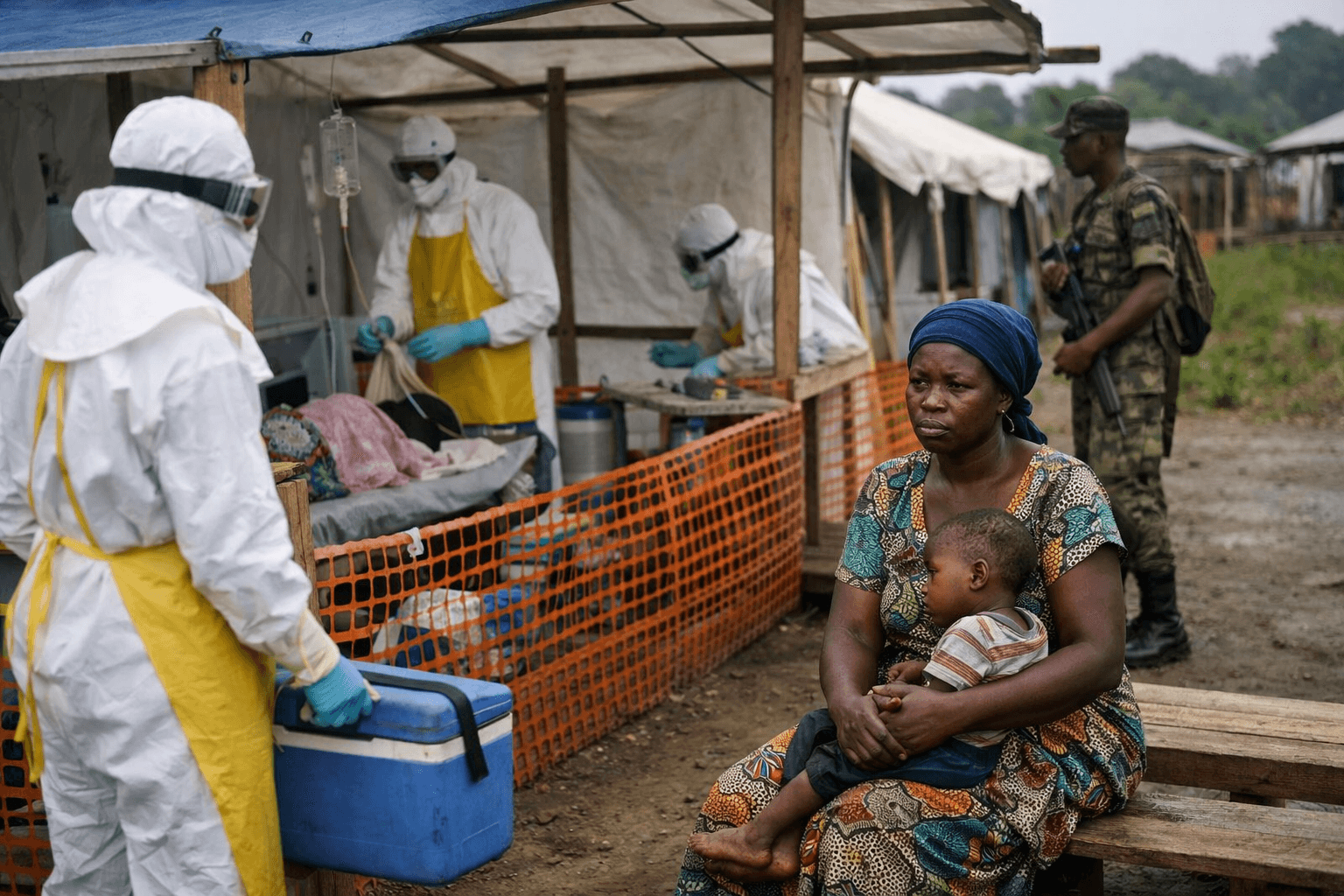
The Democratic Republic of the Congo is grappling with a devastating Ebola outbreak that has claimed over 139 lives and infected hundreds more, with the crisis exacerbated by the country's fragile healthcare system and ongoing conflict. As the World Health Organization warns of a high risk of a regional outbreak, healthcare workers and aid groups are struggling to respond to the emergency. The outbreak, concentrated in the conflict-torn eastern regions of Ituri and North Kivu, has already spread to neighboring provinces and beyond the DRC's borders into Uganda, sparking fears of a wider crisis. The DRC has experienced numerous Ebola outbreaks in the past, including the deadliest outbreak between 2018 and 2020, which claimed nearly 2,300 lives. The country's eastern regions have been plagued by conflict and instability for years, with multiple armed groups operating in the area, making it challenging to respond to the outbreak. The region is also a gold-mining hub, with people regularly crossing borders, increasing the risk of transmission. This complex web of factors has created a perfect storm that is hindering efforts to contain the outbreak.
In the affected areas, such as Mongbwalu, families are grieving the loss of loved ones, while healthcare workers, like Salama Bamunoba, are risking their lives to respond to the outbreak without adequate protection or equipment. The outbreak is also affecting local communities, with suspected cases reported in crowded urban areas, such as Butembo and Goma, where people are struggling to access basic healthcare services. The Bundibugyo strain of Ebola, responsible for the current outbreak, has a mortality rate of 30-50%, and there is no available vaccine or therapeutic treatment, unlike the Zaire strain, which has a vaccine. Aid groups like Doctors Without Borders are struggling to respond, with hospitals in the affected areas reporting a lack of space, equipment, and personnel to handle the influx of patients.
The ongoing conflict in the region is severely hampering the response to the outbreak, with the Rwanda-backed militia group M23 controlling key areas and restricting access to affected communities. A Congolese doctor has appealed to the militia group to reopen the airport in Goma to facilitate aid deliveries. The World Health Organization has warned that the numbers are expected to rise further, and the risk of a regional outbreak is high, although the risk of a global pandemic emergency is low. The international community must provide effective support to the DRC to contain the outbreak and address the underlying healthcare and humanitarian needs in the affected regions.
As the crisis deepens, the DRC's President has urged citizens to remain calm and take precautions, but the situation on the ground remains dire. With the outbreak showing no signs of slowing down, the need for urgent international aid and support has never been more pressing, and the world must act quickly to prevent a regional catastrophe. The international community's response will be crucial in determining the outcome of this crisis, and it is imperative that they take immediate action to support the DRC in its time of need.