

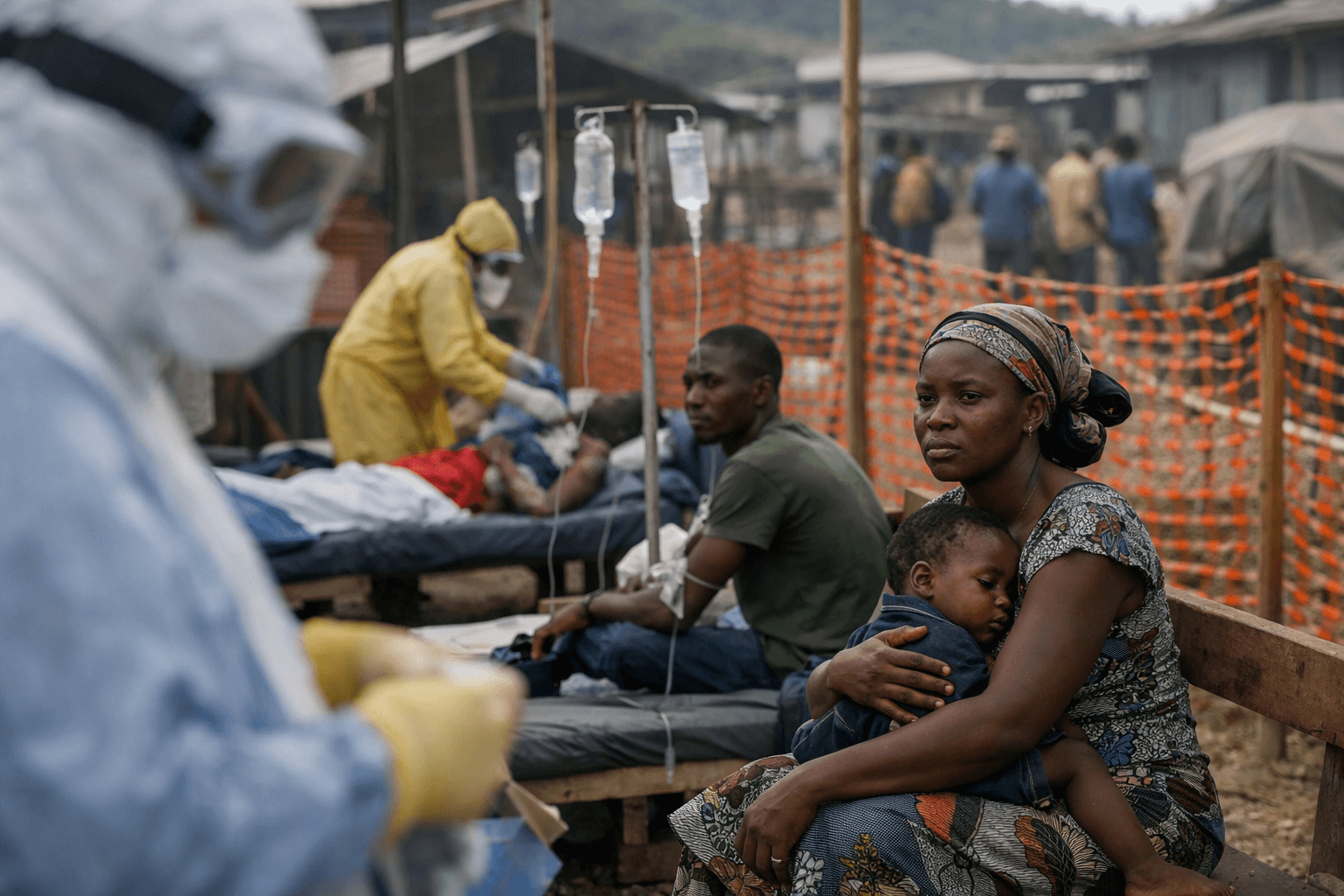
The Democratic Republic of Congo is grappling with its 17th Ebola outbreak, a crisis exacerbated by conflict, mistrust, and poor infrastructure in the affected region. With 121 confirmed cases and 17 deaths reported, the World Health Organization has declared the outbreak a public health emergency of international concern. The rare Bundibugyo strain of the virus, which has no approved medicines or vaccines, is spreading rapidly in the eastern part of the country, prompting neighboring countries like Uganda to take drastic measures to contain the spread. The outbreak is centered in Mongbwalu, a poor gold-mining town in Ituri province, where responders are struggling to contain the disease due to the threat from armed groups and poor infrastructure. The region is home to many displaced people, making it challenging to track and contain the spread of the disease. The World Health Organization has been working tirelessly to respond to the outbreak, but the organization's efforts are being hindered by the lack of access to the affected areas.
As the outbreak continues to spread, the World Health Organization is facing a daunting challenge in responding to the crisis. The organization's Director-General has called for a ceasefire in eastern Congo to allow safe access for responders and others. However, the conflict in the region is ongoing, and it is unclear whether a ceasefire will be possible. Meanwhile, Uganda has closed its border with the DRC, despite the WHO's guidance against border closures, which could push the movement of people and goods to informal border crossings and increase the risk of disease spread. The closure of the border is affecting the livelihoods of people who rely on cross-border trade, with many being forced to use informal border crossings.
The human impact of the outbreak is being felt not only in the DRC but also in neighboring countries like Uganda. A 59-year-old man in Uganda died from Ebola after being exposed to the virus, and many others are being monitored for symptoms. Health workers in Uganda are at risk of exposure to the virus, and the number of locals exposed to infection via health workers is rising. The WHO is working to provide support to health workers in Uganda and other neighboring countries, but the organization's efforts are being hindered by the lack of resources and infrastructure.
The international community is being called upon to respond to the WHO's call for a ceasefire in eastern Congo, and diplomacy is playing a crucial role in facilitating the response efforts. The WHO is working with governments, NGOs, and other organizations to provide aid to those affected by the outbreak, but more needs to be done to contain the spread of the disease. As the situation continues to unfold, it is clear that the Ebola outbreak in the DRC is a global health emergency that requires a swift and coordinated response. The World Health Organization's declaration of a public health emergency of international concern serves as a stark reminder of the urgency of the situation, and the need for a unified global response to combat the spread of the disease.